
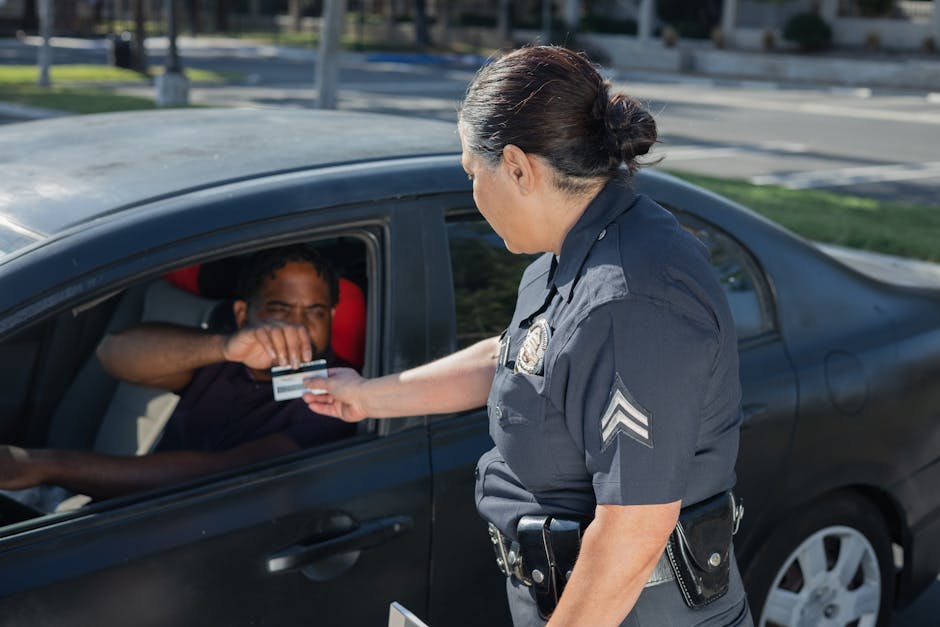
Driving While Intoxicated (DWI) in Texas is defined under Tex. Penal Code §49.04 as operating a motor vehicle in a public place while intoxicated — meaning either a blood alcohol concentration (BAC) of 0.08 or higher, or loss of the normal use of mental or physical faculties due to alcohol, drugs, or a combination. Fort Bend County DWI enforcement is conducted by the Fort Bend County Sheriff's Office (FBCSO; 1410 Ransom Road, Richmond TX 77469; 281-341-4665), the Texas Department of Public Safety on state highways including US-59/I-69 and US-90, Sugar Land Police (281-275-2540), Missouri City Police (281-403-8700), Stafford Police (281-261-3980), and Rosenberg Police (832-595-3700). DWI arrests occur across the county's entertainment and dining corridors — the Sugar Land Town Square area, First Colony Mall surroundings, the entertainment district near Missouri City, and on US-90 and US-59 late at night. A first-offense DWI (without aggravating factors) is a Class B misdemeanor: up to 180 days in county jail, up to a $2,000 fine, and a mandatory minimum 72-hour confinement, heard in the Fort Bend County Courts at Law.
Every DWI arrest in Texas initiates two parallel proceedings: the criminal case and the Administrative License Revocation (ALR) process under Tex. Transp. Code Ch. 724. Upon arrest, the officer confiscates the driver's license and issues a temporary driving permit valid for 40 days. The arrested driver has exactly 15 calendar days from the arrest date — not 15 days from release, not 15 days from arraignment, but from the date of arrest — to request a hearing before the State Office of Administrative Hearings (SOAH) to contest the automatic license suspension. Missing this 15-day ALR deadline results in automatic license suspension when the 40-day temporary permit expires: 90 days for a first-offense test failure (BAC above 0.08), 180 days for a first-offense refusal to test. Requesting the ALR hearing immediately delays the suspension while the hearing is pending — sometimes for many months — and also provides the defense attorney with an early opportunity to cross-examine the arresting officer under oath, generating sworn testimony that can be useful in the criminal defense.
Texas DWI penalties escalate significantly with aggravating factors. A BAC of 0.15 or higher on a first offense elevates the charge to a Class A misdemeanor — up to one year in county jail, up to a $4,000 fine. This enhancement applies regardless of prior record — if the blood or breath test comes back at 0.15 or above on a first-ever DWI, the DA files or amends to Class A. Second DWI is a Class A misdemeanor. Third or subsequent DWI is a third-degree felony (2–10 years state prison, up to $10,000 fine), tried in the Fort Bend County district courts. DWI with a child passenger under 15 in the vehicle is a state jail felony regardless of BAC or prior record (Tex. Penal Code §49.045). Intoxication assault (causing serious bodily injury to another person) is a third-degree felony; intoxication manslaughter (causing death while intoxicated) is a second-degree felony (2–20 years). The extensive commercial vehicle traffic on US-59/I-69 means that commercial driver DWI cases — governed by stricter BAC thresholds (0.04 CDL standard) and mandatory disqualification provisions under federal FMCSA regulations — occur regularly in the county.
The greater Houston area, including Fort Bend County, participates in No-Refusal enforcement operations on major holiday weekends — Memorial Day, Independence Day, Labor Day, Thanksgiving, and New Year's Eve — during which magistrates are pre-positioned to issue blood-draw warrants within minutes if a DWI suspect refuses a breath or blood test. During a No-Refusal operation, refusal to submit to a breath test does not prevent chemical evidence collection — it simply triggers the warrant process rather than consent, and results in both a longer ALR suspension (180 days for a first refusal) and a blood test result. Outside of No-Refusal periods, FBCSO and city police in Fort Bend County regularly seek blood-draw warrants for DWI suspects with crash history, prior DWI, or severe apparent impairment. For crashes resulting in death or serious bodily injury, Tex. Transp. Code §724.012 authorizes mandatory blood draws without consent or warrant in certain circumstances.
Texas eliminated the Driver Responsibility Program surcharges in 2019, removing the annual DPS fees that previously added thousands of dollars of additional costs onto DWI convictions for years after the sentence. The criminal consequences of a DWI conviction in Fort Bend County remain serious: the DWI Education Program (required for all first-offense DWI convictions), potential ignition interlock device requirement as a bond condition and/or probation condition, standard probation fees, and — for the county's professional workforce — license board reporting requirements and potential employment consequences for licensed professionals (engineers, nurses, attorneys, doctors) who receive DWI convictions. Texas House Bill 3582 (2017) created a first-offense DWI nondisclosure option for those who receive deferred adjudication and meet specific eligibility requirements (BAC below 0.15, no prior DWI, no crash with injury, ignition interlock completed as required). Nondisclosure seals the record from most public background checks but does not expunge it. A Fort Bend County criminal defense attorney familiar with DWI defense — including challenging chemical test procedures, field sobriety test administration, and stop validity — should be consulted immediately after any DWI arrest.
Need legal documents for your traffic case?
Hardship license requests, hearing prep forms, and correspondence — state-specific.
Sponsored links. Affiliate disclosure · Compare all options