
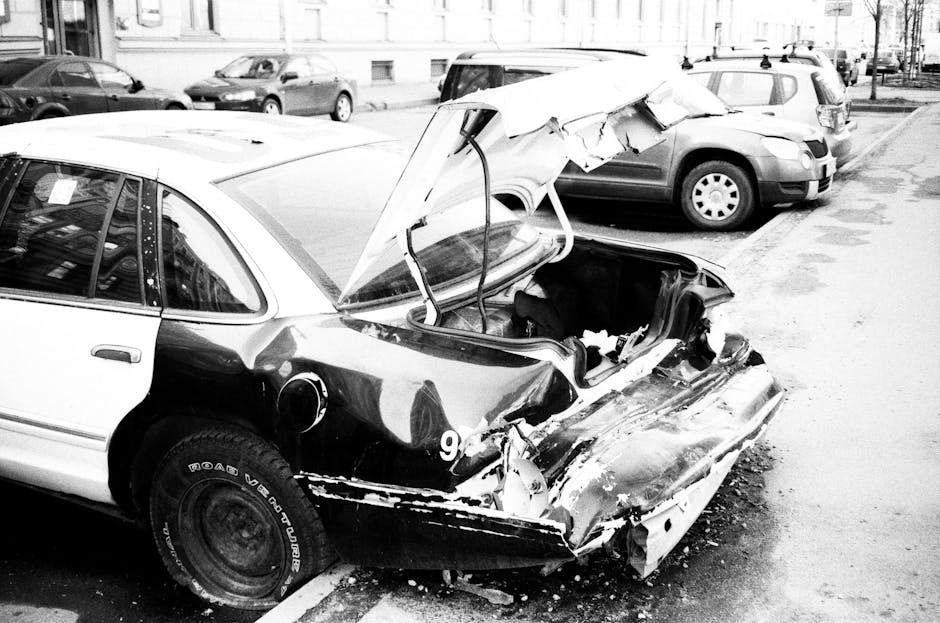
Car accidents in Fort Bend County occur across an extensive and fast-growing road network that includes US-59/I-69 (the primary commercial highway through the county, carrying heavy freight traffic between Houston and Laredo), US-90 (connecting Richmond and Rosenberg to Houston and Beaumont), the Grand Parkway (SH-99, a regional tollway running through northern Fort Bend County through Katy, Sugar Land, and connecting to I-69 south of Richmond), and SH-6 (connecting Sugar Land to the Energy Corridor and Missouri City). Fort Bend County is one of the fastest-growing counties in the United States — its road network, originally designed for a smaller population, is constantly under construction and expansion, generating both higher traffic volumes and construction-zone hazards. The Fort Bend County Sheriff's Office (1410 Ransom Road, Richmond TX 77469; 281-341-4665) handles crashes in unincorporated areas, while Sugar Land Police (281-275-2540), Missouri City Police (281-403-8700), Stafford Police (281-261-3980), Rosenberg Police (832-595-3700), and Texas DPS handle their respective jurisdictions.
Texas is an at-fault state for automobile accidents — the driver whose negligence caused the accident (and their liability insurer) is responsible for the damages to others, including medical expenses, lost wages, vehicle damage, and pain and suffering. Texas law requires minimum liability coverage of 30/60/25 ($30,000 per person bodily injury, $60,000 per occurrence, $25,000 property damage), but given the medical costs in the Houston area and the serious injuries that occur on Fort Bend County's high-speed corridors, these minimums are frequently insufficient to cover serious injuries. Underinsured motorist (UIM) coverage — which compensates the policyholder when the at-fault driver's coverage is less than the actual damages — and uninsured motorist (UM) coverage are important protections that Texas insurers must offer in writing; rejection must also be in writing. The significant commercial vehicle traffic on US-59/I-69 — eighteen-wheelers serving the Port of Houston and transiting through Fort Bend County — means that truck accidents are a significant category of serious crash cases, with potentially higher available insurance limits and the additional complexity of federal FMCSA compliance issues.
Commercial trucking accidents on US-59/I-69 and the Grand Parkway are among the most legally complex and highest-stakes crashes in Fort Bend County. Federal Motor Carrier Safety Administration (FMCSA) regulations impose specific requirements on commercial drivers and carriers: hours-of-service limits (11 driving hours in a 14-hour window), mandatory rest periods, pre-trip vehicle inspections, drug and alcohol testing, cargo securement standards, and electronic logging device (ELD) requirements replacing paper logbooks. When a commercial truck causes a crash, the carrier's black box (electronic control module) and ELD records must be preserved immediately — they begin to be overwritten after a short period, and a litigation hold letter or preservation demand should be sent to the carrier as soon as possible after the crash. Fort Bend County's proximity to the Port of Houston also means that port-drayage trucks — often smaller carriers with minimal insurance — are common on local roads, and these accidents require investigation of the carrier's insurance coverage and compliance history through the FMCSA's SAFER database.
Accidents at Fort Bend County construction zones are an ongoing issue given the county's development pace. TxDOT and county road construction projects on SH-99, SH-6, and various local arterial roads create areas of lane shifts, reduced speeds, and changed traffic patterns that are often inadequately marked or lit. Texas law (Tex. Transp. Code §545.066) doubles fines for moving violations in construction zones when workers are present, and provides that speed limits in construction zones are enforceable without specific signage requirements. However, the government entities and contractors responsible for construction zones can also be liable for accidents caused by defective or inadequate traffic control measures. Claims against TxDOT as a state agency require compliance with the Texas Tort Claims Act's notice requirements; claims against private contractors require analysis of their negligence and their contractual relationship with the governmental entity. Drunk driving and distracted driving crashes also occur across Fort Bend County's road network — particularly on US-90 between Richmond and Rosenberg and on SH-6 near Stafford. Defendants in DWI-caused accidents face both civil damages liability and criminal prosecution; Texas Penal Code §49.04 DWI criminal conviction does not automatically establish civil liability, but the criminal conviction record and associated evidence (blood test results, field sobriety test video) are typically admissible in the civil case. Victims of drunk driving accidents in Fort Bend County can seek punitive (exemplary) damages under Tex. Civ. Prac. & Rem. Code §41.003, subject to the cap of the greater of $200,000 or two times economic damages plus up to $750,000 in noneconomic damages.
Hit-and-run accidents occur throughout Fort Bend County, and the victim of a hit-and-run whose driver is never identified relies primarily on their own uninsured motorist (UM) policy for compensation. In a hit-and-run, there must typically be physical contact with the unidentified vehicle for the UM policy to pay under most policy terms — a vehicle that runs you off the road without contact may not trigger UM coverage, depending on the policy language. After any crash in Fort Bend County, victims should file an accident report with the responding agency and — if the other driver flees — a separate report indicating the hit-and-run nature of the incident. Dashcam cameras, which have become increasingly common among Fort Bend County commuters, can capture the vehicle and plate of the fleeing driver and are potentially the most useful evidence in hit-and-run cases. Witnesses should be identified immediately, as they may be the only available evidence of the accident. The State Bar of Texas Lawyer Referral Service (1-800-252-9690) and the Fort Bend County Bar Association (fbbar.org) can connect accident victims with attorneys who handle automobile accident cases on contingency.
Need legal documents after an accident?
Demand letters, release forms, and settlement agreements — ready in minutes.
Sponsored links. Affiliate disclosure · Compare all options