
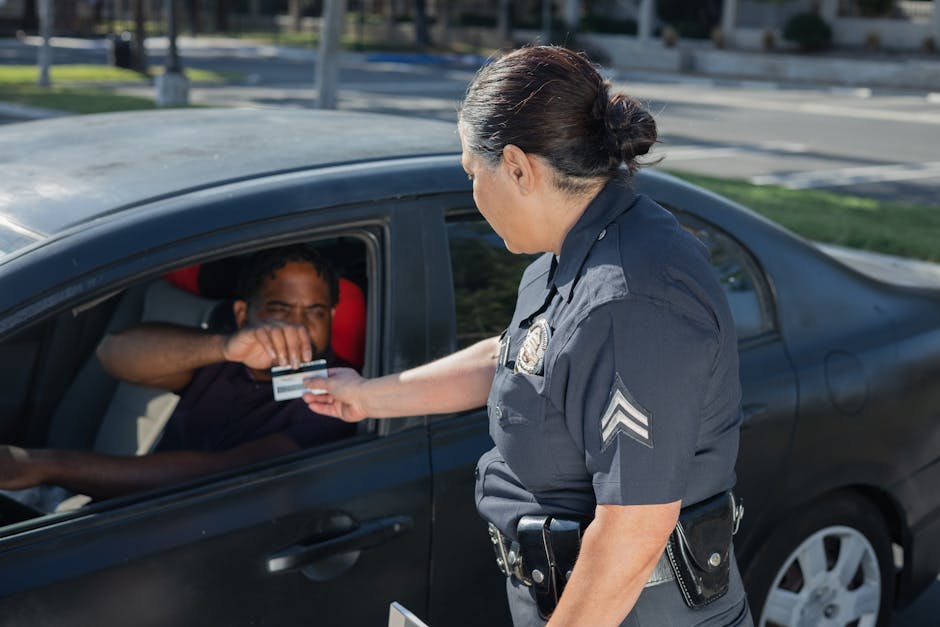
New York calls it DWI, not DUI, and in Queens County — 2.3 million residents, both New York City airports, and some of the heaviest traffic corridors in America, from the Van Wyck and the Grand Central Parkway to the Long Island Expressway and the BQE — impaired-driving and traffic enforcement operate on two entirely separate tracks that residents constantly confuse. Criminal charges under VEHICLE AND TRAFFIC LAW 1192 — driving while intoxicated and its variants — are arraigned at QUEENS COUNTY CRIMINAL COURT, 125-01 QUEENS BOULEVARD in Kew Gardens, with felony DWIs indicted and tried at the SUPREME COURT, CRIMINAL TERM in the same complex and prosecuted by the Queens District Attorney. Ordinary moving violations — speeding, red lights, improper turns, cell-phone tickets — go instead to the TRAFFIC VIOLATIONS BUREAU, an administrative DMV tribunal where, unlike virtually everywhere else in New York State, THERE IS NO PLEA BARGAINING WHATSOEVER: a Queens driver ticketed on the Grand Central Parkway either pleads guilty as charged or fights the ticket at a hearing, a stark contrast with the Traffic and Parking Violations Agencies in Nassau and Suffolk just over the county line, where negotiated reductions are routine. Parking tickets go to yet a third forum, the city's Department of Finance adjudication system, and camera notices arrive by mail against the vehicle's owner. Knowing which building your problem lives in — Kew Gardens, the TVB, or a mailed hearing request — is the first piece of Queens traffic literacy.
The VTL 1192 ladder governs every impaired-driving case. DRIVING WHILE ABILITY IMPAIRED (DWAI, blood alcohol roughly 0.05 to 0.07) is a traffic INFRACTION, not a crime. DWI — a BAC of 0.08 or more, or common-law intoxication proven through observation — is an unclassified MISDEMEANOR that creates a permanent criminal record, carrying up to a year in jail, fines of 500 to 1,000 dollars, and a minimum six-month license revocation. AGGRAVATED DWI kicks in at 0.18, drug and combined-influence charges are built on DRUG RECOGNITION EXPERT evaluations, and repetition escalates fast: a second 1192 misdemeanor conviction within ten years is an E FELONY, a third within ten years a D FELONY. LEANDRA'S LAW adds two hammers — driving intoxicated with a child fifteen or younger in the vehicle is an automatic felony on a first offense, and every misdemeanor-or-higher conviction requires an IGNITION INTERLOCK device for at least twelve months. New York also restricts plea bargaining in DWI cases by statute: pleas must generally stay WITHIN section 1192, which is why the classic first-offense outcome for a cooperative defendant with a modest BAC and clean record is a plea from misdemeanor DWI down to the DWAI infraction — a resolution that avoids a criminal conviction but still carries a license action, fines, a possible screening or IMPAIRED DRIVER PROGRAM referral, and the DRIVER RESPONSIBILITY ASSESSMENT — a DMV surcharge of 250 dollars a year for three years imposed on any 1192 conviction or chemical-test refusal, entirely on top of court fines. Cannabis legalization changed searches, not driving law: impaired driving remains a 1192 crime, typically proved through DRUG RECOGNITION EXPERT testimony rather than a number.
The license consequences begin before the case is decided. At arraignment in Kew Gardens, the judge imposes PROMPT SUSPENSION of the driver's license upon a charged BAC of 0.08 or more; a HARDSHIP PRIVILEGE for essential travel can be requested at arraignment, and after thirty days most first offenders qualify for a PRE-CONVICTION CONDITIONAL LICENSE while the case is pending. Refusing the chemical breath test triggers a completely separate track: a DMV REFUSAL HEARING, independent of the criminal case, where an administrative law judge can revoke the license for one year and impose a 500-dollar civil penalty even if the criminal charge is later dismissed — the revocation runs longer and the penalty higher for commercial drivers and repeat refusals, and the refusal itself can be used against the driver at trial as consciousness of guilt. The IMPAIRED DRIVER PROGRAM (IDP) offers a path back to a post-conviction conditional license, but only once every five years, a limit that catches repeat offenders by surprise. And for anyone who drives for a living, the stakes multiply: ANY 1192 conviction — even the noncriminal DWAI infraction — triggers a ONE-YEAR CDL DISQUALIFICATION, with lifetime disqualification for a second, rules that admit no hardship exception.
Queens is the borough where driving is a livelihood, which gives its DWI and traffic practice a distinctive shape. This is the capital of the city's taxi and for-hire-vehicle workforce — the yellow-cab MEDALLION DEBT CRISIS, the driver suicides, the 2021 hunger strike outside City Hall, and the city debt-relief program that followed are Queens history — and the TAXI AND LIMOUSINE COMMISSION treats an impaired-driving arrest, let alone a conviction, as a license emergency: TLC drivers face summary suspension upon arrest and revocation proceedings upon conviction, meaning the criminal case and the livelihood case must be defended together. The borough's street-safety geography is equally distinctive: QUEENS BOULEVARD, the original Boulevard of Death, became the city's VISION ZERO flagship and was rebuilt with protected bike lanes; the citywide default speed limit is 25 MPH; SCHOOL-ZONE SPEED CAMERAS operate 24/7 and ticket the vehicle's owner (no license points, but unpaid camera tickets pile toward registration and booting consequences); and ADMINISTRATIVE CODE 19-190, the Right of Way law, makes striking a pedestrian or cyclist who has the right of way a misdemeanor — a rule that turns an ordinary Queens fender-bend involving a crosswalk into a criminal matter. Along Roosevelt Avenue, the delivery e-bike economy generates its own enforcement wave, NYPD DWI checkpoints recur on Northern Boulevard, Queens Boulevard, and the approaches to the Queensboro Bridge and the airports, and the nightlife strips of Astoria and Long Island City feed a steady early-morning arraignment calendar in Kew Gardens. Hit-and-run victims in the borough, it is worth adding, can pursue the MVAIC fund when an uninsured or unidentified driver is involved — provided the crash is reported to police within 24 hours.
The playbook for a Queens driver: at a stop, provide license and registration and decline to answer drinking questions; field sobriety tests are refusable without DMV penalty, but refusing the chemical breath test at the precinct triggers the one-year revocation track, so that decision deserves real thought. At arraignment, request the hardship privilege; within days, calendar the DMV refusal hearing if one applies, because failing to appear forfeits it — and the hearing doubles as early cross-examination of the arresting officer. For points cases at the TVB, remember there is no deal to cut: the choice is a guilty plea as charged or a hearing where the officer must prove the charge by clear and convincing evidence, and 11 POINTS IN 18 MONTHS suspends the license while six points triggers the Driver Responsibility Assessment. Free and low-cost defense help runs through the LEGAL AID SOCIETY and QUEENS DEFENDERS for criminal charges, and for the borough's professional drivers — TLC, CDL, airport workers whose SIDA badges and commutes depend on a clean license — the smart move, as of early 2026, is retaining counsel who will defend the criminal case in Kew Gardens, the license case at the DMV, and the livelihood case at the TLC as a single coordinated fight.
Need legal documents for your traffic case?
Hardship license requests, hearing prep forms, and correspondence — state-specific.
Sponsored links. Affiliate disclosure · Compare all options