
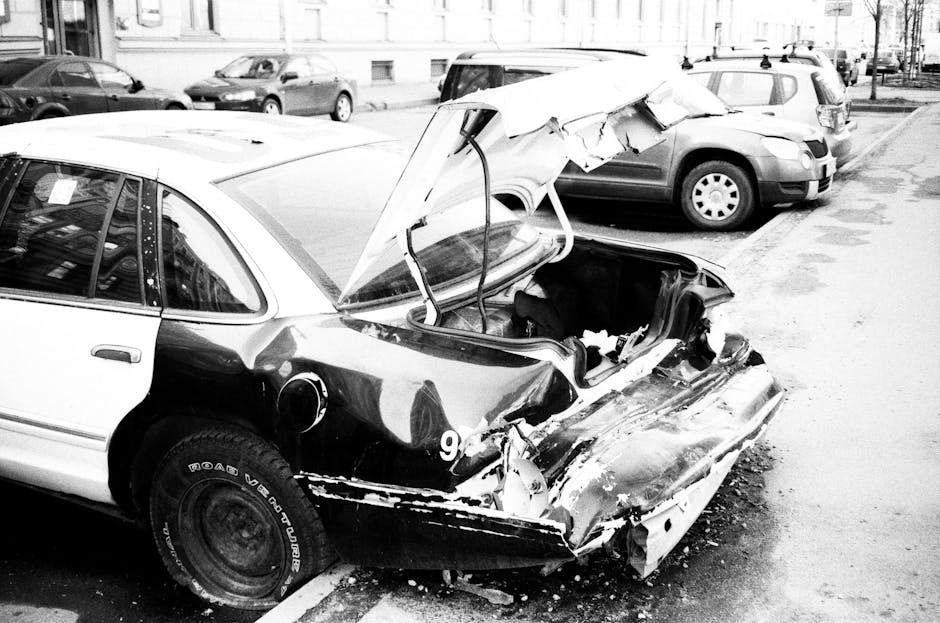
No county in America concentrates more kinds of traffic than Queens. Two international airports — JFK and LaGuardia, both operated by the PORT AUTHORITY OF NEW YORK AND NEW JERSEY — pour taxis, rideshares, rental cars, shuttle buses, and cargo trucks onto the GRAND CENTRAL PARKWAY and the VAN WYCK EXPRESSWAY around the clock; the LONG ISLAND EXPRESSWAY and the BROOKLYN-QUEENS EXPRESSWAY grind through the borough's middle; dollar vans run informal transit routes through Flushing and Jamaica; and Roosevelt Avenue beneath the elevated 7 train hosts the densest delivery e-bike economy in the city. Above it all looms QUEENS BOULEVARD — the original BOULEVARD OF DEATH, a corridor up to twelve lanes wide that killed so many pedestrians through the 1990s that it became the flagship of New York's VISION ZERO program and was rebuilt with protected bike lanes, shorter crossings, and redesigned medians. Crash lawsuits seeking more than $50,000 are filed at the QUEENS COUNTY SUPREME COURT, CIVIL TERM, 88-11 SUTPHIN BOULEVARD in Jamaica; claims up to $50,000 go to the QUEENS CIVIL COURT at 89-17 Sutphin Boulevard; and the traffic tickets that follow a crash are heard not in a criminal courtroom but at the TRAFFIC VIOLATIONS BUREAU, an administrative forum unique to New York City where — unlike the Nassau and Suffolk agencies just over the county line — NO PLEA BARGAINING is allowed on moving violations.
Every Queens crash case begins with NO-FAULT. New York requires every registered vehicle to carry at least $50,000 in basic PERSONAL INJURY PROTECTION under Insurance Law Article 51 and REGULATION 68, which pays medical bills, 80 percent of lost earnings up to $2,000 a month, and incidental expenses regardless of who caused the collision — and it covers not only drivers and passengers but also pedestrians and cyclists struck by the vehicle. The deadline is brutal: the NF-2 APPLICATION must reach the correct insurer within 30 DAYS of the crash, and medical providers must bill within 45 days, so an injured person recovering at Elmhurst or Jamaica Hospital who waits a month to face the paperwork can forfeit tens of thousands of dollars in benefits before the liability case even starts. When a carrier denies or delays, Regulation 68 channels the dispute into NO-FAULT ARBITRATION through the American Arbitration Association — a $40 filing fee, interest accruing at two percent per month on overdue benefits, and the carrier pays the claimant's attorney fees when the claimant prevails, which is why no-fault denials in Queens get fought rather than absorbed. No-fault pays the bills; it says nothing about who was at fault, and it is only the opening move.
To sue for pain and suffering, a Queens plaintiff must clear the SERIOUS INJURY THRESHOLD of INSURANCE LAW 5102(d). A FRACTURE is the bright line that qualifies automatically; death, dismemberment, significant disfigurement, and loss of a fetus also qualify categorically, while the contested territory is soft tissue — significant limitation of use, permanent consequential limitation, and the 90/180 CATEGORY, which requires proof that the injury prevented substantially all of your usual daily activities for at least 90 of the first 180 days. Once past the threshold, the liability rules favor plaintiffs: PURE COMPARATIVE NEGLIGENCE under CPLR 1411 means a pedestrian who crossed Northern Boulevard mid-block recovers even at 80 percent fault, reduced proportionally; VEHICLE AND TRAFFIC LAW 388 makes a vehicle's OWNER vicariously liable for any permissive driver's negligence — the rule that reaches taxi medallion owners, leasing companies, and the cousin who lent out the car; the negligence statute of limitations is three years, wrongful death two. City streets carry city rules: a default 25 MPH SPEED LIMIT, 24/7 SCHOOL-ZONE SPEED CAMERAS whose tickets go to the vehicle owner, and ADMINISTRATIVE CODE 19-190, which makes striking a pedestrian or cyclist who has the right of way a misdemeanor. Emergency vehicles are judged under VTL 1104's RECKLESS DISREGARD standard and snowplows under VTL 1103(b) — and any crash with a City vehicle, an NYPD cruiser, a DSNY truck, or an MTA bus triggers the 90-DAY NOTICE OF CLAIM machinery of General Municipal Law 50-e, with suit due within one year and 90 days.
Queens is the for-hire capital of America, and its crash docket shows it. This is the borough of the TLC driver — the yellow-cab medallion holders crushed by the MEDALLION DEBT CRISIS that drove drivers to suicide and a 2021 hunger strike before the city's debt-relief program, and the tens of thousands of app-based drivers working the airports and Roosevelt Avenue. TLC-licensed vehicles carry substantially higher liability coverage than the private-car minimums, app-based trips add further coverage layers as of early 2026, and the BLACK CAR FUND provides workers-compensation-style benefits to injured for-hire drivers themselves — so a crash with a taxi or rideshare usually offers more insurance than a crash with a private car, provided every layer is identified. The rest of the local map: delivery e-bikes serving the app economy (whose riders earn the city's deliverista minimum pay but whose vehicles carry no auto insurance at all), dollar vans of varying insurance quality, unfamiliar tourists in rental cars streaming out of JFK and LaGuardia, and the AIRTRAIN and Port Authority roadways where the bi-state agency's own 60-day notice and one-year suit rules displace ordinary deadlines. Crashes on the Grand Central near LaGuardia and along the Van Wyck's perpetual JFK construction zones routinely mix these defendants — a rideshare, a rental car, a contractor's barrier, a Port Authority roadway — which is why Queens crash lawyers name every entity and serve every notice first, and sort out blame afterward. For the hit-and-run epidemic, the tools are UNINSURED MOTORIST coverage — mandatory on every New York policy at $25,000 per person and $50,000 per crash, but conditioned on a POLICE REPORT WITHIN 24 HOURS — optional SUPPLEMENTARY UM/SUM coverage that raises those limits to match your own liability limits, and, for Queens pedestrians and cyclists with no auto policy in the household, the MVAIC fund, the insurer of last resort for New York City victims of uninsured and unidentified vehicles.
The playbook after a Queens crash is unforgiving about sequence. Call 911 and insist on an NYPD report — in hit-and-run cases the 24-HOUR report is a precondition to uninsured motorist and MVAIC benefits, and in every case the report anchors the insurance claims to come. Photograph vehicles, plates, the roadway, and any camera poles overhead — between school-zone cameras, bus-lane cameras, and private storefront systems along corridors like Roosevelt Avenue and Northern Boulevard, footage exists for a remarkable share of Queens crashes, but it is overwritten in days unless a preservation letter goes out. Seek treatment immediately — Elmhurst and Jamaica Hospital run the borough's Level I trauma services — and calendar the NF-2 30-DAY deadline before anything else. Check your own policy's SUM coverage: in a borough full of minimum-coverage and out-of-state vehicles, your own SUM endorsement is often the largest pot of money in the case. Never give the other side's insurer a recorded statement before speaking with counsel, and if any carrier stalls, the NEW YORK DEPARTMENT OF FINANCIAL SERVICES hotline at 1-800-342-3736 takes complaints that carriers must answer. The QUEENS COUNTY BAR ASSOCIATION runs a lawyer referral service, crash lawyers work on contingency, and court interpreters are free in all of the borough's 130-plus languages — in Queens, the case usually goes to the victim who documented fastest.
Need legal documents after an accident?
Demand letters, release forms, and settlement agreements — ready in minutes.
Sponsored links. Affiliate disclosure · Compare all options