
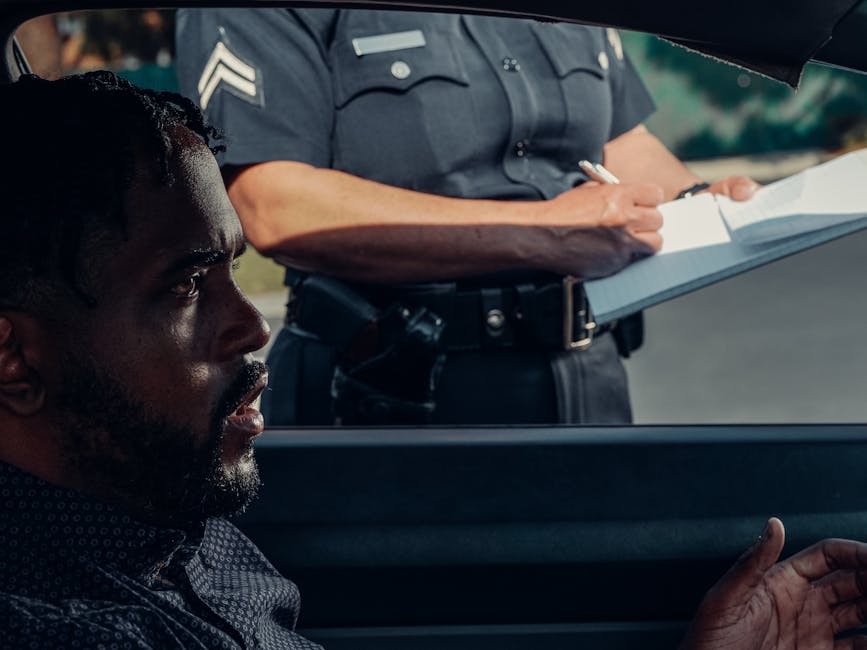
In White Plains a drunk-driving arrest — New York law calls it DWI, DRIVING WHILE INTOXICATED, not DUI — usually begins on one of the busy roads that converge on the county seat. The WHITE PLAINS POLICE DEPARTMENT works the downtown restaurant and nightlife district, Mamaroneck Avenue, and the retail core; State Police and county police patrol Interstate 287 and the BRONX RIVER, HUTCHINSON RIVER, and SPRAIN BROOK PARKWAYS. A misdemeanor DWI is arraigned and usually resolved in WHITE PLAINS CITY COURT at 77 SOUTH LEXINGTON AVENUE. Felony DWI — a second offense within ten years, or any LEANDRA'S LAW charge with a child in the car — is presented to a grand jury and prosecuted in WESTCHESTER COUNTY COURT at the Westchester County Courthouse, 111 Dr. Martin Luther King Jr. Blvd., where, as of early 2026, District Attorney Susan Cacace's office handles vehicular crimes ranging from routine per-se cases to fatal crashes charged as vehicular manslaughter. Because the county courthouse sits downtown, a felony DWI defendant from anywhere in Westchester answers the charge in White Plains.
The governing statute is VEHICLE AND TRAFFIC LAW 1192, and its ladder decides everything. DWAI — driving while ability impaired by alcohol, typically a blood-alcohol content between 0.05 and 0.07 — is a traffic INFRACTION, not a crime. DWI at 0.08 or above (or by common-law proof of intoxication) is an unclassified MISDEMEANOR; AGGRAVATED DWI kicks in at 0.18; impairment by drugs or combined drugs and alcohol is charged through DRUG RECOGNITION EXPERT evaluations, an area rich with defense challenges because no roadside number exists for cannabis or pills. A second 1192 misdemeanor conviction within ten years becomes a class E FELONY, a third a class D. LEANDRA'S LAW makes a single incident an automatic felony when a child fifteen or younger is aboard, and separately requires an IGNITION INTERLOCK DEVICE for at least twelve months on every misdemeanor-or-higher DWI conviction — an obligation that follows you onto every vehicle you own or operate. Every conviction also triggers the DRIVER RESPONSIBILITY ASSESSMENT, a three-year DMV surcharge on top of court fines, and because cannabis is now legal for adults, drugged-driving cases built on officer observation rather than a breath number are a growing share of the docket and among the most defensible charges on it.
The license fight starts before the criminal case does. At arraignment on a 0.08-or-higher charge, the judge imposes PROMPT SUSPENSION of your license while the case is pending; your lawyer can ask for a HARDSHIP PRIVILEGE — narrow permission to drive to work, school, or medical care — and after thirty days most drivers qualify for a PRE-CONVICTION CONDITIONAL LICENSE through the DMV. If you REFUSED the chemical test, a completely separate track opens: a DMV REFUSAL HEARING before an administrative law judge, where the standard is low and the consequence — a one-year revocation plus a 500-dollar civil penalty — lands regardless of the criminal outcome, even if you are acquitted. The plea system has its own iron rule: pleas must stay WITHIN SECTION 1192, so a DWI cannot be traded down to a non-alcohol violation; the classic first-offense outcome, for a clean record and a cooperative case, is a plea from misdemeanor DWI down to the DWAI infraction, preserving a crime-free record. The IMPAIRED DRIVER PROGRAM — available once every five years — unlocks a conditional license during revocation and is standard equipment in nearly every resolution.
Local geography shapes both enforcement and defense. Interstate 287 and the parkway network draw heavy patrol as they funnel commuter and out-of-county traffic through White Plains, and stops radiate from the downtown restaurant and bar district on weekend nights. Checkpoint and patrol cases raise distinct issues: whether the stop was lawful, whether field sobriety tests performed on a sloped parkway shoulder or a downtown curb mean anything, whether the breath instrument was calibrated and the operator certified — all discoverable under CPL ARTICLE 245, whose certificate-of-compliance deadlines apply to DWI prosecutions just as forcefully as to any other crime and regularly produce dismissals when ignored. For ordinary speeding and moving violations, White Plains offers a structural advantage: unlike New York City, where the Traffic Violations Bureau prohibits plea bargaining entirely, tickets in White Plains City Court CAN be negotiated — a six-point speed routinely resolves to a lower-point violation or a parking-type disposition, protecting both your wallet and your license. The stakes are cumulative: ELEVEN POINTS IN EIGHTEEN MONTHS means suspension, six points triggers the Driver Responsibility Assessment, and insurance surcharges in one of the nation's most expensive markets often dwarf the fine itself. COMMERCIAL DRIVERS face the harshest math — any 1192 conviction, even a DWAI infraction in a personal car, brings a one-year CDL DISQUALIFICATION with no conditional relief for commercial driving, a career-level threat for the delivery, contractor, and service drivers who keep the office district supplied.
The playbook starts at the roadside: be polite, hand over your documents, and decline to answer drinking questions — where you were and how much you drank are exactly the admissions that convict people. Once charged, move fast on the license: request the hardship privilege at arraignment, calendar the thirty-day mark for the pre-conviction conditional license, and if you refused the test, make sure your lawyer appears at the DMV refusal hearing — it is the only chance to cross-examine the arresting officer under oath before trial, and skipping it hands the state a one-year revocation by default. Demand full discovery, including calibration records, maintenance logs, and body-camera footage; treatment-minded defendants should ask about the drug and mental-health treatment courts that sit in the White Plains courthouse, which can convert a spiraling second offense into a supervised recovery track. Those who qualify financially get free representation from the LEGAL AID SOCIETY OF WESTCHESTER or an 18-B assigned lawyer, and the WESTCHESTER COUNTY BAR ASSOCIATION downtown refers private counsel. Noncitizens should know that a single ordinary DWI is generally not a deportable offense by itself, but it can poison discretionary applications and combinations with other charges — get an immigration-consequence analysis before any plea. And for the long term: a misdemeanor DWI is eligible for automatic sealing under the CLEAN SLATE ACT three years after sentence or release, but the DMV driving abstract is a separate record — the interlock, the revocation, and the insurance history follow their own timelines, which is why the cheapest resolution today is rarely the cheapest over five years.
Need legal documents for your traffic case?
Hardship license requests, hearing prep forms, and correspondence — state-specific.
Sponsored links. Affiliate disclosure · Compare all options