
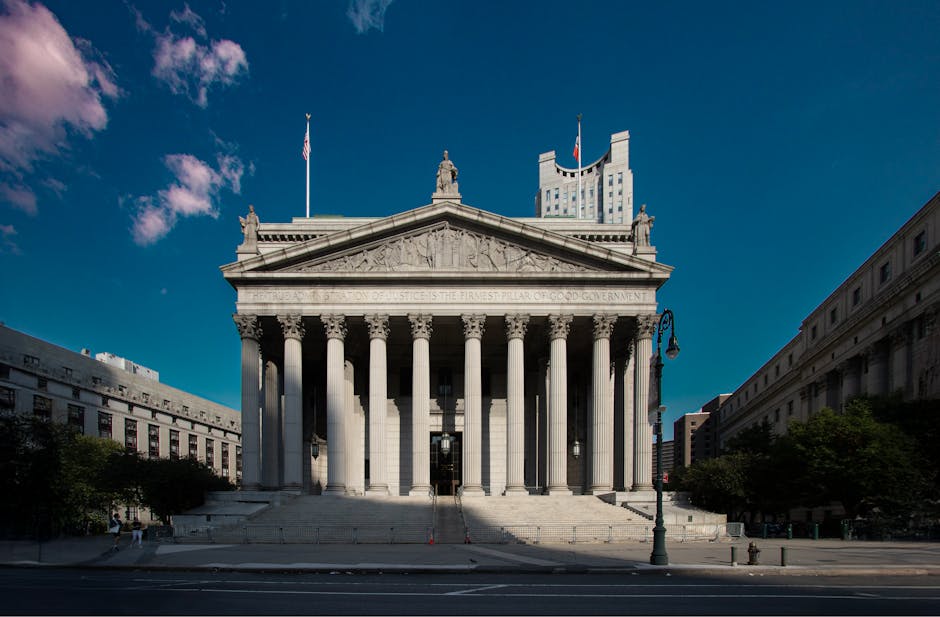
Criminal cases in San Francisco are charged, tried, and defended entirely within a single CONSOLIDATED CITY AND COUNTY, which gives the local system an unusual concentration of powerful elected offices. Felony and misdemeanor matters are heard by the SAN FRANCISCO SUPERIOR COURT at the HALL OF JUSTICE, 850 Bryant Street, the aging criminal courthouse that houses the arraignment and trial departments, the District Attorney's trial teams, and the intake jail. The SAN FRANCISCO DISTRICT ATTORNEY (Brooke Jenkins as of early 2026) decides what to charge; the SAN FRANCISCO POLICE DEPARTMENT (SFPD) investigates and arrests; and the elected SAN FRANCISCO SHERIFF runs the county jails and courtroom security. Uniquely, San Francisco has an ELECTED PUBLIC DEFENDER — the only county in California that elects rather than appoints the office — an institution made nationally famous by the late Jeff Adachi and now led by Mano Raju, whose lawyers represent the majority of people charged in the city. After an arrest, an in-custody defendant must be ARRAIGNED within 48 hours excluding weekends and holidays, and at that first hearing the judge addresses release, the accused enters a plea, and the court appoints the Public Defender for anyone who cannot afford counsel. Because the same city both prosecutes crime and funds a robust, independent defense, San Francisco has become a national testing ground for how aggressively — or how leniently — an urban justice system charges, diverts, and detains.
California's criminal law has been reshaped by a decade of ballot initiatives whose effects are felt sharply in San Francisco. PROPOSITION 47 (2014) reclassified many simple drug-possession and under-950-dollar theft offenses — shoplifting, petty theft, receiving stolen property — from felonies to MISDEMEANORS, and PROPOSITION 64 (2016) legalized adult recreational cannabis while letting thousands petition to reduce or dismiss old marijuana convictions. Reacting to retail-theft and fentanyl concerns, voters passed PROPOSITION 36 in November 2024, partially rolling back Prop 47 by re-felonizing certain repeat theft offenses and creating a new TREATMENT-MANDATED FELONY for some hard-drug possession — so, as of early 2026, San Francisco prosecutors and judges are still working out how the competing frameworks interact. Pretrial release is governed by the California Supreme Court's landmark decision IN RE HUMPHREY (2021), itself a San Francisco case, which holds that a court may not detain an arrestee merely because they cannot afford cash bail without first considering ability to pay and non-monetary conditions of release. Sentencing runs through REALIGNMENT (AB 109), which keeps many lower-level felony sentences in county jail and local supervision rather than state prison. And most convictions can eventually be cleaned up: PENAL CODE 1203.4 allows expungement of many completed cases, while AB 1076 now delivers AUTOMATIC relief for many eligible arrests and convictions without a petition.
No local dynamic defines San Francisco criminal practice more than the OPEN-AIR DRUG CRISIS centered in the TENDERLOIN and adjacent SOUTH OF MARKET (SoMa), where FENTANYL overdose deaths surged and public drug use became the city's defining political fight. The debate over how to respond — treatment or prosecution — drove the 2022 RECALL of District Attorney Chesa Boudin, whose progressive charging policies critics blamed for street disorder, and the subsequent appointment and 2024 election of Brooke Jenkins on a promise of tougher drug and repeat-offender enforcement. San Francisco also endures one of the nation's highest rates of AUTO BURGLARY — the smash-and-grab car break-ins locals call BIPPING, concentrated near tourist corridors like the Palace of Fine Arts, Fisherman's Wharf, Union Square, and Lombard Street — alongside high-profile ORGANIZED RETAIL THEFT that fueled the Prop 36 backlash. Charges routinely seen in the city's courts include possession for sale under Health and Safety Code 11351, street-level drug sales in the Tenderloin, Penal Code 459 burglary and auto burglary, Penal Code 484 and 490.2 petty theft and shoplifting, and a steady stream of quality-of-life and probation matters tied to homelessness and untreated mental illness. The city's politics swing between compassion and crackdown, and where a given case lands often depends as much on the prevailing enforcement policy as on the statute charged.
San Francisco's institutional response to that churn is one of the most developed COLLABORATIVE COURT systems in the country. The COMMUNITY JUSTICE CENTER (CJC), a neighborhood court serving the Tenderloin, SoMa, and Civic Center, pairs accountability with on-site social services, linking defendants to housing, treatment, and public benefits instead of routing every low-level case to the Hall of Justice. The Superior Court also operates a DRUG COURT, a BEHAVIORAL HEALTH COURT for defendants with serious mental illness, a VETERANS JUSTICE COURT, and a YOUNG ADULT COURT, each offering court-supervised treatment in exchange for reduced charges or dismissal on completion. Pretrial release is supported by the SAN FRANCISCO PRETRIAL DIVERSION PROJECT, which supervises released defendants and supplies the risk information judges weigh under Humphrey. The DISTRICT ATTORNEY runs its own pre- and post-filing diversion tracks, and PENAL CODE 1001.36 MENTAL HEALTH DIVERSION and Penal Code 1000 drug diversion let eligible defendants earn a dismissal by completing treatment. For those held in custody, the Sheriff's jails feed reentry programming, and the well-funded Public Defender fields specialized units — immigration, reentry, and clean-slate — that most California counties simply cannot match. The upshot is that in San Francisco the path out of a case frequently runs through treatment and a collaborative court rather than through a traditional jury trial.
If you are arrested in San Francisco and cannot afford a lawyer, the elected SAN FRANCISCO PUBLIC DEFENDER is appointed at arraignment, and its CLEAN SLATE program helps residents expunge and seal old convictions under Penal Code 1203.4 and reduce eligible felonies to misdemeanors — critical relief in a city where a record can block housing in a brutal rental market. Where the Public Defender has a conflict, the court appoints private counsel. On self-defense, California has NO stand-your-ground statute, but the standard jury instructions CALCRIM 505 and CALCRIM 3470 impose NO DUTY TO RETREAT — a person who is somewhere they lawfully may be can hold their ground and defend against a reasonable fear of harm. Gun cases reflect the post-Bruen landscape: California is now SHALL-ISSUE for concealed-carry permits, but SB 2 designates broad SENSITIVE PLACES where carry is barred, and the state keeps a 10-DAY WAITING PERIOD, its handgun roster, and gun-violence restraining orders. The practical playbook for a San Francisco case: say little to SFPD beyond identifying yourself, then ask for a lawyer; remember that jail phone calls are recorded; appear at every date at 850 Bryant, because a failure to appear generates a bench warrant; and ask counsel early about the Community Justice Center or another collaborative court, mental-health or drug diversion, and — for non-citizens — the immigration consequences of any plea, which the Public Defender's immigration unit is built to analyze. Additional free and low-cost help flows through the Bar Association of San Francisco's Lawyer Referral Service and reentry nonprofits across the city.
Need legal documents for your defense?
Character references, release forms, and legal correspondence templates.
Sponsored links. Affiliate disclosure · Compare all options