
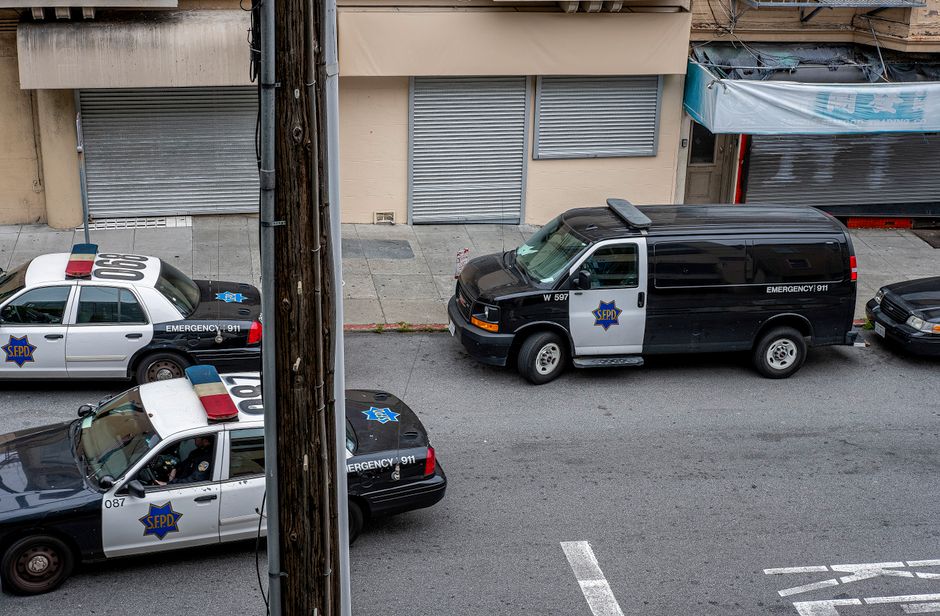
A San Francisco DUI arrest launches TWO SEPARATE CASES at once, and failing to grasp that fact is the single most common and costly mistake drivers make. The CRIMINAL case is prosecuted by the SAN FRANCISCO DISTRICT ATTORNEY and heard at the HALL OF JUSTICE, 850 Bryant Street, where you are charged under VEHICLE CODE 23152(a) — driving under the influence — and 23152(b) — driving with a blood-alcohol concentration of 0.08 percent or more; most first offenders face both counts from a single stop. The SAN FRANCISCO POLICE DEPARTMENT (SFPD), the CALIFORNIA HIGHWAY PATROL on the freeways and bridges, and occasionally the U.S. PARK POLICE in the Presidio and along the waterfront make the arrests, often at DUI checkpoints the department announces in advance and at saturation patrols around nightlife districts. The ADMINISTRATIVE case is run entirely by the CALIFORNIA DMV and is not about guilt — it is about your driving privilege, and it moves on its own clock no matter what happens in criminal court. Because San Francisco is a consolidated city and county, the criminal side funnels through one Superior Court and one District Attorney, but the DMV piece is handled through a regional DMV DRIVER SAFETY OFFICE, not the courthouse. Understanding that the citation in your hand starts a criminal prosecution while the pink temporary license clipped to it starts a separate DMV countdown is the foundation of defending a San Francisco DUI.
That DMV countdown is brutal: under California's ADMINISTRATIVE PER SE law, you have only 10 CALENDAR DAYS from the date of arrest to REQUEST A DMV HEARING, or the DMV will automatically suspend your license roughly 30 days later without any further process. This 10-DAY DEADLINE is the most-missed deadline in California DUI defense, and it is completely separate from any criminal court date — no one from the court or the DA will remind you of it. Requesting the hearing through the DMV Driver Safety Office both preserves your right to contest the suspension and usually STAYS the suspension until the hearing is held, keeping you legally on the road in the meantime. At the APS hearing the issues are narrow — whether the officer had reasonable cause to stop you, whether the arrest was lawful, and whether your BAC was 0.08 percent or higher — and a win there saves your license even while the criminal case continues. For a first offense with a BAC over the limit, the administrative suspension runs about four months, but California now lets most first offenders obtain a RESTRICTED LICENSE almost immediately by installing an IGNITION INTERLOCK DEVICE (IID) and filing SR-22 insurance, so many drivers keep commuting throughout. A CHEMICAL-TEST REFUSAL is treated far more harshly — a longer hard suspension with no restricted-license option and added criminal penalties — because California's IMPLIED CONSENT law under Vehicle Code 23612 deems every licensed driver to have already consented to testing after a lawful arrest.
San Francisco's geography shapes where DUIs happen. The city is ringed and crossed by heavily patrolled arteries — U.S. 101 and INTERSTATE 80 feeding the SAN FRANCISCO-OAKLAND BAY BRIDGE, INTERSTATE 280 running up the peninsula, and U.S. 101 across the GOLDEN GATE BRIDGE — where the CHP concentrates DUI enforcement, and impaired drivers heading home across the bridges after a night out are a recurring pattern. Within the city, arrests cluster around the nightlife of the MARINA, the MISSION, SoMa's clubs, NORTH BEACH, and the CASTRO, and spike around signature events like BAY TO BREAKERS, PRIDE, Halloween in the Castro, and Giants and Warriors games at Oracle Park and the Chase Center. Despite San Francisco's unusually dense supply of Uber, Lyft, taxis, and Muni, DUI arrests hold steady, and the city sees its share of DRUG-DUI cases under Vehicle Code 23152(f) involving cannabis — legal to possess since Prop 64 but illegal to drive on — and other substances, which SFPD investigates using DRUG RECOGNITION EXPERTS and blood testing rather than a breathalyzer. Tourists in rental cars, tech workers commuting from the East Bay and peninsula, and lifelong residents all end up in the same arraignment courtroom at 850 Bryant. The dense street grid also generates a high volume of ordinary TRAFFIC matters — the state's traffic infractions run through the court's traffic division, with the option to contest a ticket or attend traffic school to keep a point off your record.
The criminal penalties for a first-offense San Francisco DUI conviction typically include three to five years of INFORMAL (summary) PROBATION, fines and court assessments that climb into the low thousands of dollars once penalty assessments are added, a mandatory FIRST-OFFENDER DUI PROGRAM — the AB 541 'DUI school,' generally a three-month course for a low BAC and longer for higher readings — and a six-month court-triggered license suspension that runs alongside the DMV action. A frequent and favorable resolution is a plea to a WET RECKLESS under Vehicle Code 23103.5 — a reduced charge of reckless driving involving alcohol that carries lighter penalties and no mandatory court license suspension, though it still counts as a PRIOR if you are arrested for DUI again. California uses a 10-YEAR LOOKBACK, a 'washout' period: second and third offenses within ten years bring mandatory jail time, longer license suspensions, and longer DUI schools, and a FELONY DUI arises on a fourth offense within ten years or whenever a DUI causes injury or death. In the gravest cases, a driver with a prior DUI who kills someone can be charged with second-degree WATSON MURDER, because California DUI defendants sign a WATSON ADVISEMENT at their first conviction warning that driving impaired again and killing someone can be prosecuted as murder. San Francisco's collaborative-court philosophy reaches DUI too, with treatment-oriented supervision available for defendants whose repeat drinking-and-driving stems from genuine alcohol dependence.
Because a DUI in San Francisco threatens both your liberty and your ability to drive in a region where many jobs require it, moving fast matters. If you cannot afford a lawyer, the elected SAN FRANCISCO PUBLIC DEFENDER represents DUI defendants in the criminal case; the DMV hearing is a civil-administrative proceeding you can handle yourself or with private counsel, and DUI-focused defense attorneys — many found through the Bar Association of San Francisco's Lawyer Referral Service — commonly handle both tracks together. The practical playbook: request the DMV hearing within 10 DAYS of arrest, in writing, before anything else; write down everything you remember about the stop, the field sobriety tests, and the breath or blood test while it is fresh; do not miss the arraignment at 850 Bryant, since a failure to appear adds a new charge and a bench warrant; gather proof of any medical or dietary conditions that can affect a breath result; and ask your lawyer early about a wet-reckless resolution, restricted-license eligibility with an IID, and — for non-citizens — whether a specific plea carries immigration consequences. For the DMV process, install the ignition interlock device and file the SR-22 promptly so a restricted license can issue and your commute continues. Above all, treat the two cases as the parallel tracks they are: winning the DMV hearing protects your license, while the criminal case decides the conviction, the probation terms, and the penalties, and a strong defense addresses both from the very first week.
Need legal documents for your traffic case?
Hardship license requests, hearing prep forms, and correspondence — state-specific.
Sponsored links. Affiliate disclosure · Compare all options