
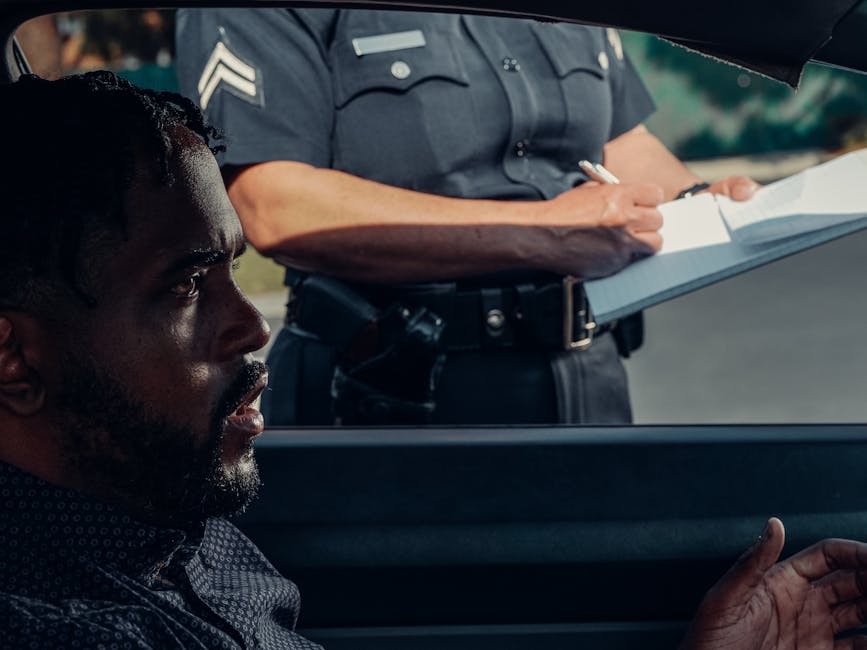
DUI enforcement in Port St. Lucie follows its arterials and its water. The bars and restaurants along US-1 and in the St. Lucie West and Tradition town centers, and the corridors that carry patrons home, feed a steady DUI docket worked by the Port St. Lucie Police Department, by the Florida Highway Patrol on I-95 and Florida's Turnpike, and by the St. Lucie County Sheriff's Office in unincorporated areas. Florida's DUI statute (Fla. Stat. §316.193) sets the standard: driving with normal faculties impaired, or with a blood or breath alcohol level of 0.08 or above (0.04 for a CDL holder in a commercial vehicle, and a 0.02 zero-tolerance administrative standard for drivers under 21). Port St. Lucie adds its own textures. GOLF-CART and low-speed-vehicle DUIs occur inside the city's gated and 55-plus communities, because carts are vehicles under the statute. BOATING under the influence (Fla. Stat. §327.35) is a real category on the St. Lucie River, the GDC canal system, and out toward the Indian River Lagoon, worked by the Florida Fish and Wildlife Conservation Commission and the Sheriff's marine unit. And prescription-medication DUIs recur in a city with a large elderly population, where a lawful medication plus a lane drift becomes an impairment arrest.
Every DUI arrest starts TWO cases, and the faster one is administrative. When you blow 0.08 or above or refuse the breath test, the officer takes your license and issues a citation that acts as a 10-DAY temporary permit. You have exactly TEN DAYS, not fifteen, to request a formal review hearing with the DHSMV's Bureau of Administrative Reviews (an office serving the Treasure Coast) or the administrative suspension becomes automatic: six months for a first-offense unlawful breath level, one YEAR for a first refusal, and eighteen months for a second refusal, which is also a separate misdemeanor. First offenders may instead be eligible to waive the hearing and immediately obtain a business-purpose license by enrolling in DUI school, a choice with real strategic tradeoffs that must be made within the same ten days. The formal hearing preserves a chance to invalidate the suspension and generates early sworn testimony from the officer, but risks a hard suspension period if lost. The criminal case proceeds separately in county court at the Fort Pierce courthouse, while felony DUIs, a third within ten years, DUI with serious bodily injury, and DUI manslaughter, go to circuit court.
Florida's DUI penalties are mandatory-minimum driven and escalate steeply. A first conviction brings fines of $500 to $1,000, up to six months in jail (rarely imposed without aggravators), six to twelve months of probation, 50 hours of community service, a 10-day vehicle immobilization, DUI school, and a six-to-twelve-month license revocation, with a BAC of 0.15 or above or a minor in the vehicle raising fines and adding a MANDATORY ignition interlock. A second conviction adds mandatory interlock and, if within five years, ten days minimum jail and a five-year revocation; a third within ten years is a FELONY with 30 days minimum jail; and DUI manslaughter carries a four-year mandatory-minimum prison term. Beyond the statute, a DUI conviction requires FR-44 insurance (bodily-injury liability at $100,000 / $300,000, roughly triple ordinary premiums for three years), and Florida makes DUI uniquely permanent: a DUI conviction can NEVER be sealed or expunged, never reduced by later good conduct, and never withheld. That permanence is why the plea that matters most is a reduction to RECKLESS DRIVING (Fla. Stat. §316.192, the "wet reckless"), which allows a withhold, preserves sealing eligibility, avoids FR-44, and spares the permanent DUI record.
Defense in the Nineteenth Circuit works the standard pressure points with local knowledge. The STOP must have a lawful basis, and weaving within a single lane, anonymous tips, and checkpoint procedures are all litigable. The FIELD SOBRIETY EXERCISES are administered on camera in most agencies, and age, weight, orthopedic conditions, footwear, and roadside conditions undermine the officer's clues; the city's elderly drivers are particularly ill-served by one-leg stands and walk-and-turns. The BREATH TEST relies on Florida's Intoxilyzer 8000, whose maintenance and calibration records are discoverable and periodically problematic, and the 20-minute observation period is a recurring failure point. BLOOD DRAWS raise warrant requirements and hospital-blood admissibility fights in injury crashes. And REFUSAL cases lack the number, so the State must prove impairment through observation, making the consciousness-of-guilt inference the battleground. Prescription-impairment cases turn on pharmacology experts and the difference between a therapeutic level and actual impairment, defensible territory before Port St. Lucie juries full of people who take the same medications. Bodycam and dashcam footage exists in most arrests, so demand and preserve it immediately.
Non-DUI traffic matters follow Florida's uniform system. Civil infractions, speeding, careless driving, and signal violations, are payable or contestable in county court, where hiring a traffic attorney or electing driving school (once per 12 months, five times in a lifetime) avoids points, and POINTS drive suspensions (12 points in 12 months is a 30-day suspension; 18 in 18 months is three months; 24 in 36 months is a year) and insurance surcharges. DRIVING WHILE LICENSE SUSPENDED (Fla. Stat. §322.34) deserves its own warning, because it is a volume charge where suspensions cascade from unpaid fines and where undocumented residents cannot obtain a license at all; three convictions trigger a five-year HABITUAL TRAFFIC OFFENDER revocation, and each knowing violation is a criminal record. Never just pay a suspended-license ticket; resolving the underlying suspension, through Clerk payment plans and reinstatement, converts many charges to dismissals or civil outcomes. Commercial drivers face career-level stakes on any moving violation, because masking is prohibited and a DUI in a personal vehicle disqualifies a CDL for a year, and out-of-state drivers should remember that Florida reports through the interstate compacts, so a Port St. Lucie conviction follows you home. For hardship licenses after any suspension, the DHSMV Bureau of Administrative Reviews is the venue, and the St. Lucie County Bar referral service is the entry point for counsel.
Need legal documents for your traffic case?
Hardship license requests, hearing prep forms, and correspondence — state-specific.
Sponsored links. Affiliate disclosure · Compare all options