
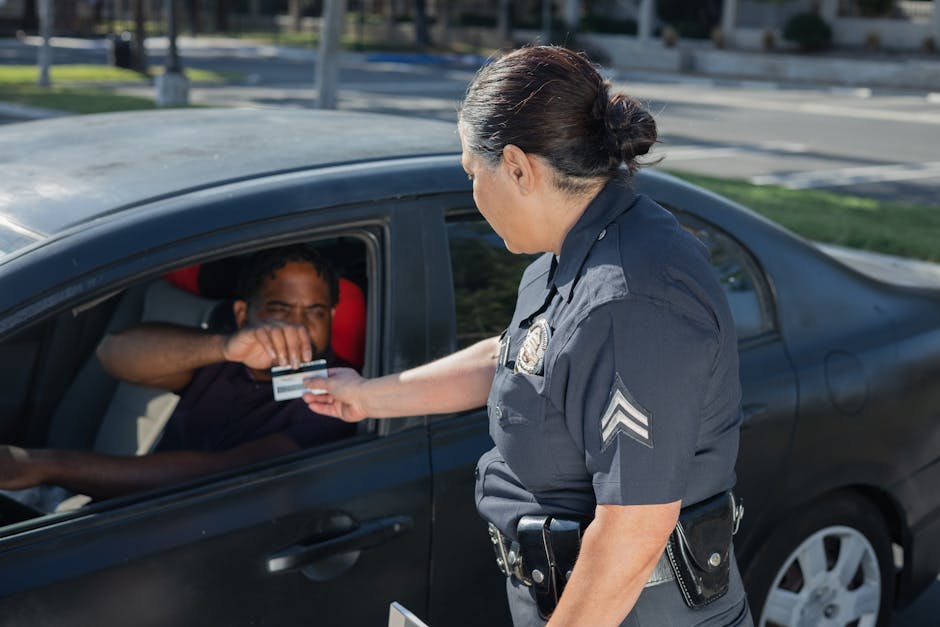
DUI enforcement in Orange County concentrates where its economy does: the downtown Orlando bar districts, the International Drive corridor, the US-192 attraction strip, and I-4 — patrolled by the Orlando Police Department, the Orange County Sheriff's Office (whose jurisdiction covers most of the tourist zone), a dozen municipal agencies, and the Florida Highway Patrol on the interstate and the toll network, with publicized checkpoints and holiday saturation patrols standard. Florida's DUI statute (Fla. Stat. §316.193) prohibits driving — or being in "actual physical control" of a vehicle, which reaches the tourist sleeping it off in a parked rental with the keys in reach — while impaired or with a blood/breath alcohol level of 0.08+ (0.04 for CDL holders; a 0.02 administrative standard under 21). Cases are prosecuted by the Ninth Circuit State Attorney and heard in county criminal court at the Orange County Courthouse (425 N. Orange Ave.; Clerk 407-836-2000), with the administrative license fight running separately through the DHSMV's Orlando Bureau of Administrative Reviews.
The TEN-DAY rule dominates the first week: a breath test of 0.08+ (or a refusal) triggers an immediate DHSMV suspension, with the citation serving as a 10-day temporary permit. Within those ten days the driver must either request a FORMAL REVIEW HEARING — an evidentiary challenge to the suspension where officers can be subpoenaed and cross-examined, doubling as early discovery for the criminal case — or (first offenders) waive review and take an immediate HARDSHIP license ("business purposes only": work, school, medical). Miss the window and the suspension simply runs: six months for a first over-the-limit test, twelve for a first refusal (eighteen for a second refusal, which is also itself a misdemeanor under Florida's implied-consent law). The choice between hearing and waiver is strategic — strong stop or test issues favor the hearing; certainty of driving favors the waiver — and it must be made inside ten days, which is why the first call after an Orange County DUI arrest is to a defense lawyer, not an insurance agent.
Criminal penalties escalate on Florida's statewide ladder: a first conviction brings a $500–$1,000 fine (doubled ranges at 0.15+ BAC or with a minor in the vehicle — which also mandates an ignition interlock), up to six months in jail (nine in the enhanced categories), twelve months' probation with 50 hours of community service, DUI school, a 10-day vehicle impoundment, and license revocation of six months to a year; a second conviction within five years carries mandatory 10 days' jail and a five-year revocation; a third within ten years is a felony with a 30-day mandatory minimum; DUI with serious bodily injury is a third-degree felony, and DUI manslaughter — a recurring tragedy on I-4 and the arterials — is a second-degree felony with a four-year mandatory minimum. Every conviction adds the FR-44 insurance requirement ($100,000/$300,000 bodily-injury limits maintained for three years, at multiplied premiums) — and a DUI conviction can NEVER be sealed or expunged in Florida, which makes conviction-avoidance the entire strategic game. The Ninth Circuit's State Attorney has operated first-offender DUI DIVERSION programming for eligible cases (no crash/injury, clean history, program tiers by BAC) resolving qualifying DUIs as reckless driving with conditions — eligibility criteria evolve, so current screening through defense counsel is essential; where diversion is unavailable, negotiated reductions to reckless driving ("wet reckless") remain realistic outcomes in evidence-limited cases.
Defense in this county works the standard pressure points with local color: the STOP (I-4 weaving cases, anonymous tips, checkpoint operational compliance), FIELD SOBRIETY EXERCISES administered on sloped shoulders and in flip-flops outside attraction parking lots, the INTOXILYZER 8000 breath program (maintenance logs, calibration records, the 20-minute observation period — all discoverable and litigated), BLOOD DRAWS in crash cases (warrant and consent issues), and ACTUAL PHYSICAL CONTROL cases (the parked-car defendant — where the State must prove capability of operation, and where sleeping-it-off facts cut both ways). Language and comprehension issues — implied-consent warnings delivered in English to Spanish-dominant drivers — generate genuine refusal challenges in this workforce. The TOURIST DUI adds a procedural layer: out-of-state licensees face Florida suspension of their Florida driving privilege, which their home state then honors through the Driver License Compact (home-state consequences follow home-state law); retained counsel can handle most first-DUI proceedings with limited or no return travel; and rental-car DUIs add contract consequences (rental agreements void coverage for DUI, exposing the renter to the company's damage claims).
Beyond DUI: Orange County's traffic docket includes the toll-runner problem (the Central Florida Expressway system's toll-by-plate enforcement escalates unpaid tolls into license-suspending misdemeanors for habitual violators — resolvable, but not by ignoring the mail), racing and stunt-driving charges on the arterials (§316.191 — vehicle impoundment and license revocation follow), driving-while-license-suspended cycles (Florida's DWLS statute criminalizes driving on suspensions that often began as unpaid tickets — three DWLS convictions trigger five-year habitual-offender revocations; the escape path runs through reinstatement clinics and hardship licenses), and scooter/micromobility impaired-driving cases downtown. Noncitizen drivers should know a single simple DUI is generally not deportable but is a DACA disqualifier and a discretionary-decision problem, drug-involved DUIs are dangerous, and any plea deserves immigration review; CDL holders face one-year disqualification for a first DUI in any vehicle (lifetime for a second) with no hardship CDL; and rideshare/delivery drivers typically lose platform eligibility on conviction. For help: the Public Defender represents qualifying defendants; the OCBA Lawyer Referral Service (407-422-4537) lists DUI specialists (most offer free consultations and flat fees); and the calendar answer is always the same — the DHSMV ten-day clock is running from the arrest, not from when you get around to it.
Need legal documents for your traffic case?
Hardship license requests, hearing prep forms, and correspondence — state-specific.
Sponsored links. Affiliate disclosure · Compare all options