
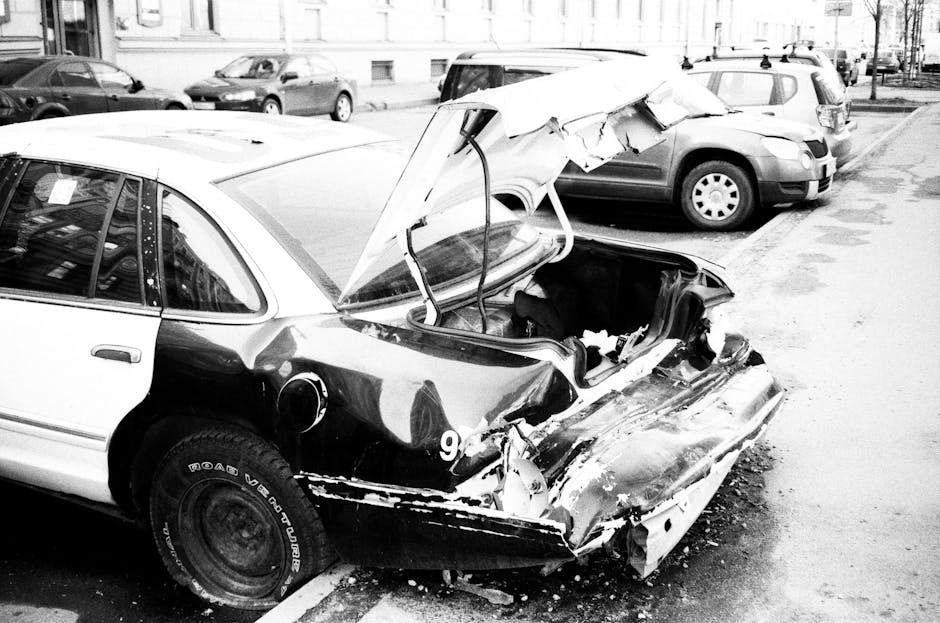
Suffolk County may be the most car-dependent large county in New York — 1.5 million people spread across the eastern two-thirds of Long Island with no subway and limited bus service, funneled onto a handful of overburdened arteries: the LONG ISLAND EXPRESSWAY, SUNRISE HIGHWAY, the SOUTHERN STATE PARKWAY, MONTAUK HIGHWAY, and the WILLIAM FLOYD PARKWAY carrying beach traffic to Smith Point and the Fire Island ferries. Summer transforms the danger map, as Hamptons-bound weekend traffic swells the East End and Montauk Highway becomes a two-lane bottleneck of impatient drivers. Crash litigation runs through the TENTH JUDICIAL DISTRICT: serious injury suits are filed in SUPREME COURT at Riverhead (1 Court Street) or the COHALAN COURT COMPLEX (400 Carleton Avenue, Central Islip), smaller claims up to $15,000 go to SUFFOLK COUNTY DISTRICT COURT, and moving violations are handled by the SUFFOLK COUNTY TRAFFIC AND PARKING VIOLATIONS AGENCY — where, unlike New York City's Traffic Violations Bureau, PLEA BARGAINING IS ALLOWED, meaning a speeding charge can often be negotiated down to a lower-point or no-point violation, with real consequences both for your license and for the civil case that may follow a crash.
Every Suffolk crash case starts with NO-FAULT. New York requires every auto policy to carry $50,000 of BASIC PERSONAL INJURY PROTECTION under Insurance Department Regulation 68, claimed from the insurer of the vehicle you occupied — or, for pedestrians and cyclists, the vehicle that struck you — REGARDLESS OF FAULT. It pays medical bills at fee-schedule rates, 80 percent of lost earnings up to $2,000 per month for up to three years, and up to $25 per day for household help and other reasonable expenses. The deadline is brutal and unforgiving: the NF-2 APPLICATION must reach the carrier within 30 DAYS of the crash, and every treating provider must bill within 45 days of service — late paperwork is the leading cause of denied Suffolk no-fault claims, ahead of any medical dispute. Motorcyclists are excluded from no-fault entirely — a fact that surprises riders on Suffolk's parkway-adjacent routes every season and makes their own health and disability coverage the first line of protection. When carriers cut off benefits after a paper review or an insurer-arranged examination, the fight moves to NO-FAULT ARBITRATION through the American Arbitration Association — a claimant-friendly forum with a $40 filing fee where the insurer pays your attorney's fees if you prevail and overdue benefits accrue INTEREST AT 2 PERCENT PER MONTH, a rate that concentrates carriers' minds remarkably.
No-fault money is reimbursement, not compensation — to sue for pain and suffering you must cross the SERIOUS INJURY THRESHOLD of INSURANCE LAW 5102(d). A FRACTURE is the bright line: break a bone and the threshold is satisfied. The other categories — significant disfigurement, permanent loss or consequential limitation of use, significant limitation of a body function, and the 90/180 CATEGORY (a medically determined injury preventing substantially all usual daily activities for 90 of the first 180 days) — are fought expert-by-expert, which is why gaps in treatment and casual medical follow-up sink more Suffolk threshold cases than bad facts do. Once across the threshold, New York's plaintiff-friendly rules take over: PURE COMPARATIVE NEGLIGENCE under CPLR 1411, a THREE-YEAR statute of limitations, NO DAMAGE CAPS, and VTL 388, which makes the OWNER of a vehicle vicariously liable for any permissive driver's negligence — critical in a county full of borrowed pickups, landscaping crew trucks, and teenagers driving parents' cars. The uninsured-driver problem has a Suffolk-specific shape: MVAIC, the fund that backstops crash victims in the five boroughs, does not serve suburban Suffolk, so your own policy is the safety net — mandatory UNINSURED MOTORIST coverage at $25,000/$50,000 minimums, a police report within 24 HOURS to preserve hit-and-run claims, and SUPPLEMENTARY UNINSURED/UNDERINSURED MOTORIST (SUM) coverage, the single most important line item a Suffolk driver can buy, because it protects your family against the minimally insured driver who causes a catastrophic injury.
Suffolk leads the region in DWI arrests — a distinction earned on dark county roads, the bar corridors along Montauk Highway and Route 110, the Fire Island ferry crowds, and the Hamptons summer circuit — and the county runs an aggressive STOP-DWI enforcement program with saturation patrols and checkpoints. For crash victims, a drunk driver changes the case: New York permits UNCAPPED PUNITIVE DAMAGES against intoxicated defendants, and the DRAM SHOP ACT (General Obligations Law 11-101) reaches the bar or restaurant that unlawfully served a visibly intoxicated patron who then caused the crash — a theory with real teeth in a county of summer beach bars and vineyard tasting rooms. The criminal prosecution, run by District Attorney Ray Tierney's office, proceeds on its own track; the civil case does not wait for it, though a conviction becomes powerful evidence. Public-entity crashes carry their own rules: collisions with county or town vehicles — Suffolk Transit buses, highway department trucks, police cruisers — require the 90-DAY NOTICE OF CLAIM under GML 50-e with suit within one year and 90 days; SNOWPLOWS actually engaged in work are liable only for RECKLESSNESS under VTL 1103(b), and EMERGENCY VEHICLES responding to calls get a similar reckless-disregard standard under VTL 1104, steep hills for any plaintiff. Claims blaming the design or maintenance of state-maintained highways like the LIE or Sunrise Highway go to the COURT OF CLAIMS against New York State, and the Long Island Rail Road — whose grade crossings lace the county — is an MTA railroad with its own claim rules and short deadlines.
The Suffolk playbook is deadline-driven. At the scene: call police and insist on a report, photograph vehicles, plates, road conditions, and injuries, and collect witness names before they drive off. Within 24 hours: report any hit-and-run to police, or your uninsured-motorist claim may be lost. Within 30 days: file the NF-2 with the correct no-fault carrier — and identifying the correct carrier is itself a legal question when you were a passenger, a pedestrian, or in a work vehicle. Then treat consistently: gaps in care are the defense's favorite exhibit in threshold litigation. The most serious victims are transported to STONY BROOK UNIVERSITY HOSPITAL, the county's only Level I trauma center — excellent care, but remember that any later claim against the hospital itself belongs in the Court of Claims within 90 days because it is a SUNY facility, while a claim against the driver who put you there stays on the ordinary three-year track. If an insurer stalls, lowballs, or issues a questionable disclaimer, the NEW YORK DEPARTMENT OF FINANCIAL SERVICES takes consumer complaints at 1-800-342-3736, and New York's timely-disclaimer rule under Insurance Law 3420(d) means a liability carrier that delays disclaiming coverage in an injury case can waive the defense entirely. Crash lawyers work on contingency; NASSAU SUFFOLK LAW SERVICES in Islandia helps low-income residents with related civil fallout, and the SUFFOLK COUNTY BAR ASSOCIATION in Hauppauge runs a lawyer referral service. In a county built around the automobile, the crash case is the most common lawsuit there is — and the ones that succeed are the ones where the 24-hour, 30-day, and 90-day clocks were all beaten.
Need legal documents after an accident?
Demand letters, release forms, and settlement agreements — ready in minutes.
Sponsored links. Affiliate disclosure · Compare all options