
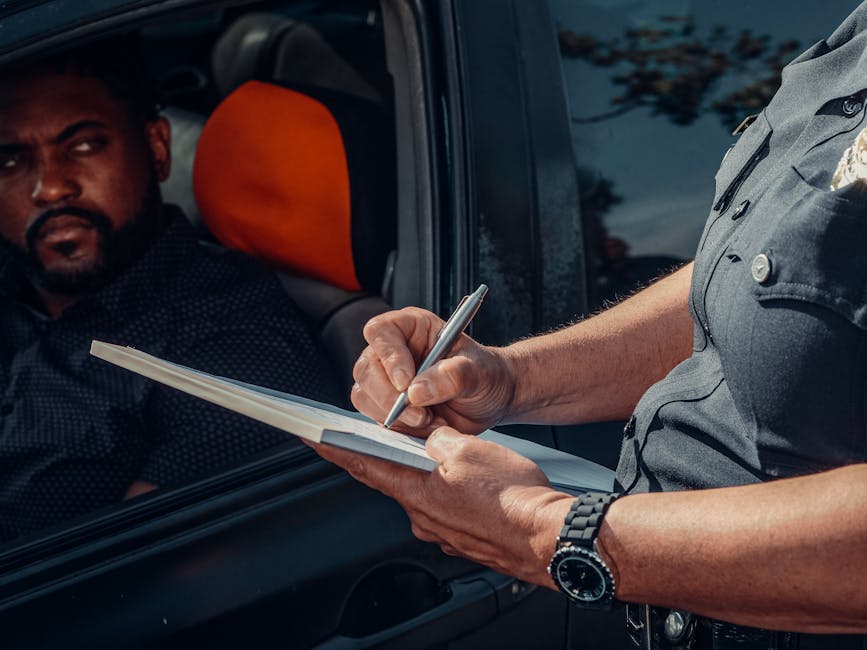
An impaired-driving arrest in Summit County can begin anywhere — the CENTRAL INTERCHANGE where I-76 and I-77 knot together south of downtown Akron, the ROUTE 8 crash corridor running north toward Cuyahoga Falls and the Turnpike, the Ohio Turnpike (I-80) across the county's northern edge, or a snow-slicked lane drift on a February night in Stow or Green. Ohio calls the offense OVI — OPERATING A VEHICLE IMPAIRED, not DUI or DWI — and the venue depends entirely on geography and severity. Misdemeanor OVIs are heard in the county's four municipal courts: AKRON MUNICIPAL COURT for city arrests, and BARBERTON, CUYAHOGA FALLS, and STOW MUNICIPAL COURTS for the western, central, and northeastern suburbs — distinct benches with their own prosecutors and plea cultures, which is why the same facts can end differently in Stow than in Barberton. Felony OVI — a fourth offense within ten years, or an impaired crash that kills or seriously injures — moves to the SUMMIT COUNTY COURT OF COMMON PLEAS at 209 S High Street in downtown Akron. The arresting agencies vary as widely as the roads: the Akron Police Department in the city, more than a dozen suburban departments, and the OHIO STATE HIGHWAY PATROL on the interstates and the Turnpike, while the county's OVI TASK FORCE runs publicized sobriety checkpoints — lawful in Ohio when announced in advance — that cluster around holiday weekends.
The governing statute is R.C. 4511.19, and it works on two tracks. The per se track makes it an offense to operate a vehicle with a blood-alcohol concentration of 0.08 or more, with a HIGH-TIER threshold at 0.17 that doubles the mandatory minimums; the impairment track requires no number at all, only proof that alcohol or drugs appreciably impaired driving. The statute also sets per se limits for controlled substances and marijuana metabolites, which matters more than ever now that recreational marijuana is legal in Ohio. But the criminal charge is only half the case, because Ohio attacks the license first: the ADMINISTRATIVE LICENSE SUSPENSION (ALS) takes effect at the moment of arrest, before any conviction, under the implied-consent law. Fail a chemical test and the ALS runs ninety days for a first offense; REFUSE the test and it runs a full year — a civil penalty that lands even if the criminal case later collapses. The ALS can be appealed, but the window is short: the appeal must be raised within thirty days, at or shortly after the arraignment, and it challenges whether the arrest was reasonable, whether the statutory advice was given, and whether the test or refusal actually occurred. LIMITED DRIVING PRIVILEGES — work, school, medical, court-ordered treatment — become available after a short hard-suspension period, and pairing them with an ignition interlock can unlock far broader driving rights.
Penalties escalate on a TEN-YEAR LOOKBACK. A first OVI carries a mandatory three days in jail OR a three-day DRIVER INTERVENTION PROGRAM — a residential weekend course that most first offenders serve in a hotel conference room rather than a cell — plus a fine starting at several hundred dollars, a license suspension of one to three years, and discretionary RESTRICTED PLATES, the bright-yellow "party plates" that become mandatory on a second offense. A second offense within ten years brings mandatory jail measured in tens of days, vehicle immobilization, and mandatory plates; a third brings more; and a FOURTH OVI WITHIN TEN YEARS IS A FELONY, prosecuted at the Common Pleas courthouse on High Street. A high-tier test at 0.17 or above doubles the minimum jail or program time even for first offenders. Ohio's ANNIE'S LAW reshaped the incentives around interlocks: first offenders who accept an IGNITION INTERLOCK can receive unlimited driving privileges rather than a narrow work-and-school list, which for a county built around commuting — Goodyear's headquarters campus, the Summa and Cleveland Clinic Akron General hospital complexes, the University of Akron, and the warehouse and fulfillment jobs along the interstate belt — is often the difference between keeping a job and losing it. One thing Ohio pointedly does not offer: diversion for OVI. There is no program that makes a first OVI disappear. The negotiated outcomes are pleas to lesser offenses — PHYSICAL CONTROL, a non-moving offense covering an impaired person in a stationary car, or RECKLESS OPERATION — and they must be earned with litigation leverage, not requested as a courtesy.
Summit County adds its own pressure points. Winter is a genuine defense theme: the county catches the fringe of Northeast Ohio's lake-effect belt, and on the ROUTE 8 corridor, the Central Interchange, and the Turnpike, snow and black ice turn lane tracking, abrupt braking, and slow reactions — the classic impaired-driving cues — into ordinary bad-weather driving, so cross-examining a marginal stop on a snow-covered highway is a different exercise than in July. Field sobriety tests administered on an iced shoulder in wind invite challenge, and Ohio law requires officers to administer standardized tests in substantial compliance with national protocols before the results count. Video decides these fights: cruiser dash cameras and body-worn cameras, now standard across Akron and most suburban departments, must be requested fast, before retention cycles erase them. Marijuana legalization has shifted the drugged-driving docket: odor alone no longer means what it once did, metabolite chemistry lags behind actual impairment, and blood and urine timing becomes a genuine battleground. Commercial drivers face a separate reality — Goodyear's freight operations, the Turnpike trucking lanes, and the county's Amazon and warehouse jobs employ thousands of CDL holders, for whom even a first ordinary-car OVI triggers a one-year CDL disqualification that no plea to privileges can soften. And every OVI file shares the municipal courtroom with Ohio's broader traffic code: license-forfeiture suspensions, driving-under-suspension charges that spiral into new criminal cases, and the reinstatement-fee treadmill that keeps low-income Akron drivers cycling through court for years.
The playbook rewards speed and paper. Mark the thirty-day ALS appeal window on day one and raise it at arraignment; even when the appeal loses, it forces early testimony and locks in the officer's story. Request all video immediately — cruiser, body-worn, booking room — and the breath machine's calibration and maintenance records, which Ohio courts allow the defense to probe. Get into the DRIVER INTERVENTION PROGRAM and an alcohol assessment early; judges across the county's municipal courts reward initiative, and completed treatment is the strongest card at sentencing. Take Annie's Law seriously: an interlock with unlimited privileges usually beats a bare suspension with a narrow privilege list. Budget for the aftermath — reinstatement fees, high-risk insurance filings, and, for repeat offenders, plates and immobilization — because the collateral costs routinely exceed the fine. Drivers who cannot afford counsel are entitled to appointed representation wherever jail is possible, including through the SUMMIT COUNTY PUBLIC DEFENDER and municipal-court appointed counsel; the private OVI bar here is deep and courthouse-specific, and local fluency matters because four separate municipal benches produce four plea cultures. Above all, understand what cannot be undone: an OVI conviction can never be sealed in Ohio — it stays on the record permanently, unlike most criminal convictions after the 2023 sealing expansion — so the decision to fight, negotiate to physical control, or plead as charged is a permanent one. In a county whose interchanges never empty and whose winters bite hard, that decision deserves more than a hallway conversation on the morning of court.
Need legal documents for your traffic case?
Hardship license requests, hearing prep forms, and correspondence — state-specific.
Sponsored links. Affiliate disclosure · Compare all options