
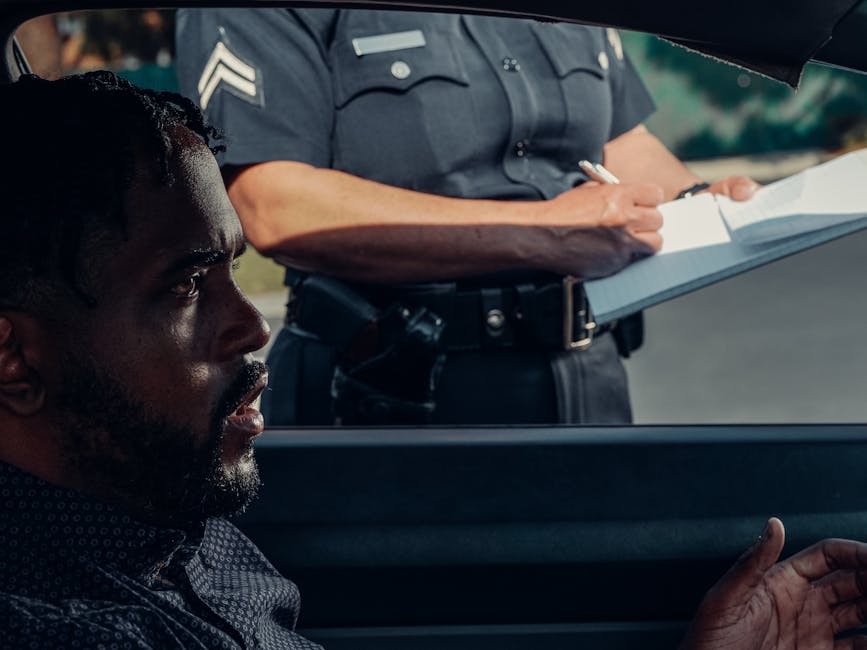
Ohio calls it OVI — OPERATING A VEHICLE IMPAIRED — not DUI or DWI, and Butler County produces the charge in volume. The county straddles the I-75 CORRIDOR between Cincinnati and Dayton, a truck-heavy spine whose Monroe and Middletown interchanges feed a booming logistics economy, while US-127, ROUTE 4 — the Butler County Veterans Highway — and the bar districts of Hamilton, Oxford, and West Chester supply the local arrests. Venue follows the stop: first and second OVI offenses are misdemeanors heard in the Hamilton, Middletown, or Fairfield municipal courts or in one of the county's three AREA COURTS covering Oxford, the central townships, and West Chester. Felony OVI — a fourth offense within ten years, or any OVI after a prior felony OVI — moves to the BUTLER COUNTY COURT OF COMMON PLEAS at 315 High St in Hamilton. The Oxford docket has a rhythm all its own: MIAMI UNIVERSITY football weekends, uptown bar closings, and the school's unofficial drinking holidays bring saturation patrols and predictable clusters of student OVI arrests, while the STATE HIGHWAY PATROL works the interstate and the county's sheriff's deputies and township officers cover the sprawling suburban townships.
The governing statute is R.C. 4511.19, and it creates two independent paths to conviction: driving under the influence as shown by impairment evidence — weaving, odor, slurred speech, field sobriety tests — and the PER SE offense of operating with a blood-alcohol concentration of 0.08 percent or more, no impairment proof required. A test at 0.17 percent or above triggers the HIGH-TIER offense, which doubles the mandatory minimums. The chemical test must be administered within three hours of operation to support the per se charge, which makes timeline evidence matter. The statute reaches drugged driving as well — impairment by marijuana or other drugs is chargeable, and Ohio has long carried per se limits for drug metabolites, a framework under continuing debate since Issue 2 legalized adult marijuana use in December 2023; as of early 2026, legal marijuana plus impaired driving still equals OVI, and the odor of marijuana in a car on the I-75 corridor remains a common springboard for the whole encounter. Separate from the criminal case, the ADMINISTRATIVE LICENSE SUSPENSION (ALS) hits immediately at arrest: an officer whose test you fail takes your license on the spot under the BMV's authority — 90 days for a first test failure — and a refusal under Ohio's implied-consent law brings a full one-year ALS. The ALS can be appealed, but only within 30 days, raised at or by the arraignment in the municipal or area court, and only on narrow grounds: whether the arrest was supported by reasonable grounds, whether a test was properly requested, whether the consequences were properly advised, and whether you actually refused or failed. Miss that window and the administrative suspension stands regardless of what happens to the criminal charge.
Penalties escalate on a ten-year LOOKBACK. A first OVI carries a mandatory three consecutive days in jail or, as most Butler County courts allow for standard first offenses, a three-day DRIVER INTERVENTION PROGRAM — a residential weekend course — plus a fine of 375 to 1,075 dollars, a class-five license suspension of one to three years, six points, and discretionary restricted plates, the yellow-and-red 'party plates.' High-tier first offenses double the minimum to six days and make restricted plates far more likely. A second offense in ten years brings at least ten days in jail, mandatory restricted plates, ignition interlock, and vehicle immobilization; a third brings thirty days and escalating vehicle consequences; a fourth in ten years is a felony with a mandatory prison-eligible minimum, tried in Hamilton. LIMITED DRIVING PRIVILEGES — work, school, medical, court-ordered treatment — are available after a short hard-suspension window, and ANNIE'S LAW gives first offenders a powerful incentive: elect a certified ignition interlock and the court can grant unlimited driving privileges and cut the suspension substantially. Reinstatement adds a BMV fee of roughly 475 dollars, and insurance consequences run for years — for the county's shift workers and I-75 commuters, the license fight is usually worth more than the jail fight.
Butler County's OVI docket carries local patterns worth knowing. Oxford's student cases stack up around game days, and a Miami University student faces the parallel campus-conduct exposure on top of the area-court case. The I-75 corridor generates commercial-driver stops, and the stakes there are brutal: a CDL holder faces a 0.04 limit in a commercial vehicle, a one-year CDL disqualification for a first OVI even in a personal vehicle, and no limited privileges for commercial operation — for the county's warehouse and steel-hauling workforce, an OVI is a career event. Cleveland-Cliffs shift workers and logistics employees in Middletown and Monroe depend on tailored privilege orders that match rotating schedules, and local judges will structure them around employer letters. Refusal cases carry their own trap: a refusal with a prior OVI conviction within twenty years is itself a separate, enhanced charge with doubled mandatory jail, and officers can — and on the interstate corridor do — seek search warrants for blood draws, so refusing rarely means no test. Sobriety checkpoints are publicized in advance under Ohio law and appear seasonally along Route 4, US-127, and the Hamilton and Middletown arterials, and defense counsel scrutinize checkpoint paperwork, stop justifications, field-sobriety administration against national standards, and breath-machine maintenance records, because suppression is where OVI cases are actually won. Beyond OVI, the same courts process the corridor's ordinary traffic docket — speeding through the Monroe construction zones, distracted-driving stops under Ohio's 2023 hands-free enforcement, and suspension-related charges that stack quickly for drivers who never resolved an old fine — and a driving-under-suspension conviction on top of an OVI history is how working people in this county end up unemployable behind the wheel.
What Ohio does not offer matters as much as what it does: there is NO DIVERSION for OVI — Intervention in Lieu of Conviction expressly excludes it, and nothing like other states' first-offender OVI programs exists here. The negotiated outcomes are pleas to PHYSICAL CONTROL — being in the driver's seat with the keys without operating, a first-degree misdemeanor that carries no mandatory suspension and, crucially, no OVI on the record and no enhancement baggage — or to a reduced reckless-operation charge, which carries points but no OVI history. Prosecutors extend those offers when the evidence wobbles: a marginal stop, sloppy field tests, a borderline or late-administered breath result. And an OVI conviction can never be sealed or expunged in Ohio — traffic convictions sit outside even the expanded 2023 sealing law — so the record is permanent, with a ten-year enhancement window and a twenty-year refusal-enhancement window behind it. The playbook: raise the ALS appeal at arraignment within 30 days, petition early for limited privileges or an Annie's Law interlock order, demand video and machine records before any plea, and fight now rather than expecting to clean the record later — because later never comes for an Ohio OVI. Indigent defendants qualify for appointed counsel or the public defender; the LEGAL AID SOCIETY OF SOUTHWEST OHIO's Hamilton office, while not an OVI defense shop, can help with the license-reinstatement and employment fallout that follows.
Need legal documents for your traffic case?
Hardship license requests, hearing prep forms, and correspondence — state-specific.
Sponsored links. Affiliate disclosure · Compare all options