
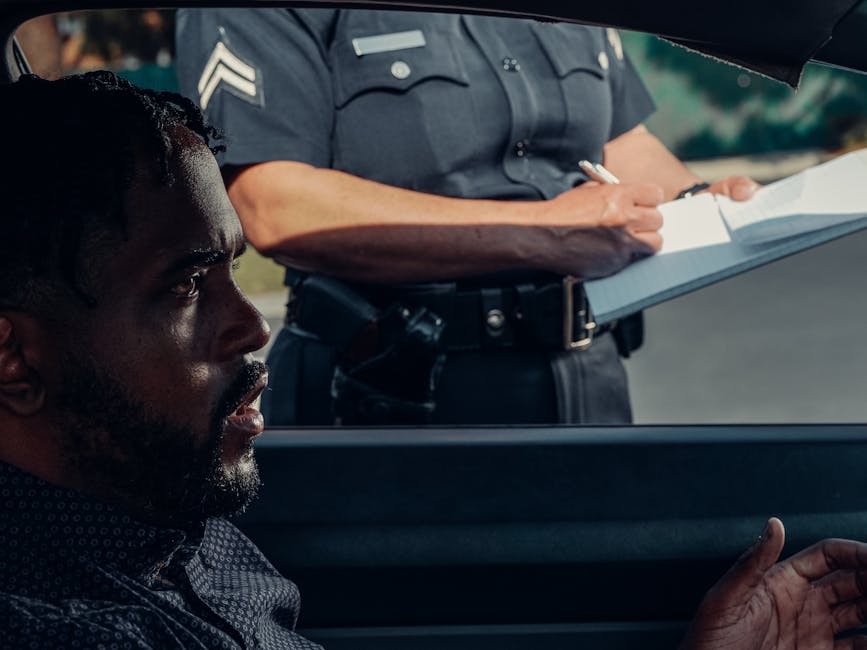
A DUI arrest in the City of San Diego launches two separate cases from a single traffic stop, and the quieter one carries a deadline that ends most unrepresented license fights before they begin. The CRIMINAL case is prosecuted by the SAN DIEGO CITY ATTORNEY for a standard first or second misdemeanor DUI (the County DA takes felony DUIs — a fourth offense within ten years, or any DUI causing injury or death) and heard in SAN DIEGO SUPERIOR COURT at the Central Courthouse or a branch. The ADMINISTRATIVE case runs entirely separately through the California DMV, and it carries the trap: you have just 10 DAYS from the date of arrest to REQUEST A DMV HEARING (the Administrative Per Se hearing) to contest the automatic license suspension. Miss those ten days and the suspension takes effect no matter what happens in court. San Diego DUIs are charged under Vehicle Code 23152(a) and 23152(b) (0.08 percent or higher); SAN DIEGO POLICE investigate surface-street stops while the CHP owns the freeways — the I-5, I-15, I-805, and CA-163 that thread the city — and for the region's many SERVICE MEMBERS, a DUI carries military and security-clearance consequences on top of the civilian penalties.
California's DUI framework is uniform statewide but unforgiving in its mechanics. A first-offense DUI typically brings probation, fines and heavy court assessments, a DUI-education program (the AB 541 three-month program for a first offense, longer for higher BACs or refusals), and a license suspension — with a restricted license, often conditioned on an IGNITION INTERLOCK DEVICE (IID), available to keep you driving. The 'WET RECKLESS' plea under Vehicle Code 23103.5 is the classic negotiated reduction, valuable for borderline-BAC cases and sometimes important to a service member trying to limit the record. California uses a 10-YEAR LOOKBACK, so a prior DUI within ten years sharply escalates penalties, and a fourth within ten years — or any DUI causing injury — becomes a FELONY, with repeat offenders who kill facing WATSON MURDER (second-degree murder) exposure. Refusing the post-arrest chemical test triggers a longer mandatory suspension and is used against you in court.
San Diego's enforcement has features a local driver should understand. SDPD and the CHP run DUI CHECKPOINTS (whose locations must be publicly announced in advance and conducted under neutral criteria — a checkpoint that fails those rules is challengeable) and SATURATION PATROLS, concentrated in the Gaslamp Quarter and downtown nightlife, Pacific Beach and Mission Beach, and along the coastal and freeway corridors, and around major events at Petco Park and the convention center. The military calendar and the beach-and-boating culture drive holiday-weekend surges, and BUI (boating under the influence) on Mission Bay and the harbor is its own enforcement priority. The BORDER adds a wrinkle: cross-border nightlife (returning from Tijuana) produces late-night DUI stops near the San Ysidro approach. And the region's car-dependence makes a suspended license genuinely destabilizing — for military members whose duties require driving, and for civilians commuting across the sprawling county, the IID-restricted license is often the difference between keeping a job and losing one.
Beyond DUI, San Diego enforces a large volume of ordinary TRAFFIC and vehicle matters through the Superior Court's traffic operations, where standard moving violations are infractions carrying fines, DMV points, and insurance consequences rather than jail — though accumulating points triggers a NEGLIGENT OPERATOR license action, and traffic school can keep a point off your record for eligible infractions. More serious driving offenses are crimes, not infractions: DRIVING ON A SUSPENDED LICENSE (Vehicle Code 14601), driving unlicensed, HIT-AND-RUN (Vehicle Code 20002 for property, 20001 for injury), RECKLESS DRIVING (23103), and EXHIBITION OF SPEED / street racing (23109), which San Diego prosecutes given street-racing and sideshow activity in the industrial and border areas. California ended license suspensions imposed purely for unpaid traffic fines, but unpaid citations can still lead to a failure-to-appear charge and a DMV registration hold.
The defense infrastructure is deep. For those who cannot afford counsel, the SAN DIEGO COUNTY PUBLIC DEFENDER represents DUI and criminal-traffic defendants; the private DUI-defense bar is large and includes counsel experienced with military clients. The playbook after a San Diego DUI arrest is time-sensitive: (1) calendar the 10-DAY DMV HEARING DEADLINE immediately and request the hearing (a lawyer can do this and often appears in your place), which both preserves the license fight and forces the DMV to disclose its evidence; (2) do not assume guilt from a breath number — the machine's calibration, the 15-minute observation, rising-BAC, medical conditions, and the legality of the stop are all challengeable; (3) get the police report, any checkpoint operational plan, and body-cam/dash-cam video early; (4) enroll proactively in a DUI program and consider an IID, which judges view favorably; (5) appear at every court date; and (6) if you are a SERVICE MEMBER, tell your lawyer immediately so the civilian outcome can be managed alongside command and clearance consequences, and if you are a NON-CITIZEN, tell your lawyer your status. Acting within the first ten days is the single most important thing an arrested San Diego driver can do.
Need legal documents for your traffic case?
Hardship license requests, hearing prep forms, and correspondence — state-specific.
Sponsored links. Affiliate disclosure · Compare all options