
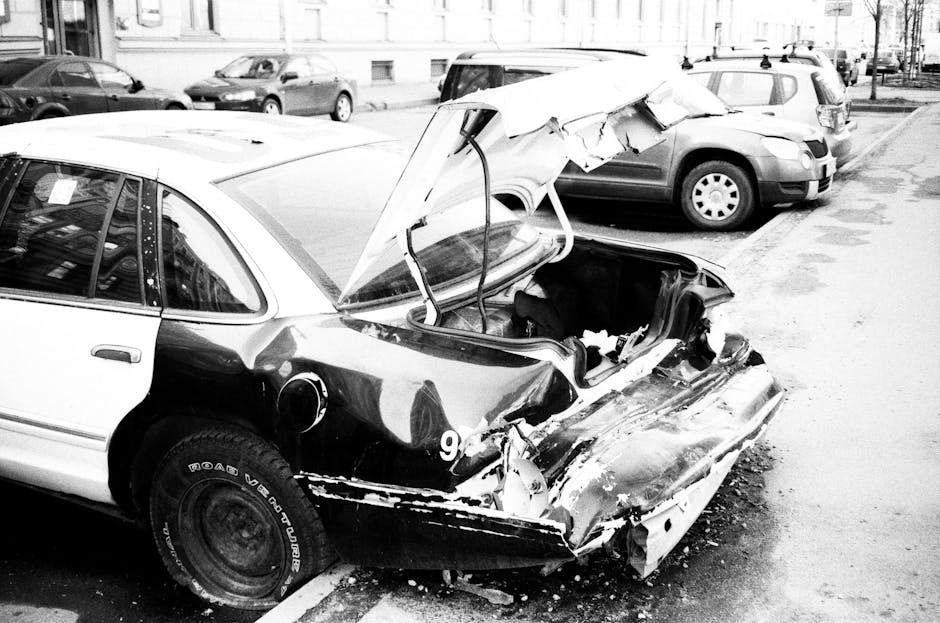
The CITY OF SAN DIEGO threads five freeways and a fast surface grid through 1.4 million residents: Interstate 5 down the coast toward the San Ysidro border, Interstate 15 climbing inland through Mira Mesa and Kearny Mesa, Interstate 805 splitting the central city, Interstate 8 running east from Ocean Beach through Mission Valley, and STATE ROUTE 163 cutting the historic canyon slot from downtown through Balboa Park. Jurisdiction over a crash splits in a way that decides where your report comes from: the SAN DIEGO POLICE DEPARTMENT's traffic units — working out of divisions like Central, Western, Northern, Mid-City, and Southeastern — investigate collisions on city surface streets, while the CALIFORNIA HIGHWAY PATROL owns the freeways, so a pileup on I-805 generates a CHP report and a broadside on El Cajon Boulevard generates an SDPD report, each retrieved through a different channel. A collision that involves an MTS trolley or bus, a city refuse truck, or an SDPD cruiser adds a public-entity defendant and with it the GOVERNMENT CLAIMS ACT six-month claim deadline — to the San Diego City Clerk for city vehicles, to MTS for transit — that blindsides out-of-state insurers and unrepresented drivers alike.
California is a FAULT state — no no-fault, no PIP — and every San Diego claim is built on PURE COMPARATIVE NEGLIGENCE: a driver 40 percent at fault recovers 60 percent of the damages, with no cutoff at any percentage. Minimum liability limits were recently increased to 30/60/15, but a bare-minimum policy still evaporates against a single trauma admission at UC San Diego or Scripps Mercy, which makes UNINSURED and UNDERINSURED MOTORIST (UM/UIM) coverage the most consequential line on a San Diego driver's own policy — doubly so near a border where an at-fault driver may carry only a Mexican policy that does not meet California standards. PROPOSITION 213 adds a harsh wrinkle: a driver who was UNINSURED at the time of the crash is barred from recovering NON-economic damages — pain and suffering — even against a fully at-fault defendant, which is the strongest argument in the state for never letting a California policy lapse. Reporting duties stack fast: an SR-1 to the DMV within 10 DAYS of any crash with injury or significant property damage, prompt notice to your own carrier, and a police-report request while the incident is fresh.
The city's crash patterns are distinctive. The I-5 and I-805 approaches to the San Ysidro Port of Entry — the busiest land crossing in the Western Hemisphere — jam with cross-border commuters, and collisions there routinely involve drivers whose only coverage is a Mexican auto policy, throwing the case back onto the victim's own UM/UIM coverage as the reliable source of recovery. Downtown, the GASLAMP QUARTER, PACIFIC BEACH, and the Mission Valley entertainment corridor concentrate nightlife and rideshare traffic, where impaired-driving and pickup-zone collisions cluster, and rideshare coverage steps from a contingent layer up to a one-million-dollar policy depending on the driver's trip phase. The beach communities add boardwalk and coastal-road bicycle and e-scooter collisions; commercial and DRAYAGE trucks stream from the Tenth Avenue Marine Terminal and the Otay Mesa freight gate onto I-5 and SR-905, bringing FEDERAL MOTOR-CARRIER rules and telematics into play; and the city's VISION ZERO high-injury network — El Cajon Boulevard, University Avenue, and similar arterials through City Heights and Southeastern San Diego — concentrates the severe and fatal pedestrian crashes, where corridor history and camera footage often decide the fault fight.
Where the case is heard and who pays are city-specific questions. Unlimited civil auto cases filed in San Diego are heard downtown at the Central Courthouse and the Hall of Justice, with a mandatory settlement conference before trial and regional venue in Vista, El Cajon, or Chula Vista for crashes elsewhere in the county. A claim against the CITY OF SAN DIEGO — a dangerous intersection, a mistimed signal, a missing sign, a city-fleet collision — must be presented to the City Clerk within six months, and the city fights dangerous-roadway claims through DESIGN IMMUNITY under Government Code 830.6, which it asserts aggressively for its signal timing and lane configurations; a claim against MTS goes to the transit district on the same six-month clock. Medical liens then shape the net: the city's trauma care runs through UC San Diego (a UC facility with its own lien posture) and private systems whose emergency bills are negotiated under Howell principles, so a San Diego settlement is only as good as its lien resolution.
The playbook for a San Diego crash victim is concrete. At the scene: photograph the vehicles, plates, street signs, and signal phases; identify the investigating agency — SDPD traffic division on surface streets, CHP on the freeway — and get the report number; decline to speculate about fault. Within days: see a doctor even if adrenaline masked the symptoms, because gap-free treatment is the spine of case value; file the SR-1; put your own carrier on notice; and open the UM investigation if the other driver fled, was uninsured, or carried only a Mexican or minimum policy. Within weeks: counsel sends preservation letters for commercial telematics, MTS bus and trolley video (overwritten on short cycles), and nearby business and doorbell cameras, and a six-month claim goes out to any public entity in the fault picture. Legal help is dense and multilingual — the LEGAL AID SOCIETY OF SAN DIEGO (877-534-2524) for low-income drivers, the SDCBA Lawyer Referral Service (619-231-0781) for screened referrals — and contingency representation at roughly a third is the norm. California's robust common-law BAD-FAITH doctrine (Comunale, Egan and their line) exposes insurers to tort and punitive damages for unreasonably lowballing a clear-liability claim, leverage an experienced San Diego practitioner uses from the first demand letter.
Need legal documents after an accident?
Demand letters, release forms, and settlement agreements — ready in minutes.
Sponsored links. Affiliate disclosure · Compare all options