
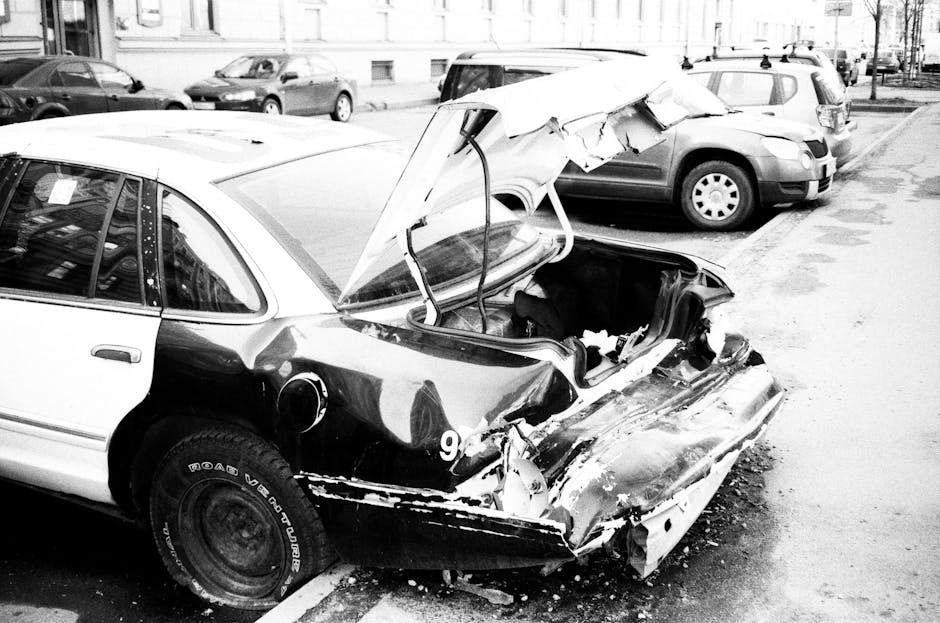
Car crashes inside the CITY OF TAMPA cluster on a handful of notorious arteries. I-275 slices through the middle of the city and vaults across the bay on the Howard Frankland Bridge; I-4 launches from downtown toward Orlando along one of the deadliest interstate corridors in the country; the Lee Roy Selmon Expressway toll road carries commuters over Brandon and the crosstown; and surface roads — Dale Mabry Highway, Kennedy Boulevard, Hillsborough Avenue, Fowler Avenue, Nebraska Avenue, and scenic Bayshore Boulevard — mix heavy local traffic with cyclists and pedestrians. The Tampa Bay region has repeatedly ranked among the most dangerous metros in the nation for people on foot, and Tampa's wide, fast arterials with sparse crossings are a big reason why. City-street collisions are worked by the TAMPA POLICE DEPARTMENT (non-emergency 813-231-6130), the Florida Highway Patrol takes the interstates and the bay bridges, and the Hillsborough County Sheriff covers crashes just past the city line. Injury suits are filed at the Edgecomb Courthouse in the Thirteenth Circuit, and Florida's post-2023 modified comparative-fault rule now zeroes out any driver found more than half at fault.
Florida is a no-fault, PIP state, and that shapes every Tampa car claim. Every driver must carry $10,000 in Personal Injury Protection and $10,000 in Property Damage Liability; PIP pays 80 percent of medical bills and 60 percent of lost wages up to the limit regardless of fault, but only if you seek initial treatment within 14 days of the crash (Fla. Stat. §627.736). Florida does NOT require bodily-injury liability coverage, so an at-fault Tampa driver may have nothing beyond your own PIP to pay for your injuries — which is exactly why uninsured/underinsured motorist coverage on your own policy is the most valuable protection you can buy. To step outside no-fault and sue for pain and suffering and full damages, your injury must cross the serious-injury threshold of Fla. Stat. §627.737: a permanent injury, significant and permanent scarring or disfigurement, significant and permanent loss of an important bodily function, or death. Whether an injury clears that threshold is the central medical fight in most Tampa cases.
The 2023 comparative-fault reform makes the crash investigation decisive, because a driver more than 50 percent at fault recovers nothing, and at 50 percent or below damages are cut by the fault percentage. Tampa's crash mix produces hard-fought allocation disputes — chain-reaction wrecks on I-275 and I-4, merge collisions on the Selmon and Veterans expressways, and T-bones on the six-lane arterials. The evidence that decides fault — the Florida Traffic Crash Report, scene photos, event-data-recorder downloads, dashcam clips, and business, port, or doorbell surveillance — degrades within days, so a prompt preservation letter matters. Commercial trucking is a major category given Port Tampa Bay, the distribution warehouses along the I-4 and I-75 freight corridors, and the fuel tankers rolling off the port: eighteen-wheelers answer to Federal Motor Carrier Safety Administration rules, and the tractor's electronic logging device and control-module data must be preserved immediately because carriers overwrite it fast and dispatch rapid-response teams to serious wrecks within hours. Pedestrian and cyclist crashes on Bayshore, Nebraska, and Fowler are their own severe category, and a struck pedestrian usually starts with the stronger fault position.
Two Tampa-specific angles sharpen the picture. First, impaired driving: Ybor City's Seventh Avenue clubs, the SoHo strip on South Howard, the Channel District, and the downtown Riverwalk pour intoxicated drivers onto the roads, and Florida allows punitive damages against drunk drivers under Fla. Stat. §768.72, with the criminal DUI file (breath results, body-cam) supplying powerful civil evidence — though Florida's narrow dram-shop law (Fla. Stat. §768.125) makes a bar liable only for serving a minor or a person known to be habitually addicted, so Ybor bar liability is harder to establish than in many states. Second, the military and tourism overlay: crashes involving MacDill servicemembers can implicate TRICARE liens, the Servicemembers Civil Relief Act, and the FTCA for on-base incidents, while heavy rideshare traffic around Tampa International Airport, cruise turnarounds, and nightlife triggers the platforms' tiered coverage — up to $1 million when a ride is active — with the driver's app status at impact as the threshold coverage question.
After any Tampa crash, call the police and get the crash report; seek medical evaluation within 14 days to protect your PIP; photograph vehicle positions, damage, plates, and the scene before anything is moved; exchange insurance and identify witnesses who scatter quickly; and notify your own insurer (PIP and UM run through your own policy) but decline recorded statements to the other driver's insurer until you have counsel. Because Florida has no BI mandate, always confirm whether the at-fault driver carried any liability coverage and whether YOU have UM/UIM — that answer usually determines what your case is worth. Property-damage disputes over a total-loss valuation or a diminished-value claim can often be resolved directly with the insurer or through the Florida Department of Financial Services without a lawsuit. Income-qualifying drivers can get free help from Bay Area Legal Services (813-232-1343), and the Hillsborough County Bar Association referral service (813-221-7777) connects residents to accident attorneys who work on contingency with free consultations. The earlier the consultation, the more evidence survives — and in serious cases the combination of expensive trauma care, minimum-limits drivers, and government or federal defendants makes early advice the single most valuable step a Tampa crash victim can take.
Need legal documents after an accident?
Demand letters, release forms, and settlement agreements — ready in minutes.
Sponsored links. Affiliate disclosure · Compare all options