
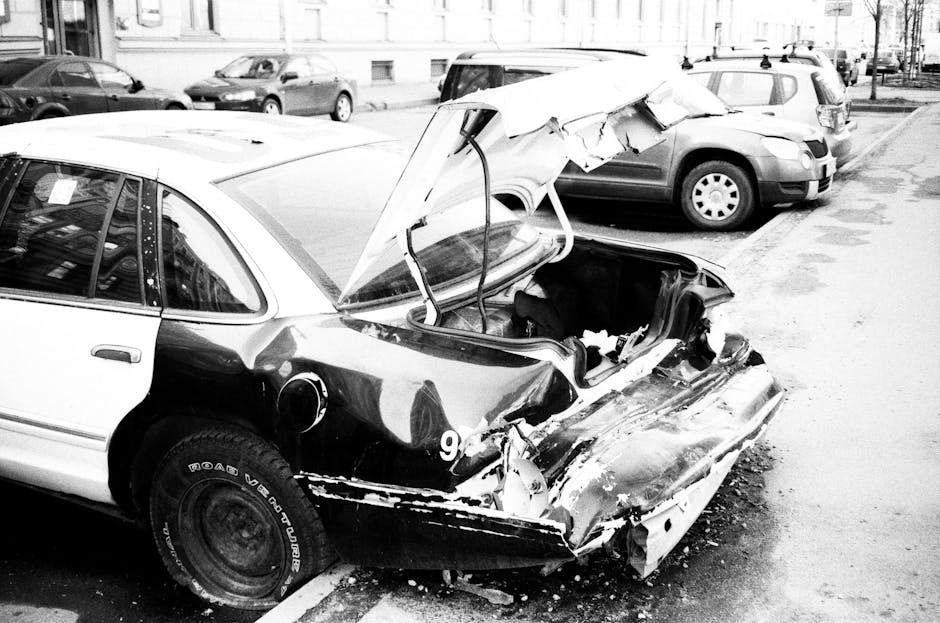
Broward County's roads are among the most congested and dangerous in Florida. I-95 runs the length of the county along the coast and consistently ranks among the deadliest interstates in the nation; I-595 connects the coast to the western suburbs and the airport; I-75 and its Sawgrass Expressway (SR 869) serve the western communities; Florida's Turnpike bisects the county; and heavily traveled surface arteries — US-1 (Federal Highway), University Drive, Sunrise Boulevard, Commercial Boulevard, and Hollywood/Pines Boulevard — carry constant local traffic through a dense grid. Add year-round tourism, seasonal "snowbird" population surges, cruise-passenger traffic to Port Everglades, and a large elderly driving population, and Broward produces one of the highest crash volumes in the state. Crashes inside the cities are worked by municipal police (Fort Lauderdale PD, Hollywood PD, Pembroke Pines PD, Coral Springs PD, and others), unincorporated areas and many contract cities by the Broward Sheriff's Office (954-764-4357 non-emergency), and the interstates by the Florida Highway Patrol; crash reports are available through the Florida Crash Portal and the Clerk of Courts.
Florida is a no-fault auto insurance state, which makes its system unlike most of the country. Every driver must carry $10,000 in Personal Injury Protection (PIP) and $10,000 in Property Damage Liability (PDL); PIP pays 80% of your medical bills and 60% of lost wages up to $10,000 regardless of who caused the crash, but ONLY if you seek initial treatment within 14 days of the accident (Fla. Stat. §627.736). Critically, Florida does NOT require bodily injury (BI) liability coverage — so the at-fault driver may have no coverage to pay for your injuries beyond your own PIP. To step outside the no-fault system and sue the at-fault driver for pain and suffering and full damages, you must meet the "serious injury threshold" of Fla. Stat. §627.737: permanent injury, significant and permanent scarring or disfigurement, significant and permanent loss of an important bodily function, or death. Because BI coverage is optional and roughly one in five Florida drivers is uninsured, uninsured/underinsured motorist (UM/UIM) coverage on your own policy is frequently the most important protection you can carry — and often the only real source of recovery in a serious Broward crash.
The 2023 comparative negligence reform (HB 837) applies to auto cases: for crashes on or after March 24, 2023, a driver found more than 50% at fault recovers nothing, and at 50% or below, damages are reduced by the fault percentage. This makes the fault investigation decisive, and Broward's crash mix produces hard-fought allocation disputes — chain-reaction pileups on I-95 and the Turnpike, left-turn and red-light collisions on the county's busy arterials, and crashes involving tourists and seasonal residents unfamiliar with the roads. Evidence that decides fault — the crash report, scene photos, event data recorder (black box) downloads, dashcam footage, traffic-camera video, and increasingly doorbell and business surveillance — degrades within days, so prompt preservation is essential. Commercial vehicle crashes are a significant category given Port Everglades freight, the airport, and the county's construction boom: eighteen-wheelers, delivery trucks, and cement mixers on I-595, I-75, and US-27 are governed by Federal Motor Carrier Safety Administration rules, and the truck's electronic logging device and control-module data must be preserved immediately with a spoliation letter, because carriers overwrite it quickly and dispatch rapid-response teams to serious crashes.
Two Broward-specific crash categories deserve emphasis. First, ride-share and tourism traffic: Fort Lauderdale, the beach corridor, and the airport/cruise-port area generate heavy Uber and Lyft volume, and rideshare crashes trigger the platforms' tiered coverage — up to $1 million in liability and UM/UIM when a ride is active or a passenger is aboard, reduced contingent coverage when the app is on but unmatched, and the driver's personal policy (which usually excludes commercial use) when the app is off; identifying the driver's app status at the moment of the crash is the threshold coverage question. Second, impaired and distracted driving: Broward's nightlife (Fort Lauderdale Beach, Las Olas, Hollywood, Wilton Manors) and its tourist economy produce steady DUI traffic, and Florida allows punitive damages against drunk drivers (Fla. Stat. §768.72), with the criminal DUI case (blood/breath results, body-cam) providing powerful civil evidence. Florida's dram-shop law is narrow — a vendor is liable only for serving a minor or a person known to be habitually addicted to alcohol (Fla. Stat. §768.125) — so bar liability is harder to establish than in many states. Texting while driving is a primary offense in Florida, and cell-phone records are routinely subpoenaed in distraction cases.
After any Broward County crash: call the police and get the crash report; seek medical evaluation within 14 days to protect your PIP; photograph vehicles, positions, damage, and the scene before clearing; exchange insurance and identify witnesses; and notify your own insurer promptly (PIP and UM claims run through your own policy) but decline recorded statements to the other driver's insurer until you have counsel. Hit-and-run crashes are common on Broward's freeways and beach corridors — report immediately (leaving the scene of a crash with injuries is a felony under Fla. Stat. §316.027), and pursue your UM coverage, which covers phantom and uninsured drivers (with a physical-contact or corroboration requirement in some policies). Because Florida has no BI mandate, always check whether the at-fault driver had any liability coverage and whether YOU have UM/UIM — the answer usually determines what your case is worth. Free and low-cost help: Legal Aid Service of Broward County (954-765-8950; legalaid.org), the Broward County Bar Association referral service (954-764-8040; browardbar.org), and the Florida Bar Lawyer Referral Service (800-342-8011). Car accident representation is contingency-based with free consultations, and the earlier the consultation, the more evidence survives.
Need legal documents after an accident?
Demand letters, release forms, and settlement agreements — ready in minutes.
Sponsored links. Affiliate disclosure · Compare all options