
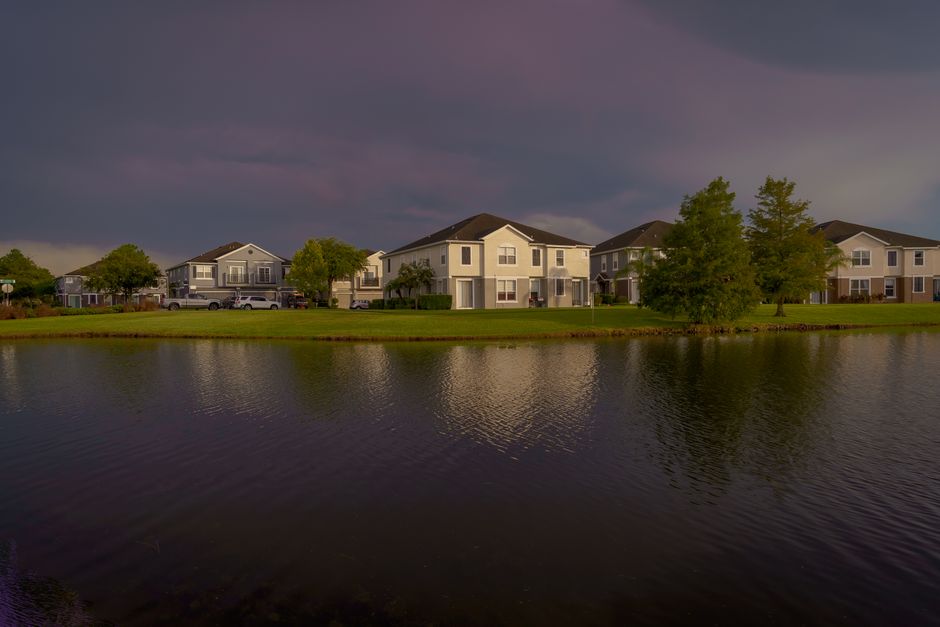
Real estate in the City of Orlando runs the full urban spectrum: downtown high-rise condos and rentals around Lake Eola and the Central Business District, master-planned neighborhoods like Baldwin Park (built on the former Naval Training Center) and Lake Nona in the southeast, established single-family districts such as College Park, Colonialtown, and Delaney Park, and a huge apartment market feeding the service workforce. Most of the city's newer housing is association-governed. Purchases close through title companies or attorneys with title insurance (Central Florida custom favors title agencies, though attorney review is advisable for anything non-standard), the Ninth Judicial Circuit hears the city's property disputes at the Orange County Courthouse (which is also the recording office for deeds and liens through the Comptroller), and the Orange County Property Appraiser administers valuation and exemptions. Since October 2024, Florida sellers must give a FLOOD DISCLOSURE covering flood-damage claims and federal flood assistance — pointed in a city whose 2022 Hurricane Ian experience flooded neighborhoods well outside mapped flood zones.
Homeowners' association law (Fla. Stat. Chapter 720, distinct from the condominium statute, Chapter 718) governs most Orlando homeowners, and its stakes are real: associations enforce recorded covenants over architecture, parking, rentals, and lawns through fines that can become LIENS, and an assessment lien can be FORECLOSED, costing an owner a home over a dispute that began at a few hundred dollars. Recent legislative reforms tightened the field with expanded owner records rights, fining due process (notice and a hearing before an independent committee), education requirements for directors, and licensing accountability for managers. The owner's playbook is consistent: read the governing documents BEFORE buying (Florida gives resale buyers a disclosure package and cancellation window in an HOA community), pay assessments even while disputing (withholding is what creates the lien that becomes the foreclosure), demand violations and fines in writing, and use the required pre-suit mediation for most covenant disputes. CONDO buyers downtown face the post-Surfside structural regime instead: milestone inspections at 30 years (25 within three miles of the coast, which reaches little of inland Orlando, but the reserve-funding mandates apply statewide), structural integrity reserve studies, and the special-assessment wave now repricing older buildings.
Homestead law delivers its three Florida protections to Orlando owners. The TAX EXEMPTION takes up to $50,000 off assessed value and must be filed with the Orange County Property Appraiser by MARCH 1, renewing automatically, with additional exemptions for limited-income seniors, disabled veterans, first responders, and surviving spouses. The SAVE OUR HOMES cap limits assessed-value growth to 3% or CPI, whichever is lower — enormous in a market that has appreciated relentlessly across College Park, Baldwin Park, and Lake Nona — and PORTABILITY lets a mover carry up to $500,000 of accumulated benefit to a new Florida homestead (filed on form DR-501T). The cap RESETS on sale, so a new buyer must budget taxes from the purchase price rather than the seller's capped bill, the classic Central Florida year-two escrow shock. Homestead also carries CONSTITUTIONAL creditor protection against forced sale (unlimited value, capped at a half-acre inside the city) and devise restrictions protecting a spouse and minor children, a genuine estate-planning trap in blended families. Assessment challenges run through the Value Adjustment Board after the August TRIM notice, with the petition due about 25 days later.
Renting and eviction close the residential picture, and Chapter 83 is landlord-friendly and procedurally unforgiving. Nonpayment evictions begin with a 3-day notice, and to contest one a tenant must generally DEPOSIT the disputed rent into the COURT REGISTRY within the five business days to respond, or face a default regardless of any defense — the rule that decides more Orlando eviction cases than the merits. Only the sheriff may execute the final writ; landlord self-help such as a lockout or a utility shutoff is illegal with statutory damages. Habitability duties (Sec. 83.51) run through a written seven-day notice, security-deposit procedures follow Sec. 83.49 (a 30-day claim notice, a 15-day return), and there is NO rent control, because the rent-stabilization measure Orange County voters approved in 2022 was blocked by the courts and is foreclosed by state preemption. Layered on top is the City of Orlando's own tenant-protections ordinance (a Tenant Bill of Rights requiring landlords to notify tenants of their rights, with additional notice for larger rent increases — verify current terms), a genuine local overlay that does not displace the state's registry and notice mechanics. Community Legal Services of Mid-Florida defends qualifying tenants, and the day a 3-day notice arrives is the day to call, not after default.
Foreclosure and short-term rentals round out the topic. Florida foreclosure is JUDICIAL: the lender sues in the Ninth Circuit, the homeowner has 20 days to respond, and the full defense toolkit applies — standing and notice defenses, loss mitigation through HUD-approved counselors (never an upfront-fee rescue company), reinstatement, Chapter 13, or an equity-capturing sale in this appreciated market, with any auction surplus belonging to the former owner (claimed through the court, and beware percentage-fee recovery vultures). SHORT-TERM RENTALS are a three-layer question: Florida preempts local governments from banning vacation rentals or regulating their duration and frequency (for ordinances adopted after 2011), but the City of Orlando's own registration regime limits many residential short-term rentals to owner-occupied home-sharing configurations rather than whole-home party houses, and the famous whole-home vacation-rental subdivisions sit largely in neighboring and resort-zoned areas outside the city. An HOA's recorded covenants can restrict or prohibit rentals outright, and they trump an owner's business plan, so verify the parcel's zoning and covenants before underwriting rental income. For counsel, the OCBA Lawyer Referral Service lists real estate litigation and transaction lawyers, and the Legal Aid Society of the OCBA serves qualifying homeowners and tenants.
Need real estate legal documents?
Leases, purchase agreements, quit-claim deeds — state-specific templates.
Sponsored links. Affiliate disclosure · Compare all options