
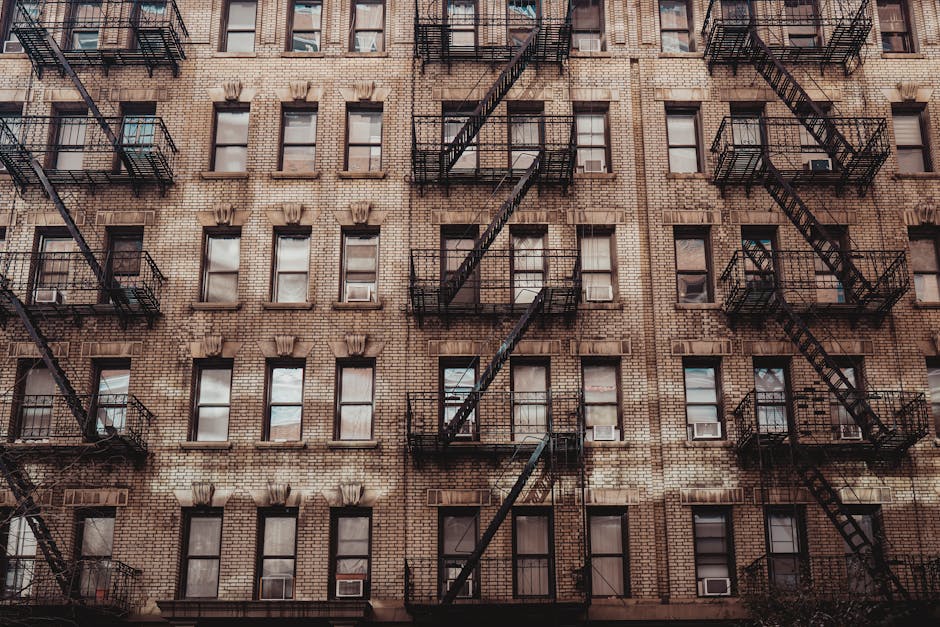
New York City is the most expensive and most heavily litigated real estate market in the country, and its disputes are handled borough by borough. Landlord-tenant cases fill the HOUSING COURT — part of the NYC Civil Court — in each borough, all of which now offer income-eligible tenants a RIGHT TO COUNSEL; the same Civil Court hears general claims to 50,000 dollars and small claims to 10,000. Foreclosures, title fights, partition actions, and co-op and condominium litigation proceed in the SUPREME COURT of the borough, and property passing through estates — a constant source of heirs' disputes in the city's brownstone and row-house neighborhoods — runs through the borough SURROGATE'S COURT. Deeds and mortgages for Manhattan, the Bronx, Brooklyn, and Queens are recorded with the City Register through the online ACRIS system, which any owner can search for free; Staten Island deeds are recorded with the RICHMOND COUNTY CLERK. From rent-stabilized walk-ups in the Bronx and Bushwick to co-op towers on Central Park West and waterfront condos in Long Island City and DUMBO, nearly every housing transaction and dispute in the five boroughs passes through one of these forums.
The state framework starts with the HOUSING STABILITY AND TENANT PROTECTION ACT OF 2019, which rewrote residential landlord-tenant law statewide: security deposits are capped at ONE MONTH'S RENT, nonpayment cases require a 14-DAY WRITTEN RENT DEMAND, month-to-month and expiring tenancies get 30, 60, or 90 days' notice depending on length of occupancy, late fees are capped, and retaliation against complaining tenants is presumed if an eviction follows within a year. Every residential lease carries the non-waivable WARRANTY OF HABITABILITY under REAL PROPERTY LAW 235-B — heat, hot water, and safe conditions are conditions of paying rent, not favors. On the ownership side, New York is a JUDICIAL FORECLOSURE state: a lender must sue in Supreme Court, must first serve the RPAPL 1304 ninety-day pre-foreclosure notice — whose defects continue to win dismissals — and must appear at a MANDATORY SETTLEMENT CONFERENCE where loan modification is explored before litigation proceeds. DEED THEFT was made a crime in 2023, with prosecutors empowered to intervene in related proceedings; SOURCE-OF-INCOME discrimination — refusing vouchers such as Section 8 or CityFHEPS — is illegal statewide; and after the Supreme Court's Tyler v. Hennepin decision, New York reformed tax enforcement so governments must return surplus equity above the tax debt rather than keeping the windfall.
New York City then layers on the strongest tenant infrastructure in America. The city holds rent regulation at massive scale: hundreds of thousands of RENT-STABILIZED apartments across the boroughs whose renewal increases are set annually by the RENT GUIDELINES BOARD, whose registration histories live at the state Division of Housing and Community Renewal (DHCR), and whose tenants hold renewal and succession rights that survive building sales and, since 2019, can no longer be deregulated at high rents. Tenants facing eviction in Housing Court have a RIGHT TO COUNSEL — New York City was the first jurisdiction in the nation to guarantee free lawyers to income-qualified tenants. Housing Court is not only defensive: tenants can bring HP ACTIONS to force repairs, heat, and lead-paint remediation, and the city's TENANT HARASSMENT laws — including rules regulating buyout offers in gentrifying neighborhoods — carry civil penalties. GOOD CAUSE EVICTION applies inside the city, giving many market-rate tenants a defense against arbitrary non-renewal and unreasonable rent hikes, subject to exemptions for small portfolios, newer construction, and very high-rent units. Seniors and disabled tenants can freeze their rent through the SCRIE and DRIE programs (the Senior Citizen and Disability Rent Increase Exemptions). The LOFT LAW still governs legacy live-work conversions, MITCHELL-LAMA developments provide middle-income housing with their own rules, and NYCHA public housing operates under federal rules with its own grievance procedures.
Ownership in the city has a grammar of its own. Co-ops and condominiums dominate — in a co-op the buyer purchases SHARES and a PROPRIETARY LEASE rather than real property, which means BOARD APPROVAL can sink a deal without stated reasons (so long as no unlawful discrimination is involved), FLIP TAXES skim resales, and board decisions enjoy the deference of the BUSINESS JUDGMENT RULE announced in Levandusky v. One Fifth Avenue. Closings are attorney-driven by custom: contracts are negotiated by counsel, due diligence means reading board minutes and building financials, and closing costs include the state and city REAL PROPERTY TRANSFER TAXES and the tiered MANSION TAX, which starts at 1 percent at 1 million dollars and climbs to 3.9 percent above 25 million on New York City purchases. Because co-op shares are personal property, a defaulting co-op borrower faces a UCC ARTICLE 9 sale rather than a judicial foreclosure — faster and less protective, though state law now requires a ninety-day pre-sale notice. Condominium and co-op OFFERING PLANS are reviewed by the New York Attorney General under the MARTIN ACT, and construction-defect battles between new-building boards and their sponsors fill the Supreme Court calendars. Meanwhile the city's generational wealth is under attack from DEED THEFT — forged or deceptively obtained transfers targeting brownstones and row houses in Bedford-Stuyvesant and Harlem, southeast Queens, and the Bronx, and elderly or estate-entangled owners — and the NYC Human Rights Law adds protections the state lacks, including the FAIR CHANCE FOR HOUSING ACT, which limits criminal-history screening by landlords and brokers.
Help in the city is unusually concrete. Tenants sued in Housing Court should appear on the return date and ask for RIGHT TO COUNSEL screening — providers such as the Legal Aid Society and Legal Services NYC staff the courthouses, and Housing Court Answers runs information tables for the unrepresented; emergency rent arrears can sometimes be covered through a ONE-SHOT DEAL from the city's Human Resources Administration. Rent-stabilized tenants should order their DHCR rent history — free, and the foundation of any overcharge claim — and eligible seniors and disabled tenants should apply for SCRIE or DRIE before increases pile up. Homeowners in foreclosure should never ignore the RPAPL 1304 notice, should appear at the settlement conference even without a lawyer, and can find free counsel through court-connected housing-counseling programs. Every owner should enroll in the City Register's free notification program so that any document recorded against their property in ACRIS triggers an alert — the single cheapest defense against deed theft — and suspected fraud belongs simultaneously with the New York Attorney General, the borough District Attorney, and a civil quiet-title action in Supreme Court. Buyers should retain a New York real estate attorney before signing anything, and estate heirs should move promptly in Surrogate's Court, because unresolved heirs' property is exactly what deed thieves hunt.
Need real estate legal documents?
Leases, purchase agreements, quit-claim deeds — state-specific templates.
Sponsored links. Affiliate disclosure · Compare all options