
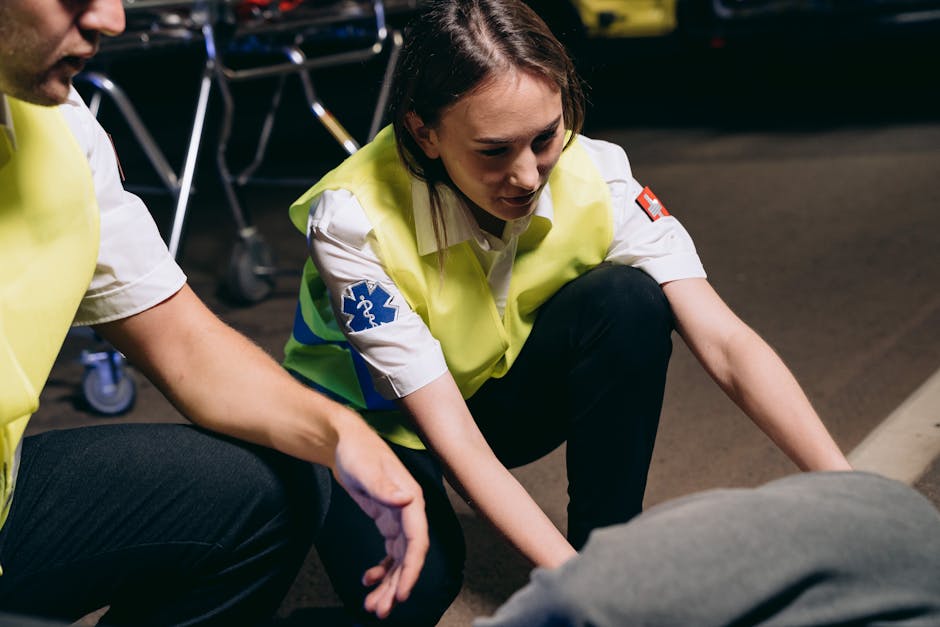
Personal injury claims arising inside the CITY OF STOCKTON — the SAN JOAQUIN COUNTY seat, a city of roughly 320,000 in the northern SAN JOAQUIN VALLEY where the SACRAMENTO-SAN JOAQUIN DELTA meets the valley floor — are litigated in the SAN JOAQUIN COUNTY SUPERIOR COURT. Civil unlimited matters (those seeking more than $35,000) are heard at the STOCKTON COURTHOUSE (180 E. Weber Ave., Stockton CA 95202) in the downtown core, a short walk from the Delta waterfront and the civic center, while limited civil cases move through the same court on a separate track. What distinguishes a city injury case from the surrounding county docket is the density of public defendants packed into Stockton's grid: the CITY OF STOCKTON's own streets, sidewalks, parks, and fleet vehicles; STOCKTON POLICE DEPARTMENT conduct; the SAN JOAQUIN REGIONAL TRANSIT DISTRICT (RTD) bus system; CALTRANS-controlled state routes threading through town; and STOCKTON UNIFIED SCHOOL DISTRICT campuses and buses. California's PURE COMPARATIVE NEGLIGENCE rule from Li v. Yellow Cab Co. (1975) 13 Cal.3d 804 governs every case — an injured pedestrian found 70 percent at fault still recovers 30 percent of the damages, and even a plaintiff 90 percent responsible recovers the remaining tenth. That rule matters constantly here, because a single collision at a CROSSTOWN FREEWAY on-ramp or a warehouse-district intersection can spread blame across a private driver, a defective city road, a Caltrans ramp, and the injured party at once, with each defendant's share apportioned rather than used to bar the claim.
The ordinary deadline is two years from the injury under Code of Civil Procedure §335.1, but the CALIFORNIA GOVERNMENT CLAIMS ACT (Gov. Code §810 et seq.) rewrites that timeline whenever a public entity is involved — and in Stockton one usually is. A claim against the CITY OF STOCKTON — a broken sidewalk downtown, a pothole on a neglected south-side street, a city vehicle, or a hazard in a city park such as Victory Park or Oak Park — must be presented in writing to the STOCKTON CITY CLERK within SIX MONTHS of the injury under Gov. Code §911.2; the city then has 45 days to act, and a written rejection starts a six-month clock to sue under Gov. Code §945.6. A claim tied to SAN JOAQUIN COUNTY (the sheriff, county roads, or SAN JOAQUIN GENERAL HOSPITAL) goes to the County; a claim involving a state highway — Interstate 5, State Route 99, or the State Route 4 CROSSTOWN FREEWAY — routes instead to the GOVERNMENT CLAIMS PROGRAM run by the Department of General Services (DGS), because those roadways belong to Caltrans; and RTD transit injuries go to the district. Miss the six-month window and you must apply for leave to present a late claim under Gov. Code §911.4, a discretionary remedy that is far from guaranteed. Dangerous-condition-of-public-property suits proceed under Gov. Code §835 and demand proof of actual or constructive notice, while the entity routinely raises the DESIGN IMMUNITY defense of Gov. Code §830.6 — so identifying which entity owned and controlled the hazard is the first and most consequential task in a Stockton injury case. The city's 2012 Chapter 9 BANKRUPTCY — Stockton was the largest U.S. city to file at the time — reshaped municipal finances but did not abolish these rules; the six-month presentation requirement still controls every claim against the city.
Stockton's injury patterns track its geography and its people. It is one of the most diverse cities in America with no racial majority — large LATINO, FILIPINO (the historic LITTLE MANILA community and its Delta farm-labor legacy), CAMBODIAN and SOUTHEAST ASIAN (Hmong, Mien, Lao, and Khmer refugee families clustered around Park Village), BLACK (concentrated in south and east Stockton), and SIKH PUNJABI populations, the last anchored by the oldest Sikh temple in the United States, founded on Grant Street in 1912. Pedestrian and cyclist injuries concentrate on wide, fast arterials cutting through historically underinvested neighborhoods — CHARTER WAY (Dr. Martin Luther King Jr. Boulevard), WILSON WAY, EL DORADO STREET, AIRPORT WAY, and the HAMMER LANE and MARCH LANE corridors on the north side. The city's warehouse-and-logistics boom at the I-5/SR-99 crossroads has flooded surface streets and the Crosstown Freeway with heavy TRUCK TRAFFIC feeding Amazon and distribution centers, raising the stakes of every intersection crash. The PORT OF STOCKTON — an inland deepwater port on the Delta channel — adds longshore and industrial injury exposure, and the waterways themselves generate boating, drowning, and levee-path premises questions the drier suburbs rarely see. Stockton's long-documented VIOLENT-CRIME history also drives negligent-security claims against apartment complexes and commercial properties in higher-crime corridors, and the city's visible homelessness produces premises and encampment disputes that intersect with municipal policy.
The institutional map is anchored by a public hospital and a reform-era police department. SAN JOAQUIN GENERAL HOSPITAL (500 W. Hospital Rd., French Camp), just south of the city, is the county's PUBLIC safety-net hospital and a key trauma resource for the region — which means a claim tied to its care, or to a county ambulance, generally implicates SAN JOAQUIN COUNTY as a public entity with its own SIX-MONTH government-claim deadline, a trap for patients who assume a private provider treated them. ST. JOSEPH'S MEDICAL CENTER (1800 N. California St.), a large DIGNITY HEALTH hospital, DAMERON HOSPITAL near the Miracle Mile, and the KAISER PERMANENTE Stockton campus round out the network, and their records become the backbone of any damages case. On the liability side, the STOCKTON POLICE DEPARTMENT — a nationally watched agency that has piloted reform models including OPERATION CEASEFIRE, ADVANCE PEACE, and a city OFFICE OF VIOLENCE PREVENTION — is a recurring defendant in excessive-force and civil-rights claims brought under the TOM BANE CIVIL RIGHTS ACT (Civ. Code §52.1) alongside federal Section 1983 (42 U.S.C. §1983). California's AB 392 tightened the deadly-force standard and SB 1421 and SB 16 opened access to officer-misconduct records, so these cases turn on documentary evidence — body-camera video, dispatch logs, use-of-force reports — that must be preserved early through a written demand before retention schedules purge it.
Wrongful-death standing is limited to spouses, domestic partners, children, and qualifying dependents under Probate Code §377.60, with the survival action under CCP §377.30 requiring a probate appointment through the Superior Court's probate division at the Stockton Courthouse. For low- and moderate-income residents, CALIFORNIA RURAL LEGAL ASSISTANCE (CRLA), which maintains a Stockton office, serves the Delta's farmworker and immigrant communities in Spanish, Hmong, and other languages, and LEGAL SERVICES OF NORTHERN CALIFORNIA also covers San Joaquin County; the SAN JOAQUIN COUNTY BAR ASSOCIATION's lawyer-referral service connects residents with screened injury attorneys for a low-cost initial consultation. Nearly all Stockton personal injury lawyers work on a CONTINGENCY fee — commonly about a third of any pre-litigation recovery, higher if the case goes to trial — so representation costs nothing up front, and for uninsured residents facing interim bills, Medi-Cal enrollment through San Joaquin County Human Services can bridge treatment subject to a lien under Welfare & Institutions Code §14124.72. Because so many city injuries carry an unforgiving six-month government-claim deadline layered on top of the two-year statute, moving fast — and pinning down whether the city, the county, Caltrans, RTD, or a private party is responsible — is the practical difference between a recoverable claim and a barred one, a question often decided within weeks of the injury while camera footage and witness memories are still fresh.
Need legal documents for your claim?
Medical release forms, demand letters, and more — state-specific.
Sponsored links. Affiliate disclosure · Compare all options