
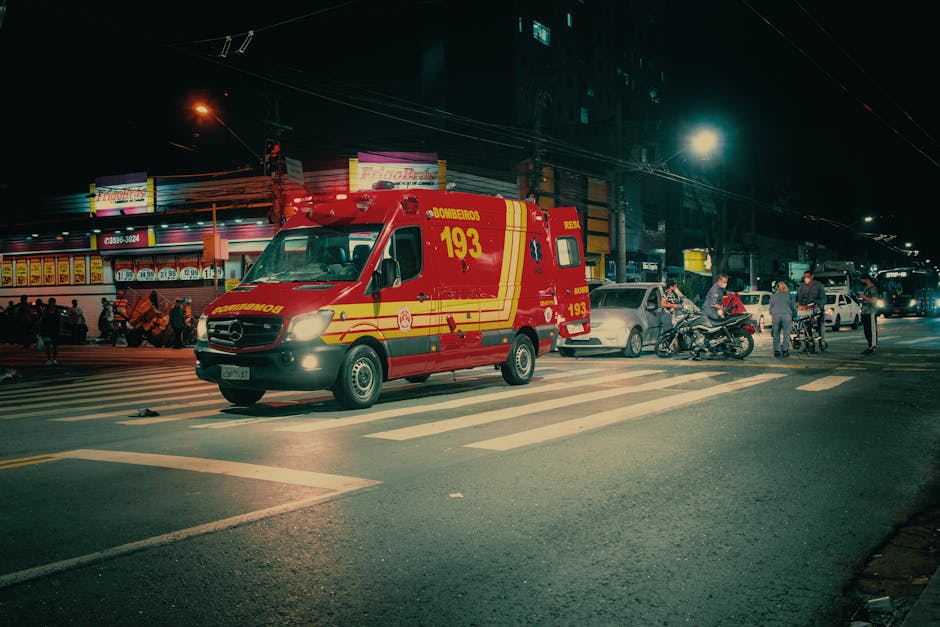
Pinellas County is Florida's most densely populated county: roughly 960,000 residents packed onto a built-out peninsula between Tampa Bay and the Gulf of Mexico, from St. Petersburg — the county's largest city — north through Largo, Pinellas Park, Clearwater (the county seat), Dunedin, and Tarpon Springs, fringed by a chain of barrier-island beach towns (St. Pete Beach, Treasure Island, Madeira Beach, Indian Rocks Beach, Clearwater Beach) that drive a tourism economy of millions of visitors a year. Density is the county's injury-law signature: no other Florida county mixes this much traffic, this many pedestrians and cyclists, this large an elderly population, and this little room between them. Personal injury suits are filed in the SIXTH JUDICIAL CIRCUIT — which covers Pinellas and Pasco counties — through the Pinellas County Clerk of the Circuit Court & Comptroller (727-464-7000; mypinellasclerk.gov), with civil trials at the Pinellas County Courthouse (315 Court St., Clearwater) and proceedings also held at the St. Petersburg Judicial Building (545 First Ave. N.). Circuit civil hears claims over $50,000; county civil handles $8,000–$50,000; small claims covers up to $8,000. Jury pools blend retirees, healthcare and hospitality workers, finance employees from the Raymond James campus, and multigenerational locals from south St. Petersburg's historic Black neighborhoods and Tarpon Springs' Greek community — a mix experienced trial counsel read carefully.
The county's docket starts on its streets. The Tampa Bay region ranks among America's deadliest for pedestrians and cyclists, and Pinellas concentrates the worst of it: US-19 — the county's north–south spine — is routinely listed among the most dangerous roads in the United States for people on foot, and Ulmerton Road, Gulf-to-Bay Boulevard, 34th Street (US-19 Alternate corridors), and the beach-access arterials add to a steady toll. The Fred Marquis Pinellas Trail threads 45+ miles through the county and generates its own crossing and trail-intersection cases; downtown St. Petersburg's growth has added e-scooter and e-bike injuries; and the beach towns' golf-cart culture (street-legal carts circulate in Gulfport, Dunedin, and the barrier islands) produces crashes with genuinely tangled insurance coverage. Premises liability tracks the visitor economy — hotel and vacation-rental falls, pool incidents, negligent security along the Clearwater Beach and John's Pass entertainment corridors — and the county's enormous senior infrastructure (mobile-home and 55+ communities, assisted living, and one of Florida's largest nursing-home concentrations) generates fall, neglect, and elder-abuse claims. Note the legal boundary that matters: NURSING HOME and ALF claims proceed under Chapter 400/429 residents'-rights statutes — different presuit process and deadlines than either ordinary negligence or medical malpractice — and choosing the wrong track can wreck an otherwise strong case.
The statutory framework is Florida's post-2023 regime. For negligence causes accruing on or after March 24, 2023, the statute of limitations is TWO years (Fla. Stat. §95.11, cut from four by HB 837) and modified comparative negligence applies — a plaintiff more than 50% at fault recovers NOTHING (§768.81), a rule defense teams now aim at in every pedestrian case ("dark clothing, mid-block crossing") and every fall case ("open and obvious"). Pre-3/24/2023 accruals and medical-malpractice claims keep the older rules, so precise incident dating matters. Government claims run through §768.28 — written notice to the agency and the Department of Financial Services, a 180-day investigation window, $200,000/$300,000 caps — and the county's public roster is extensive: Pinellas County government, 24 municipalities, the Pinellas County School District, PSTA (the county bus system), the county-operated St. Pete–Clearwater International Airport, Pinellas Suncoast Transit's paratransit contractors, and FDOT for state-road design claims (US-19's crossing design has been the subject of years of safety projects — road-design theories against public defendants carry the caps and notice rules). One structural fact distinguishes Pinellas from several big Florida counties: there is NO public hospital district here — the hospital systems are private — so catastrophic hospital-negligence claims face no sovereign-immunity ceiling; the exception is the federal BAY PINES VA HEALTHCARE SYSTEM, one of the nation's busiest VA medical centers, where claims proceed under the Federal Tort Claims Act.
Serious trauma in Pinellas has a geography of its own: the county has NO Level I trauma center. Adult trauma goes to BAYFRONT HEALTH ST. PETERSBURG (Level II, operated by Orlando Health) or HCA FLORIDA LARGO HOSPITAL (Level II); the region's Level I care and burn center sit across the bay at Tampa General Hospital, and pediatric specialty care concentrates at Johns Hopkins All Children's Hospital in St. Petersburg — meaning catastrophic-injury victims are often transported over the Howard Frankland or Gandy bridges, and their records, providers, and life-care planning span two counties. The county's private hospital landscape — BayCare's Morton Plant (Clearwater), St. Anthony's (St. Pete), and Mease hospitals (Dunedin/Countryside), Orlando Health Bayfront, HCA's facilities, and Johns Hopkins All Children's — matters to injury practice because facility liens, records custodians, and charge-master fights all run through private systems. Practical local patterns: SEASONAL evidence decay (winter-visitor witnesses leave in April — get statements and contacts immediately), hurricane-season interruptions (the 2024 storms scattered residents and businesses from the barrier islands, complicating service, inspection, and valuation in pending cases), and boating and personal-watercraft injuries along the Intracoastal, the sandbars, and John's Pass, where maritime law, rental-operator liability waivers, and FWC investigation reports all intersect.
Legal help in Pinellas County: GULFCOAST LEGAL SERVICES (headquartered in St. Petersburg; 727-821-0726; gulfcoastlegal.org) serves income-qualified residents with civil matters including injury-adjacent problems (benefits, housing, medical debt); the COMMUNITY LAW PROGRAM provides pro bono civil help through the St. Petersburg Bar Foundation; and the county's two bar associations — the ST. PETERSBURG BAR ASSOCIATION (referral service 727-821-5450; stpetebar.com) and the CLEARWATER BAR ASSOCIATION (referral 727-461-4880; clearwaterbar.org) — both run lawyer-referral services that screen injury specialists. Florida injury practice is contingency-based on the Bar's sliding scale (commonly 33⅓% pre-suit), consultations are free, and the fundamentals apply with local force: treat within 14 days after any auto crash to preserve $10,000 in PIP benefits; carry and use UM/UIM coverage (Florida mandates no bodily-injury liability insurance, and this county's density guarantees uninsured defendants); photograph scenes and injuries immediately; send surveillance-preservation letters before hotel, resort, and condo systems overwrite; and — for the county's tourists and snowbirds — connect with LOCAL counsel before leaving Florida, while the evidence, the witnesses, and the treating physicians are all still on the peninsula.
Need legal documents for your claim?
Medical release forms, demand letters, and more — state-specific.
Sponsored links. Affiliate disclosure · Compare all options