
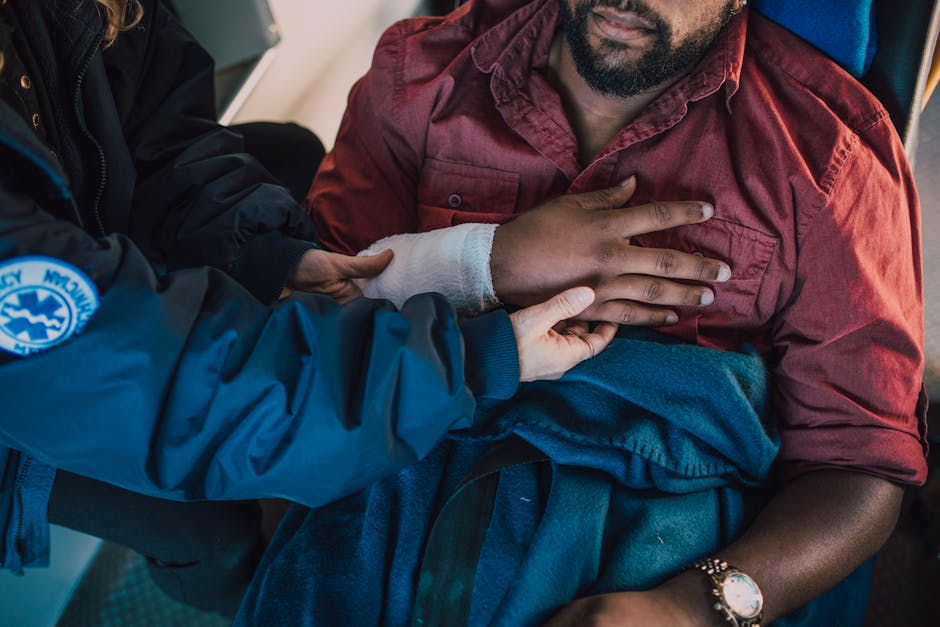
A serious injury in the CITY OF CHAMPAIGN — a university city of roughly 89,000 that shares a street grid, a school district, and a public-transit system with its twin, URBANA — is litigated in the CIRCUIT COURT OF CHAMPAIGN COUNTY, the trial court of the SIXTH JUDICIAL CIRCUIT. The quirk every newcomer learns first is that the CHAMPAIGN COUNTY COURTHOUSE sits not in Champaign but in Urbana, the county seat, at 101 E. Main Street, so a fall on a Champaign sidewalk and a crash on Green Street both file three miles east from where they happened. What gives a Champaign injury case its distinctive shape is the concentration of PUBLIC and STATE defendants packed into a small footprint dominated by the UNIVERSITY OF ILLINOIS URBANA-CHAMPAIGN and its 50,000-plus students. A single stretch of road can be a City of Champaign street, an Urbana street, a University drive patrolled by the UNIVERSITY OF ILLINOIS POLICE, an IDOT state highway, or a Champaign County road within a few blocks. Illinois governs the merits with MODIFIED COMPARATIVE NEGLIGENCE and its 51 PERCENT BAR (735 ILCS 5/2-1116): your damages drop by your share of fault, and a jury that puts you above 50 percent sends you home with nothing — a cliff that makes fault allocation the whole ballgame when a pedestrian, a distracted student driver, and a poorly lit crosswalk all share blame at once.
The governing clock is state law, but which clock runs depends entirely on who hurt you. Most injury suits get TWO YEARS from the injury (735 ILCS 5/13-202), and wrongful death carries its own two-year period from the date of death. The trap that swallows Champaign claims is the LOCAL GOVERNMENTAL AND GOVERNMENTAL EMPLOYEES TORT IMMUNITY ACT (745 ILCS 10), which cuts the deadline to ONE YEAR against local public entities — the City of Champaign, the City of Urbana, Champaign County, the Champaign Park District, Unit 4 and Urbana school districts, the CHAMPAIGN-URBANA PUBLIC HEALTH DISTRICT, and the CHAMPAIGN-URBANA MASS TRANSIT DISTRICT (MTD) — and layers on discretionary immunities plus a WILLFUL AND WANTON standard for police and emergency conduct. A second, sharper trap is the University itself: the University of Illinois is a STATE institution, so an injury on campus, in a University building, involving a University vehicle or University police, or on University-owned WILLARD AIRPORT cannot be filed in the Champaign County Courthouse at all — it belongs to the ILLINOIS COURT OF CLAIMS in Springfield, under its own notice rules and damage limits. The interstates that ring the city — I-57, I-72, and I-74 — and US-45 (Neil Street) are IDOT state highways, so a claim that the roadway itself was defective also routes to the Court of Claims, not the circuit court. Care at the DANVILLE VA (the VA Illiana Health Care System, about 35 miles east) is federal and proceeds under the FEDERAL TORT CLAIMS ACT. Sorting the defendant's identity is the first and most consequential task in any Champaign case, because it fixes whether the deadline is two years, one year, or a Court of Claims notice measured in months.
The city's injury patterns track a college town. Pedestrian and bicycle injuries concentrate in CAMPUSTOWN along Green Street and around the Quad, where dense foot traffic, cyclists, e-scooters, buses, and distracted or unfamiliar drivers — including thousands of out-of-state and international students new to Illinois roads — mix at the same intersections; football and basketball crowds at MEMORIAL STADIUM and the STATE FARM CENTER add game-day surges of traffic and alcohol. The MTD's heavy bus network, one of the busiest per-capita transit systems in the country because it moves the student population, generates bus-pedestrian and bus-passenger claims that carry the one-year public-entity deadline. Away from campus, the I-57/I-74 crossroads and the US-45 corridor push freight and commuter traffic through town, and Champaign's manufacturing base — Flex-N-Gate's auto-parts plants, the Kraft Heinz operation, and warehouse and rail work — produces industrial, forklift, and machinery injuries where workers' compensation is the exclusive remedy against the employer but a third-party negligence suit against an equipment maker or contractor can run in parallel. Central Illinois winters bring the NATURAL ACCUMULATION RULE into nearly every slip-and-fall: Illinois property owners generally owe no duty for natural snow and ice, and the SNOW AND ICE REMOVAL ACT immunizes residential shoveling, leaving only an UNNATURAL ACCUMULATION — refrozen downspout discharge, a plow ridge, a mispitched drain — as a viable winter theory.
The institutional map decides both treatment and targets. Trauma flows to CARLE FOUNDATION HOSPITAL (611 W. Park Street, Urbana), the region's only LEVEL I TRAUMA CENTER and the flagship of the large Carle Health nonprofit system, with OSF HEALTHCARE HEART OF MARY MEDICAL CENTER (1400 W. Park Street, Urbana) and the CHRISTIE CLINIC group rounding out private care; students are often first seen at MCKINLEY HEALTH CENTER on campus, which is a University — and therefore state — facility. Because Illinois imposes NO CAPS on personal injury or wrongful-death damages after LEBRON V. GOTTLIEB MEMORIAL HOSPITAL (2010), a catastrophic Champaign case is limited only by proof and available coverage. Two refinements matter in multi-defendant cases: under 735 ILCS 5/2-1117 a defendant found less than 25 percent at fault is only severally liable for non-economic damages, and elder-neglect claims against the county's nursing homes proceed under the ILLINOIS NURSING HOME CARE ACT (210 ILCS 45) with a private right of action and attorney fees. The Campustown bar strip generates DRAM SHOP exposure under the Liquor Control Act (235 ILCS 5/6-21) — statutory-only, subject to annually indexed damage caps, with its own one-year limitations period — when a tavern overserves a patron who then injures someone.
Getting help in a legal-aid town like this is straightforward, and the timing is what matters. LAND OF LINCOLN LEGAL AID, which serves central and southern Illinois from a Champaign office, handles the civil fallout of an injury for low-income residents; the University's STUDENT LEGAL SERVICE assists enrolled students; and the CHAMPAIGN COUNTY BAR ASSOCIATION operates a referral service, while nearly every injury firm in town works on CONTINGENCY, so ability to pay a retainer is rarely the barrier — time is. The practical playbook: get treated at Carle or OSF and follow through, because gaps in care are the defense's favorite exhibit; photograph the scene, the defect, and the injuries before conditions change; identify every potential defendant's governmental or state status within the first weeks, because the difference between a two-year clock, a one-year Tort Immunity clock, and a Court of Claims notice is the difference between a case and a condolence; and move fast on video, since MTD onboard cameras, University surveillance, and Campustown storefront and bar cameras overwrite in days, and a preservation letter should go out immediately. Be candid with counsel about your own conduct, because under the 51 percent bar comparative fault is not a detail — it is the case.
Need legal documents for your claim?
Medical release forms, demand letters, and more — state-specific.
Sponsored links. Affiliate disclosure · Compare all options