
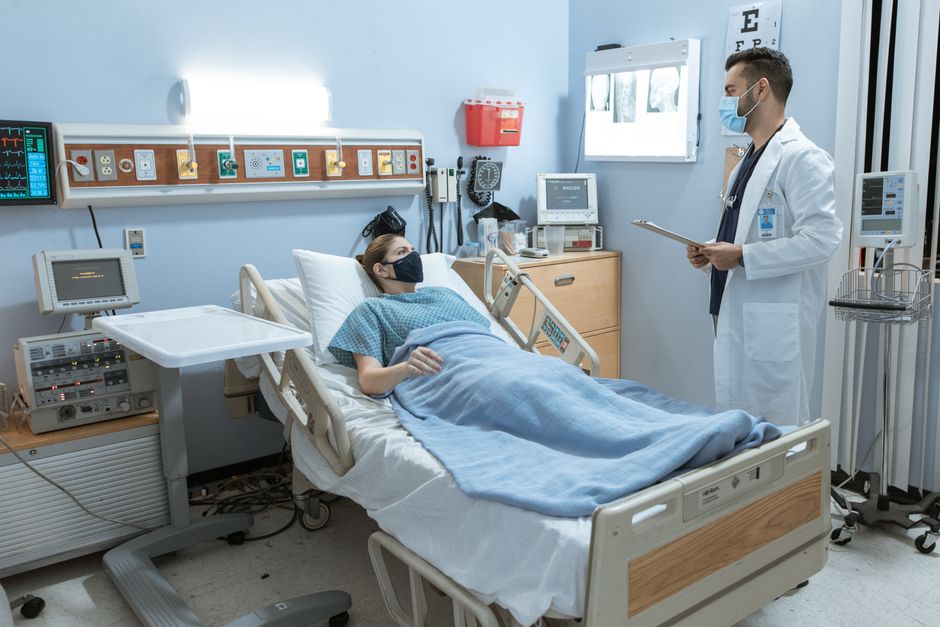
A medical-malpractice case in Joliet is litigated in the LAW DIVISION of the CIRCUIT COURT OF THE TWELFTH JUDICIAL CIRCUIT at the WILL COUNTY COURTHOUSE, 100 W. Jefferson Street, and it usually turns first on WHO OWNS the facility that treated the patient, because ownership fixes the deadline, the forum, and the rules. Joliet's two major hospitals — ASCENSION SAINT JOSEPH JOLIET (333 N. Madison Street), the city's long-standing Catholic hospital, and SILVER CROSS HOSPITAL (1900 Silver Cross Boulevard) just east in New Lenox — are PRIVATE institutions, so a claim against them runs on the ordinary Illinois medical-negligence clock. But other providers in the area answer to entirely different bodies of law: care at a VA outpatient clinic serving the county's veterans is FEDERAL and proceeds under the Federal Tort Claims Act; many of the neighborhood safety-net clinics are FEDERALLY QUALIFIED HEALTH CENTERS whose physicians are deemed federal employees; the WILL COUNTY HEALTH DEPARTMENT and any public-entity provider fall under the one-year Tort Immunity clock; and health care delivered inside STATEVILLE CORRECTIONAL CENTER in neighboring Crest Hill implicates the state and its own tracks. Unlike Cook County, Will County does not run a large public safety-net hospital of its own, so the classic public-hospital trap is less common here — but the federal, state, and public-entity wrinkles still catch patients who assume every provider they saw was a private one.
The substantive framework is Illinois medical-negligence law, and its headline feature is what it does NOT have: caps. In LEBRON V. GOTTLIEB MEMORIAL HOSPITAL (2010), the Illinois Supreme Court struck down the legislature's caps on non-economic damages as an unconstitutional violation of separation of powers, so an Illinois jury may award pain-and-suffering, disfigurement, and loss-of-normal-life damages without a statutory ceiling. The trade-offs are procedural. A malpractice claim must ordinarily be filed within TWO YEARS of the date the patient knew or reasonably should have known of the injury and its wrongful cause, and never more than FOUR YEARS after the negligent act itself — the STATUTE OF REPOSE under 735 ILCS 5/13-212 that extinguishes even undiscovered claims. Children get eight years, but no suit may be brought after the patient's 22nd birthday. Every case must also clear the gate of 735 ILCS 5/2-622: the plaintiff's attorney must attach an affidavit and a written report from a qualified health professional attesting that the claim is reasonable and meritorious — a certificate-of-merit requirement that means a lawyer needs your complete records and a physician reviewer before filing, not after. Illinois applies MODIFIED COMPARATIVE NEGLIGENCE with a 51 percent bar (735 ILCS 5/2-1116) — a plaintiff more than 50 percent at fault recovers nothing — and under 735 ILCS 5/2-1117 a defendant found less than 25 percent at fault is only severally liable for non-economic damages. PUNITIVE damages are barred in Illinois medical-malpractice actions altogether, and wrongful-death claims carry their own two-year clock from the date of death.
The local ownership map, though quieter than Cook County's, still decides cases. A VA outpatient clinic serving Joliet-area veterans is FEDERAL, so a claim there falls under the FEDERAL TORT CLAIMS ACT (FTCA) with a mandatory written administrative claim to the agency within TWO YEARS before any lawsuit and a bench trial in federal court — no jury. Community CLINICS and federally qualified health centers serving the city's Latino and working-class neighborhoods — a network that grew with the migrant and warehouse population — may be FEDERALLY funded and deemed Public Health Service employees, again invoking the FTCA rather than ordinary state rules, a trap for patients who believe they saw a private doctor. The WILL COUNTY HEALTH DEPARTMENT and any public-entity provider are covered by the LOCAL GOVERNMENTAL AND GOVERNMENTAL EMPLOYEES TORT IMMUNITY ACT (745 ILCS 10), whose default limitations period is ONE YEAR — though a later amendment gives patient-care claims against public entities two years with a four-year repose, careful practitioners docket the shorter date. Correctional health at STATEVILLE, a state prison, implicates the State (routing claims to the Illinois Court of Claims) and frequently a parallel federal civil-rights theory for deliberate indifference. Because a single course of treatment can move a patient from a community clinic to a private hospital to a specialist, identifying the correct defendant and its ownership is the threshold investigation in every Joliet case — get it wrong and a meritorious claim can die on a deadline that never should have applied.
The private landscape drives most of the docket. Ascension Saint Joseph Joliet and Silver Cross Hospital anchor the area's obstetrics, surgery, emergency, and specialty care, with the most catastrophic trauma sometimes transferred to Level I centers in the Chicago core, and the case mix follows: BIRTH INJURY and obstetric malpractice, EMERGENCY-DEPARTMENT MISDIAGNOSIS (a heart attack, stroke, or infection sent home), surgical and anesthesia errors, and failure-to-diagnose cancer claims. Because Joliet is a diverse city with large Latino and Black communities, LANGUAGE-ACCESS and informed-consent issues recur — consent obtained without a qualified Spanish interpreter for a limited-English patient can itself support a claim, and delayed presentation among working and uninsured patients feeds delayed-diagnosis cases. NURSING-HOME and long-term-care neglect is its own practice across Will County's many facilities, litigated not as ordinary malpractice but under the ILLINOIS NURSING HOME CARE ACT — one of the strongest resident-rights statutes in the country, granting a private right of action, ATTORNEY FEES to prevailing residents, and voiding waivers signed at admission — which changes the economics of pressure-ulcer, fall, sepsis, and neglect cases and makes the Act, not malpractice law, the workhorse of local elder-care litigation. Regulatory oversight runs through the ILLINOIS DEPARTMENT OF PUBLIC HEALTH for hospitals and nursing homes and the ILLINOIS DEPARTMENT OF FINANCIAL AND PROFESSIONAL REGULATION for physician licenses — neither substitutes for a lawsuit, but both create records.
The practical playbook starts the day you suspect negligence. First, identify the ENTITY — private (two years from discovery, four-year repose), federal (VA or a deemed clinic, administrative claim first), public (Will County Health Department, assume one year), or state (Stateville care, Court of Claims) — because every later step depends on that answer. Second, request the complete chart, imaging, and, in birth cases, fetal-monitoring strips in writing immediately, because the 2-622 physician review cannot begin without records and health systems lawfully take weeks to produce them. Third, understand the economics: virtually the entire malpractice bar works on CONTINGENCY, so consultations cost nothing, but screening is rigorous because 2-622 reports and expert testimony make these the most expensive cases in civil practice; the WILL COUNTY BAR ASSOCIATION's referral service and the Chicago-area malpractice bar can route a strong case to qualified counsel, and PRAIRIE STATE LEGAL SERVICES in Joliet can help low-income patients with records access even where it cannot litigate the case. Fourth, use the regulatory channels in parallel to build a record. As of early 2026 none of the fundamentals have changed — no caps, the 2-622 gate, the federal and public-entity traps — and the rule of thumb in a county without its own public hospital is still the same: assume the shortest deadline that could possibly apply, confirm the ownership of every provider, and see a lawyer months, not days, before the clock runs.
Need legal documents for a malpractice claim?
Medical records requests, demand letters, and HIPAA release forms.
Sponsored links. Affiliate disclosure · Compare all options