
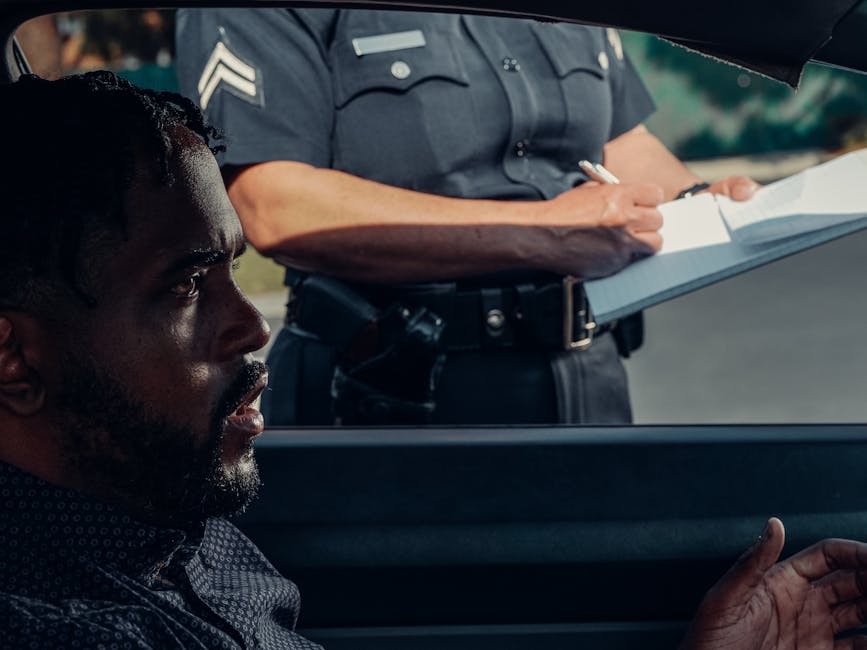
A DUI arrest in Joliet can begin on an I-80 ramp at two in the morning, on Jefferson Street after a night downtown, or leaving one of the two casinos — HARRAH'S JOLIET or HOLLYWOOD CASINO JOLIET — but every case funnels into the CIRCUIT COURT OF THE TWELFTH JUDICIAL CIRCUIT and is heard at the WILL COUNTY COURTHOUSE, 100 W. Jefferson Street in downtown Joliet. Misdemeanor DUIs run through the traffic and misdemeanor call; felony AGGRAVATED DUI charges are heard on the felony side of the same building. The arresting agency varies with the location: the JOLIET POLICE DEPARTMENT inside the city, the WILL COUNTY SHERIFF in the unincorporated county, and the ILLINOIS STATE POLICE on the interstates — I-80, I-55, U.S. 6, Route 53 — and the I-355 tollway, where a large share of the area's late-night stops and crash investigations occur. Illinois also permits publicized ROADSIDE SAFETY CHECKS, and enforcement waves around Memorial Day, the Fourth of July, and the winter holidays are a fixture of local policing, especially near the casinos and along the freight corridors. Whichever agency makes the stop, the file that follows is governed by one statute and one unforgiving administrative clock.
Illinois DUI law lives at 625 ILCS 5/11-501: driving under the influence means a blood-alcohol concentration of 0.08 or more, 5 nanograms of THC in whole blood, any amount of certain controlled substances, or actual impairment by alcohol, drugs, or intoxicating compounds. A first DUI is a CLASS A MISDEMEANOR — up to 364 days in jail and a fine of up to 2,500 dollars — with enhancements layered onto specific facts: a BAC of 0.16 or higher carries mandatory minimum community service and fines even on a first offense, and a child passenger under 16 raises penalties sharply. But the criminal charge is only half the case. The other half is the STATUTORY SUMMARY SUSPENSION, a civil, automatic license suspension that takes effect on the 46TH DAY after notice: SIX MONTHS for a first offender who fails chemical testing, TWELVE MONTHS for a first offender who refuses it, with far longer terms for repeat offenders. The suspension arrives whether or not the criminal case is ever proven — unless the driver files a PETITION TO RESCIND, which should be filed within 30 days of arrest and which entitles the driver to a prompt hearing on issues such as whether the officer had reasonable grounds for the stop, whether proper warnings were given, and whether testing was properly administered. First offenders can drive through the entire suspension with an MDDP — the MONITORING DEVICE DRIVING PERMIT — which requires a BAIID breath-alcohol ignition interlock installed in the vehicle at the driver's expense.
The single most valuable card in an Illinois first-DUI case is COURT SUPERVISION — available ONCE PER LIFETIME for DUI. Supervision means no conviction is entered: the driver completes conditions — a mandatory alcohol and drug evaluation, risk education or treatment matched to the evaluation's classification, a victim impact panel, fines and costs — and the case closes without a conviction, which means no license revocation. The catch list is real: DUI supervision can NEVER be expunged, it counts as a prior if there is ever a second arrest, it does NOT protect a COMMERCIAL DRIVER'S LICENSE — a CDL holder takes a one-year disqualification even with supervision — and other states may treat it as a conviction. An actual DUI CONVICTION triggers a minimum ONE-YEAR REVOCATION of driving privileges — and a revocation, unlike a suspension, never ends automatically — plus high-risk SR-22 insurance for three years and a SECRETARY OF STATE hearing before any reinstatement. AGGRAVATED DUI felonies stack quickly: a third or subsequent DUI, DUI while license-less or uninsured, DUI with a child passenger where injury results, and DUI causing death, which carries 3 to 14 years for a single death and is charged aggressively in the fatal expressway crashes the interstates around Joliet regularly produce.
Joliet adds its own pressure points, and the biggest is the COMMERCIAL DRIVER. This is the largest inland port in North America — the intermodal terminals, the CenterPoint warehouses, and the trucking companies that feed them employ an enormous number of CDL holders, and for them the DUI calculus changes completely, because court supervision does not stop the federal CDL disqualification and a first DUI in ANY vehicle (even a personal car off duty) triggers a one-year loss of the commercial privilege that is the driver's livelihood; a DUI while operating a commercial vehicle, or a second offense, brings a lifetime CDL disqualification. The casinos add their own stream of over-served-patron cases, and a crash involving an intoxicated driver can also expose the establishment under the DRAM SHOP provisions of the Liquor Control Act. Illinois permits PLEA BARGAINING in all of its traffic courts, so outcomes turn heavily on courthouse-specific knowledge of how Twelfth Circuit judges and the Will County State's Attorney handle a given fact pattern. The broader traffic docket has its own criminal tier: AGGRAVATED SPEEDING — 26 to 34 mph over the limit is a Class B misdemeanor and 35 or more a Class A — turns an ordinary interstate ticket into a criminal charge, and the 20 mph school-zone limits and construction WORK-ZONE fine doubling (common in a county perpetually building warehouses and widening roads) feed a steady diet of enhanced-penalty cases. For noncitizens — including holders of the Illinois standard licenses issued regardless of immigration status since 2013 — a simple DUI is rarely deportable by itself, but it is a classic discretionary killer in the Chicago Immigration Court, damaging bond requests, cancellation cases, and naturalization applications. And for everyone, the court-ordered alcohol and drug evaluation quietly determines both the sentencing conditions and the difficulty of ever getting a license back.
The playbook rewards speed. Calendar the summary-suspension date immediately — it begins on the 46th day after notice — and file the petition to rescind within 30 days so the hearing happens while it can still matter; request the squad-car and body-camera video before retention periods cycle it away; complete the alcohol and drug evaluation early and, if treatment is indicated, start it before sentencing, because judges reward initiative; apply for the MDDP so a suspension never means an empty driveway; and think a move ahead on licensing — informal SECRETARY OF STATE hearings serve most first offenders, formal hearings are required after revocations and fatality cases, and both turn on documented treatment, consistent abstinence or controlled-use evidence, and airtight paperwork rather than remorse speeches. Drivers who cannot afford counsel are entitled to the WILL COUNTY PUBLIC DEFENDER in any case where jail is on the table, and the private DUI bar in the Twelfth Circuit is experienced and courthouse-specific. Out-of-state drivers stopped on I-80 should know that an Illinois summary suspension or revocation follows them home through the interstate compact — no state will license around an unresolved Illinois hold — and any CDL holder facing a first DUI should treat the case as a threat to a career, not just a license. In a city whose interstates never empty of freight, the difference between supervision and a conviction — one lifetime card, played once — is usually the difference between a bad year and a changed life.
Need legal documents for your traffic case?
Hardship license requests, hearing prep forms, and correspondence — state-specific.
Sponsored links. Affiliate disclosure · Compare all options