
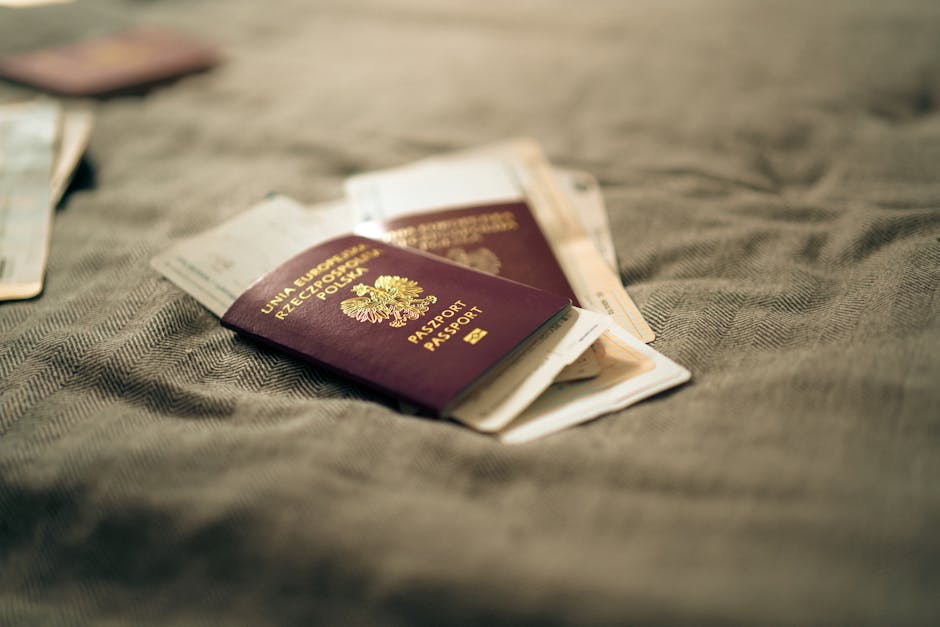
Few cities Erie's size carry an immigration story this large. For its roughly 94,000 residents, Erie is one of Pennsylvania's most significant REFUGEE-RESETTLEMENT hubs — a city that has absorbed Bosnians since the 1990s and, in the decades since, Bhutanese-Nepali, Syrian, Iraqi, Somali, Sudanese, Eritrean, and Congolese families, resettling refugees at a rate far above what a mid-sized Rust Belt city would suggest. The resettlement infrastructure runs through the INTERNATIONAL INSTITUTE OF ERIE (a local affiliate of the U.S. Committee for Refugees and Immigrants, USCRI), the MULTICULTURAL COMMUNITY RESOURCE CENTER (MCRC), CATHOLIC CHARITIES of the Diocese of Erie, and the St. Benedict Education Center, and its footprint is visible in the ethnic groceries and worship spaces east and south of downtown. The structural fact that governs every removal case, though, is an absence: THERE IS NO IMMIGRATION COURT IN ERIE. Removal proceedings for Erie residents are docketed to the PHILADELPHIA IMMIGRATION COURT, an EXECUTIVE OFFICE FOR IMMIGRATION REVIEW (EOIR) tribunal more than 400 miles across the state, so Erie respondents either make the long trip east or appear by internet-based video hearing. Appeals climb to the BOARD OF IMMIGRATION APPEALS (BIA) and then, for Pennsylvania cases, to the UNITED STATES COURT OF APPEALS FOR THE THIRD CIRCUIT. What Erie does hold is the federal courthouse of the WESTERN DISTRICT OF PENNSYLVANIA, ERIE DIVISION at 17 South Park Row, where naturalization oaths are administered and where habeas petitions over prolonged detention and mandamus actions over stalled applications can be filed; adjustment and naturalization interviews are conducted at the nearest USCIS field office serving the region. And the state courthouse matters for the wrong reason — immigration is federal, and no judge at 140 West Sixth Street can grant or strip status, yet a single guilty plea in the Erie County Court of Common Pleas can be the document that ends a lawful permanent resident's American life long before any immigration judge hears the name.
Pennsylvania's overlay lands hard, and it starts at the DMV counter. PENNSYLVANIA DOES NOT ISSUE DRIVER'S LICENSES TO UNDOCUMENTED RESIDENTS — unlike New York and New Jersey next door — so a worker without status who drives to a job risks a citation for driving without a license, and each traffic stop drags immigration exposure along behind it, a chronic problem in a snowbelt city with transit-thin suburbs. On the criminal side the controlling definition is federal: under INA section 101(a)(48)(A) a CONVICTION exists wherever there is a formal judgment of guilt, or a guilty or nolo plea or an admission of sufficient facts, joined with any punishment, penalty, or restraint. State labels do not decide the question, and an offense the Erie County court treats as trivial can be an AGGRAVATED FELONY or a CRIME INVOLVING MORAL TURPITUDE in immigration law. That is why the PENNSYLVANIA CLEAN SLATE ACT — the nation's first automatic record-sealing statute (2018, expanded 2023) — buys no immigration relief: sealing hides a record from employers and landlords but does not unmake a conviction federally, and state rehabilitative expungements are generally ignored by USCIS and EOIR. ACCELERATED REHABILITATIVE DISPOSITION (ARD), Pennsylvania's standard first-offense diversion and the ordinary route for a first DUI, demands special care — it requires no guilty plea and no in-court admission, which is why many argue it falls outside the INA definition, but the analysis is fact-specific and belongs to counsel before acceptance, never after. Note the cannabis trap: Pennsylvania permits MEDICAL MARIJUANA only, marijuana is Schedule I federally, and a state card, a dispensary job, or a candid admission at a USCIS interview can sink a green card or naturalization.
The county's caseload sorts into recognizable Erie patterns, and the biggest one is the maturation of a refugee city. Families resettled a decade or two ago have moved from adjustment of status to NATURALIZATION, which puts the language and civics EXEMPTIONS at the center of the work: the 50/20 and 55/15 rules that let long-resident older applicants test in their own language, and the FORM N-648 medical-disability waiver for those whose conditions prevent them from testing — both heavily used among Erie's Bhutanese-Nepali and Bosnian elders. Newer arrivals and asylum seekers need the front-end work: ASYLUM applications (subject to the one-year filing deadline), refugee and asylee ADJUSTMENT OF STATUS to a green card, DERIVATIVE petitions to reunite families, and Temporary Protected Status and work authorization for nationals of designated countries. Survivors of violence pursue U and T visas and VAWA self-petitions. The universities — GANNON, MERCYHURST, and PENN STATE BEHREND — feed an F-1 and J-1 student stream with OPT and STEM OPT questions, and the health-care employers sponsor foreign-trained clinicians. DETENTION has its own geography: with the Berks family facility closed in 2023, Erie-region detainees are commonly held at the MOSHANNON VALLEY PROCESSING CENTER in Clearfield County — roughly two and a half hours southeast — or transferred to other out-of-state facilities, far from family, counsel, and evidence, with bond hearings conducted by video before Philadelphia-based judges.
The institutional map shows where the leverage — and the danger — sits. Immigration status does NOT switch off Pennsylvania labor rights: the WAGE PAYMENT AND COLLECTION LAW (WPCL) recovers unpaid wages with liquidated damages and attorney fees regardless of status, WORKERS' COMPENSATION covers injured workers, and the PENNSYLVANIA HUMAN RELATIONS ACT (PHRA) reaches national-origin discrimination at employers with four or more workers, with a PHRC filing deadline of 180 days — protections that matter for refugee and immigrant workers staffing Erie's hospitality, food-processing, warehouse, and service jobs. On the criminal side the ERIE COUNTY DISTRICT ATTORNEY prosecutes at 140 West Sixth Street while arraignments run through the magisterial district judges, and under PADILLA v. KENTUCKY defense counsel must advise a non-citizen of a plea's immigration consequences — a protection that works only if the lawyer KNOWS you are not a citizen, and one worth demanding in writing. The refugee-resettlement agencies — the International Institute of Erie/USCRI, the Multicultural Community Resource Center, and Catholic Charities of the Diocese of Erie — provide the intake, interpretation, and case management that connect newcomers to legal help, and the region's ESL and workforce programs (including at the St. Benedict Education Center) round out the support. But intake is not representation: only licensed attorneys and DOJ RECOGNIZED AND ACCREDITED REPRESENTATIVES may give legal advice.
Help exists across this city, and so do predators. NORTHWESTERN LEGAL SERVICES provides civil legal aid countywide, the refugee-resettlement agencies offer accredited-representative immigration services within their programs, and the ERIE COUNTY BAR ASSOCIATION runs a lawyer referral service; EOIR separately publishes a LIST OF PRO BONO LEGAL SERVICE PROVIDERS for the Philadelphia court. Confirm intake and funding as of early 2026; demand outruns supply in a heavy-resettlement city, so move early. AVOID NOTARIOS: in much of the world a notario or notary is a lawyer, while in Pennsylvania a notary public is NOT — and storefronts promising miracles have cost immigrant families their cases and their money. The playbook is unglamorous and it works. NEVER MISS A HEARING, because failure to appear generally produces an IN ABSENTIA removal order far harder to undo than the underlying problem. File FORM EOIR-33 with the court and FORM AR-11 with USCIS within 10 days of any move, since notices mailed to a stale address still count, and verify hearing dates yourself through EOIR's automated system rather than trusting the mail. Obtain CERTIFIED DISPOSITIONS from the ERIE COUNTY CLERK OF COURTS for every arrest before filing with USCIS. Treat every charge — even a summary offense or a first DUI headed for ARD — as an immigration event, never sign an ICE form without counsel, understand that you may decline to open your door absent a judicial warrant, and write your A-NUMBER where a family member can find it, so that a transfer to Moshannon Valley or to New York becomes a phone call instead of a search.
Need immigration-related legal documents?
Affidavits, power of attorney, notarized forms — 150+ document types.
Sponsored links. Affiliate disclosure · Compare all options