
State guide Oklahoma

Starting a dui & traffic violations issue in Oklahoma: license-restoration steps, court-date coordination, and before the file hardens

Direct dui & traffic violations guidance for Oklahoma residents covering license-restoration steps, court-date coordination, pressure points, and when legal review starts changing leverage.

Reviewed January 2026 2 min read Official-source grounded Ver en Espanol En Español
Key Takeaways
  • Oklahoma DUI (tit. 47 § 11-902): TWO prongs — (1) per se BAC ≥0.08% (no proof of impairment required); (2) actual impairment even below 0.08% (officer observations + FSTs + witness testimony); DWI (§ 761) = lesser offense for BAC 0.05-0.079%; CDL holders = 0.04% in CMV; under-21 = 0.02% zero tolerance (tit. 47 § 6-107.4); DUID = no per se drug limit → DRE testimony + actual impairment proof; Intoxilyzer 8000 = Oklahoma breath test instrument
  • Actual Physical Control (APC): Hughes v. State 1994 OK CR 3, 868 P.2d 730 = totality of circumstances (driver's seat + keys accessible + capability to start vehicle); "sleeping it off" in driver's seat with keys in ignition = APC exposure; defensive positioning: backseat + keys in glovebox/on tire + engine off = better defense posture; APC applies on PRIVATE PROPERTY (parking lots/driveways) as well as public roads; Bricktown/Pearl District nightlife = prime APC enforcement area
  • Penalties: 1st DUI (misdemeanor) = up to 1yr county jail + up to $1,000 fine + 180-day revocation + mandatory treatment + victim impact panel; 2nd within 10yr (felony) = 1-5yr prison + 1yr revocation; 3rd within 10yr = 1-10yr prison + 3yr revocation; IID required on reinstatement: 18mo (1st) / 3yr (2nd) / 5yr (3rd) (tit. 47 § 754.1); deferred sentence available for first-time offenders (plea withdrawn + charge dismissed if completed)
  • Implied consent (tit. 47 § 751): refusal = 6mo revocation (first) / 1yr (second within 10yr); blood/breath/urine; Birchfield v. North Dakota applies (warrant needed for warrantless blood draw over refusal); enforcement concentrations: OKC Bricktown (Thunder/Dodgers events); Tulsa Pearl District/BOK Center; OU game days Norman (Cleveland County); OSU game days Stillwater; Route 66 corridor; Oklahoma Panhandle (light enforcement density)
  • McGirt DUI jurisdiction: enrolled tribal member + DUI in Indian Country (Muscogee/Cherokee/Choctaw/Chickasaw/Seminole reservation) = tribal + federal jurisdiction, NOT state; non-Indian DUI in Indian Country = state jurisdiction; Tulsa (inside Muscogee + Cherokee territory) = major enforcement jurisdiction dispute; tribal DUI courts (Cherokee Marshals/Muscogee Lighthorse/Osage Nation Police); cross-deputization agreements = partial gap-fill; defense must analyze Indian Country status of arrest location for enrolled member defendants
Key Numbers — Oklahoma All 50 states →
Filing Deadline 2 years
Fault Rule Modified Comparative
Insurance System At-Fault
Key Statute 12 O.S. § 95
DUI & Traffic Violations guide for Oklahoma
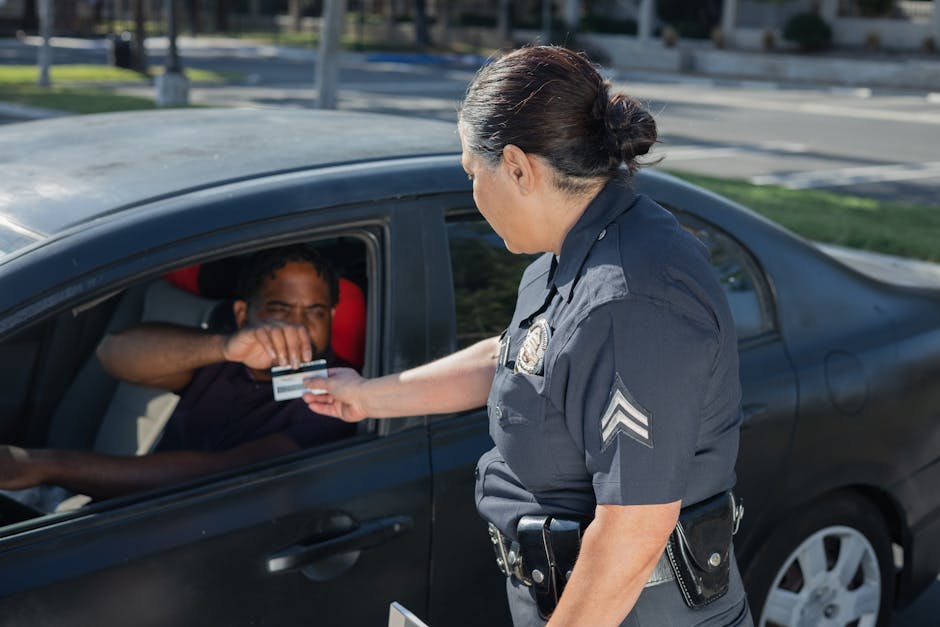
Photo by Kindel Media on Pexels

Oklahoma DUI law begins with a statutory distinction that is subtle but operationally significant: Okla. Stat. tit. 47 § 11-902 creates two parallel paths to criminal liability — the per se offense, which is triggered by a measured blood alcohol concentration of 0.08 percent or above regardless of observable impairment, and the actual impairment offense, which is triggered by operating a motor vehicle "while under the influence of alcohol" to the point that their ability to drive is materially and appreciably impaired, regardless of BAC. A driver who tests 0.07 percent but who was clearly impaired — stumbling, incoherent, exhibiting nystagmus on the horizontal gaze test — can be convicted under the impairment prong of § 11-902 even without a per se BAC violation. Conversely, a driver who tests 0.09 percent but appears entirely sober to the arresting officer is subject to per se prosecution without proof of subjective impairment. In practice, DUI prosecutions in Oklahoma City, Tulsa, and rural Oklahoma counties generally rely on the combination of the chemical test result, field sobriety test performance, and the officer's observations of driving behavior to build a comprehensive case under both prongs of the statute.

Oklahoma's DUI legal landscape has a dimension that distinguishes it from most other states: the "Actual Physical Control" provision of § 11-902, which extends DUI liability to a person who is in actual physical control of a motor vehicle while under the influence — even if the vehicle is not moving and the person is not driving. An Oklahoma driver who pulls into a parking lot, parks the car, and falls asleep in the driver's seat with the keys in the ignition has placed themselves in "actual physical control" of the vehicle under Oklahoma case law interpreting § 11-902. The Oklahoma Supreme Court's interpretation of APC liability has expanded the statute's reach well beyond the typical driving scenario, creating significant exposure for persons who choose — in good faith — to sleep off alcohol intoxication in their vehicles rather than drive home. Defense attorneys in Oklahoma regularly advise clients that the APC provision makes "sleeping it off" in the driver's seat legally risky, and that moving to the backseat — or better yet, calling for transportation — provides a better defense posture.

Sponsored

Need legal documents for your traffic case?

Hardship license requests, hearing prep forms, and correspondence — state-specific.

Sponsored links. Affiliate disclosure · Compare all options