
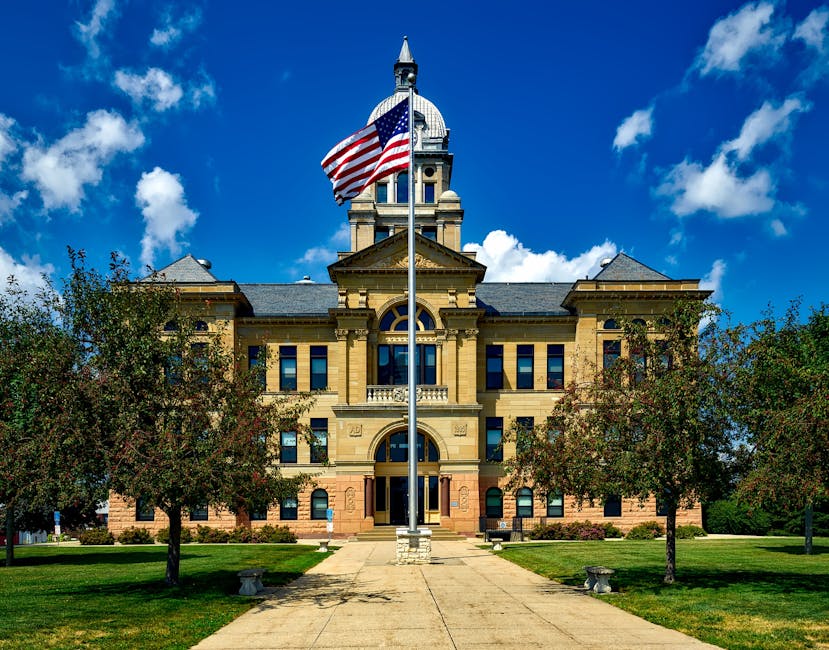
A criminal case in Rockford is prosecuted by the WINNEBAGO COUNTY STATE'S ATTORNEY and defended, for those who cannot afford private counsel, by the WINNEBAGO COUNTY PUBLIC DEFENDER, and it moves through the CIRCUIT COURT OF THE SEVENTEENTH JUDICIAL CIRCUIT — the two-county circuit (Winnebago and Boone) whose criminal calls run at the WINNEBAGO COUNTY COURTHOUSE and JUSTICE CENTER on West State Street in downtown Rockford, beside the WINNEBAGO COUNTY JAIL that the Sheriff operates. Arrests are made by the ROCKFORD POLICE DEPARTMENT inside the city, the WINNEBAGO COUNTY SHERIFF in the unincorporated county, and the ILLINOIS STATE POLICE on the interstates. Federal prosecutions — firearms cases adopted by the U.S. Attorney, drug-trafficking, fraud — are not sent to Chicago; the Western Division of the U.S. District Court for the Northern District of Illinois sits in Rockford at the STANLEY J. ROSZKOWSKI UNITED STATES COURTHOUSE, 327 S. Church Street. Rockford has carried a heavy violent-crime reputation for years, which drives an aggressive local enforcement posture, a busy felony docket, and — on the civil side — a steady stream of negligent-security premises claims; on the criminal side it means gun, drug, and violent-offense files dominate the courtrooms, and the quality and speed of the defense in the first hours often decide the case.
Illinois rewrote the front end of its criminal process with the SAFE-T ACT and its PRETRIAL FAIRNESS ACT provisions: on September 18, 2023, Illinois became the first state in the country to abolish cash bail entirely. Release before trial is now the legal default — nobody sits in the Winnebago County Jail because they cannot afford a bond figure — and detention is possible only when the State's Attorney files a verified petition on a qualifying offense and a judge finds, after a prompt DETENTION HEARING, clear and convincing evidence that the defendant poses a real and present threat to a person or the community or a high likelihood of willful flight that no conditions can manage. Qualifying offenses run to forcible felonies, many gun charges, domestic battery, and violations of orders of protection, and the hearing typically happens within a day or two of arrest — which makes the first 48 hours the most consequential stretch of the case. The same statute mandated police BODY CAMERAS statewide, and the Rockford Police Department's footage now supplies the raw material for suppression and impeachment litigation in nearly every case. Illinois also layers firearm regulation heavily: a FOID CARD is required merely to possess a gun, a CONCEALED CARRY LICENSE (CCL) to carry one, and out-of-state carry permits are NOT honored — a trap that matters enormously in a city fifteen miles from the WISCONSIN LINE, because a driver lawfully armed under Wisconsin law who crosses into Rockford with a loaded gun can be charged with felony aggravated UNLAWFUL USE OF A WEAPON (UUW). Cannabis is legal under the CANNABIS REGULATION AND TAX ACT — adults may possess 30 grams of flower — but cannabis-plus-gun combinations and driving with 5 nanograms of THC still generate charges, and on self-defense Illinois imposes NO DUTY TO RETREAT under 720 ILCS 5/7-1.
Rockford's local patterns give that state framework its texture. GUN POSSESSION is the signature felony here as across Illinois — UUW and aggravated UUW files fill the Winnebago County criminal courtrooms — and most of those cases rise or fall on the legality of the stop and the search rather than on whether a gun existed, which is why body-camera footage and the basis for the traffic stop or street encounter are the main battleground. DRUG cases run heavily too, from cannabis-DUI and possession-with-intent files to the fentanyl-driven overdose caseload that has hit the Rock River Valley hard, sometimes charged as drug-induced homicide. The Wisconsin border shapes the docket in a way Chicago never sees: cross-border traffic on I-90 and US-20 produces out-of-state defendants, interstate drug corridors, and the recurring lawful-in-Wisconsin, felony-in-Illinois firearm scenario. Two institutions shape charging from the first hour: the Winnebago County State's Attorney screens the most serious charges before approving them for filing, and PRETRIAL SERVICES and ELECTRONIC MONITORING through the circuit and the Sheriff form the contested middle ground between release and jail under the Pretrial Fairness Act. Rockford's long history of high violent crime means the county also carries wrongful-conviction and civil-rights exposure — reversed-conviction damages suits are litigated in the Roszkowski federal courthouse — and it makes the reliability of eyewitness identifications and interrogations a live issue in serious cases.
The institutional map matters at every stage. The WINNEBAGO COUNTY PUBLIC DEFENDER represents the majority of felony defendants; asking for appointed counsel at the very first appearance costs nothing and preserves everything, and saying nothing to police beyond identifying yourself is the single most valuable thing a person can do in the station house. Neighborhood geography and demographics shape the caseload: Rockford's Black community, its Latino population of roughly one in six residents, and its Laotian and Southeast Asian communities all interact with an enforcement system where language access and fair treatment are recurring concerns. For NONCITIZENS the overlay is unforgiving: the ILLINOIS TRUST ACT bars the Rockford Police Department and the Winnebago County Sheriff from honoring ICE detainers without a judicial warrant, but a criminal disposition still follows a defendant into the CHICAGO IMMIGRATION COURT at 55 E. Monroe (the EOIR venue that serves Rockford and all of downstate), and federal immigration law can treat outcomes Illinois calls non-convictions — including COURT SUPERVISION entered on a guilty plea — as convictions. Every noncitizen defendant is entitled to accurate PADILLA advice about immigration consequences before pleading, and in a Rockford case that advice can matter more than the sentence itself.
Illinois pairs its criminal code with some of the nation's broadest RECORDS RELIEF, and Rockford residents should use it. Arrests that end without conviction are EXPUNGEABLE; most misdemeanor and felony convictions become SEALABLE after a waiting period, generally three years after the sentence ends; cannabis offenses have been expunged in automatic waves under the 2020 legalization law; and COURT SUPERVISION — a disposition that avoids a conviction for many misdemeanors — keeps a first-time defendant's record clean if completed. The exclusions matter — DUI, domestic battery, and registrable sex offenses generally cannot be sealed — but the three-year sealing rule for ordinary felonies is among the most generous in the nation, and petitions are filed with the Circuit Clerk at the Winnebago County Courthouse with fee waivers available. Free and low-cost help exists: the Winnebago County Public Defender, PRAIRIE STATE LEGAL SERVICES for records and collateral-consequence guidance, periodic expungement clinics, and the WINNEBAGO COUNTY BAR ASSOCIATION referral service. The practical playbook: say nothing to police beyond identifying yourself and ask for a lawyer immediately, because station-house statements decide cases; never consent to a search; treat the detention hearing as the first trial of the case, arriving with proof of employment, housing, and family ties; demand and preserve body-camera and surveillance footage early, before retention periods run; appear at every court date, because a willful miss converts a releasable case into a detention petition; and once the case ends, pursue sealing or expungement without delay — in a city where background checks gate jobs and apartments, the record is often the longest sentence.
Need legal documents for your defense?
Character references, release forms, and legal correspondence templates.
Sponsored links. Affiliate disclosure · Compare all options