
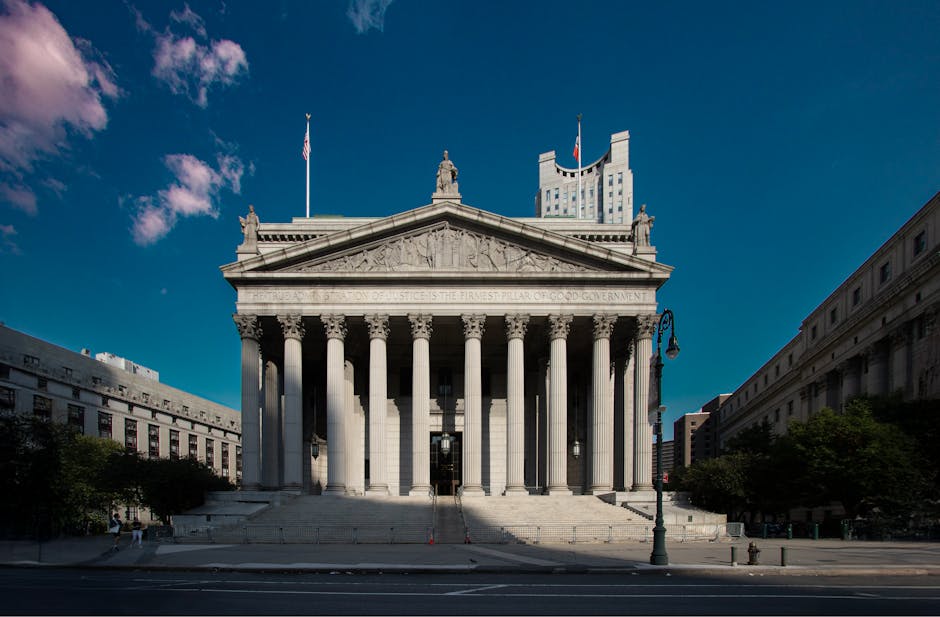
A criminal case in the CITY OF PHILADELPHIA moves through machinery no other Pennsylvania county operates the same way. Because the city and Philadelphia County are one and the same, everything runs inside the FIRST JUDICIAL DISTRICT: felonies are tried in the Criminal Trial Division of the COURT OF COMMON PLEAS inside the CRIMINAL JUSTICE CENTER at 1301 Filbert Street, the courthouse a block from City Hall that pulled the city's scattered criminal courtrooms under one roof in the 1990s. Misdemeanors and the PRELIMINARY HEARINGS that decide whether a felony is held for trial go to PHILADELPHIA MUNICIPAL COURT, a forum that exists in no other county in the state. The very first appearance happens even earlier and over a video link: an ARRAIGNMENT COURT MAGISTRATE — the city's bail commissioner — reads the charges and sets CASH BAIL by closed-circuit camera at all hours, usually within a day of arrest, because Pennsylvania has never abolished cash bail and this video room is where it is first argued. Charges are brought by the office of DISTRICT ATTORNEY LARRY KRASNER, the country's best-known progressive prosecutor, whose published charging policies, conviction-integrity work, and long feud with the state legislature (which once mounted an impeachment) shape how ordinary cases resolve. Federal matters run on an entirely separate track in the UNITED STATES DISTRICT COURT FOR THE EASTERN DISTRICT OF PENNSYLVANIA, where detention rules and the federal sentencing guidelines make the exposure look nothing like state court.
The substantive rules are statewide, and two Pennsylvania creations decide more outcomes than any local practice. ACCELERATED REHABILITATIVE DISPOSITION — ARD — is the Commonwealth's pretrial diversion track and the usual road for a first offender: it is neither a plea nor a conviction, the DISTRICT ATTORNEY alone controls who gets in, and a defendant who finishes the supervision, classes, community service, and restitution has the charges dismissed and the arrest made eligible for expungement. The second is the CLEAN SLATE ACT — the first automated record-sealing law in the nation when Pennsylvania passed it in 2018, broadened in 2023 — which seals qualifying misdemeanor convictions after ten conviction-free years and shields most non-conviction records automatically, so long as court costs and fines are paid. Then come the questions every gun owner asks. Pennsylvania recognizes a CASTLE DOCTRINE and, since a 2011 amendment, a limited STAND-YOUR-GROUND rule that removes the duty to retreat in public ONLY when the attacker displays or uses a firearm or other weapon capable of lethal force; against an unarmed assailant outside the home, the older duty to retreat with complete safety still governs — a line that quietly decides cases and startles people who assume Pennsylvania copies Florida. Concealed carry is shall-issue through a LICENSE TO CARRY FIREARMS from the sheriff. Marijuana stays criminal outside the state MEDICAL MARIJUANA program — there is no recreational legalization in Pennsylvania as of early 2026 — though Philadelphia keeps a local ordinance letting city police issue a civil ticket for small-quantity possession instead of filing the state misdemeanor.
Where the arrest happens rewrites the case. KENSINGTON — the East Coast's most notorious open-air drug market — dominates the narcotics docket, and the crisis keeps mutating: XYLAZINE, the veterinary sedative sold on the street as tranq, leaves the necrotic wounds now filling emergency departments, while the city swings between harm-reduction outreach, recovery-house regulation, and enforcement sweeps that clear an encampment one month and watch it re-form the next. Gun violence drives its own set of dockets — prosecutions, civil suits, and crime-victim compensation claims alike — and it lands hardest on the historically Black neighborhoods of WEST, NORTH, and SOUTHWEST PHILADELPHIA, where heavy policing, poverty, and a record that gates housing and hospital jobs are braided together. The Puerto Rican blocks of Fairhill, the Mexican and Southeast Asian corridors of South Philadelphia, and the West African communities of the Southwest each meet the system with their own language-access and collateral-consequence pressures. Lower down the ladder, retail-theft, drug-possession, and driving-under-suspension charges snowball into bench warrants and compounding court debt — the churn the Krasner charging policies were written to slow. The First Judicial District answers with an unusually developed set of PROBLEM-SOLVING COURTS — drug court, mental health court, veterans court, and a dedicated DUI court — any of which can turn a conviction-and-jail track into supervised treatment for an eligible defendant. PROTECTION FROM ABUSE petitions form a hybrid docket of their own: a PFA is a civil order, but violating one is criminal contempt punishable by immediate arrest, and a final PFA strips firearm possession and can upend a custody arrangement overnight.
In Philadelphia it is COLLATERAL CONSEQUENCES, not sentences, that drive most plea decisions, and the reason is the city's economy. Eds and meds run the town: PENN and the HOSPITAL OF THE UNIVERSITY OF PENNSYLVANIA, JEFFERSON, and TEMPLE — whose Level I trauma service and gunshot-wound volume are a national talking point — are among the region's largest employers, and their background screening disqualifies applicants with certain convictions from patient-facing and elder-care jobs, so a minor theft or drug plea can lock a nursing aide out of the biggest industry in town for a decade. The city's own BAN-THE-BOX ordinance limits when that record can be used in hiring, and Clean Slate can seal it, but neither undoes a conviction that a licensing board or a federal screen still sees. The universities layer on their own campus-conduct proceedings, and the city's large immigrant and refugee populations — Cambodian and Vietnamese South Philadelphia, Liberian and West African Southwest, the Chinatown community fighting a proposed arena — face immigration penalties that are often the harshest thing on the table. Under PADILLA v. KENTUCKY, defense counsel must warn a noncitizen client of a plea's deportation risk before it is entered, because a charge that looks trivial at 1301 Filbert can be an aggravated felony in immigration law, and the PHILADELPHIA IMMIGRATION COURT sits close enough that the two systems collide constantly. And the city's JAIL COMPLEX in the Northeast has drawn years of federal oversight litigation over staffing, medical care, and lockdowns — pressure that puts real weight behind every bail argument made in the arraignment room.
The support network is deep but has to be worked from the first minute. The DEFENDER ASSOCIATION OF PHILADELPHIA represents people who cannot afford counsel from preliminary arraignment through appeal — ask for it at the very first video appearance, not weeks later. On the civil side, COMMUNITY LEGAL SERVICES, PHILADELPHIA LEGAL ASSISTANCE, PHILADELPHIA VIP, and the SENIORLAW CENTER absorb the fallout that trails a criminal case: evictions, protection-order matters, driver's-license restoration, and expungement clinics. The playbook is short and unforgiving. Invoke the right to silence and ask for a lawyer in plain words, then stop talking, because jail phone calls are recorded and prosecutors pull the recordings. Treat the PRELIMINARY HEARING in Municipal Court as the first trial — it is the earliest chance to cross-examine the Commonwealth's witnesses, lock testimony onto the record, and negotiate before charges harden into a formal information. Raise ARD eligibility immediately, because the District Attorney controls admission and a late request can forfeit it. When a case ends without a conviction — dismissal, withdrawal, acquittal, or completed ARD — file the expungement petition rather than trusting the record to vanish on its own. And for older convictions, check whether Clean Slate has already sealed them by pulling your dockets from the statewide UJS portal, then weigh the PENNSYLVANIA BOARD OF PARDONS, which as of early 2026 has been moving nonviolent applications with unusual speed — a pardon followed by expungement is the full reset that sealing alone cannot deliver.
Need legal documents for your defense?
Character references, release forms, and legal correspondence templates.
Sponsored links. Affiliate disclosure · Compare all options