
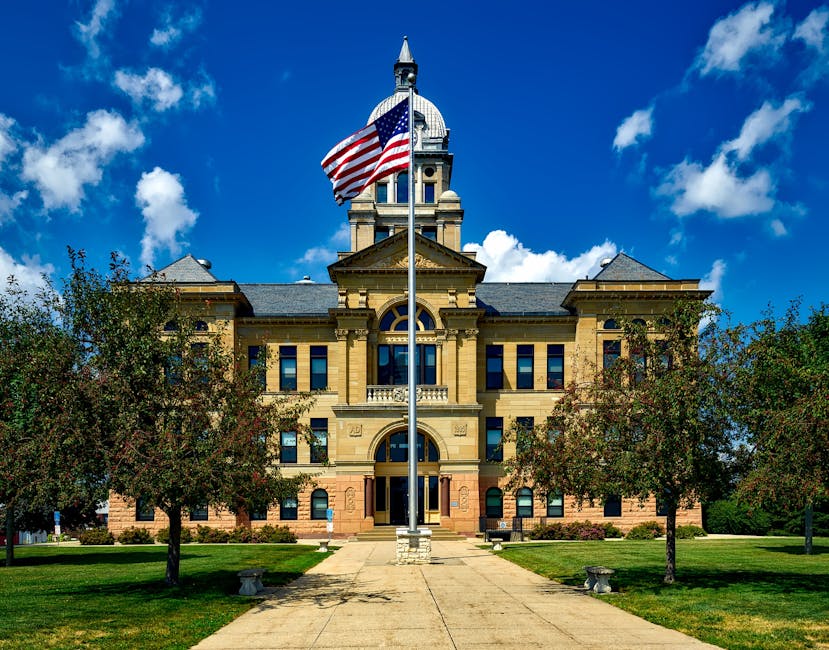
The CITY OF ERIE — roughly 94,000 people on Lake Erie, the seat of Erie County and the urban center of northwestern Pennsylvania — runs its criminal docket through the SIXTH JUDICIAL DISTRICT of Pennsylvania. Felonies and graded misdemeanors are tried in the Criminal Division of the COURT OF COMMON PLEAS at the ERIE COUNTY COURTHOUSE, 140 West Sixth Street downtown, and cases enter the system earlier and further down the ladder. A person arrested by the ERIE BUREAU OF POLICE is taken for a PRELIMINARY ARRAIGNMENT before a MAGISTERIAL DISTRICT JUDGE — frequently by video from the Erie County Prison and at any hour — who sets bail, presides over preliminary hearings, and decides whether a charge is strong enough to be held for court. An arrest in the townships and boroughs beyond the city, or on the interstates by the PENNSYLVANIA STATE POLICE (Troop E), begins before that jurisdiction's magisterial district judge. Pennsylvania has NEVER abolished cash bail, and the magisterial bench is where it is first set, argued down, or modified. The ERIE COUNTY DISTRICT ATTORNEY prosecutes Commonwealth charges out of the courthouse; the most serious federal matters — drug and firearms conspiracies, wire fraud — proceed separately at the UNITED STATES DISTRICT COURT FOR THE WESTERN DISTRICT OF PENNSYLVANIA, ERIE DIVISION, at 17 South Park Row, where pretrial-detention standards and the federal sentencing guidelines make the exposure look nothing like state court.
The rules are statewide, and two Pennsylvania inventions do more to shape outcomes here than any local practice. ACCELERATED REHABILITATIVE DISPOSITION — ARD — is the Commonwealth's pretrial diversion track and the ordinary route for a first offender: it is neither a plea nor a conviction, the DISTRICT ATTORNEY alone decides who is admitted, and a defendant who completes the supervision, coursework, community service, and restitution walks away with the charges dismissed and the arrest eligible for expungement. The second is the CLEAN SLATE ACT — enacted in 2018 as the FIRST AUTOMATED record-sealing law in the country and broadened in 2023 — which seals qualifying misdemeanor convictions after ten conviction-free years and shields most non-conviction records with no petition required, provided outstanding court costs and fines are cleared. Above those sit the self-defense questions every Erie gun owner asks. Pennsylvania recognizes a CASTLE DOCTRINE and, since a 2011 amendment, a LIMITED STAND-YOUR-GROUND rule that lifts the duty to retreat in public only when the assailant displays or uses a firearm or other weapon readily capable of causing death or serious injury; confront an unarmed attacker outside the home and the older duty to retreat with complete safety still controls — a distinction that quietly decides cases and blindsides people who assumed Pennsylvania mirrors Florida. Concealed carry is SHALL-ISSUE through a LICENSE TO CARRY FIREARMS from the Erie County Sheriff. Marijuana remains a criminal substance outside the state MEDICAL MARIJUANA program — there is NO recreational legalization in Pennsylvania as of early 2026, and unlike Pittsburgh and Philadelphia, Erie has NO local ordinance downgrading small-quantity possession to a civil ticket, so a gram that draws a citation in those cities is a state misdemeanor here.
Erie's own geography and economy give the docket its texture. The city carries the concentrated-poverty and gun-violence challenges of a post-industrial small city, and its criminal-justice conversation runs alongside reentry, diversion, and treatment programming. Retail theft along the Peach Street and downtown corridors, simple drug possession, and DRIVING-UNDER-SUSPENSION charges that snowball into bench warrants and compounding court debt fill the misdemeanor calendar, and the county has built out PROBLEM-SOLVING COURTS — including drug court, mental health court, veterans court, and DUI programming — any of which can convert a conviction-and-jail track into supervised treatment for an eligible defendant, so arguing admission is a routine part of local defense. PROTECTION FROM ABUSE petitions form their own hybrid docket: a PFA is a CIVIL order, but violating one is CRIMINAL CONTEMPT punishable by immediate arrest, and a final PFA strips firearm possession and upends a custody arrangement overnight, License to Carry or not. And Erie's standing as one of Pennsylvania's most significant REFUGEE-RESETTLEMENT cities — with large Bosnian, Bhutanese-Nepali, Syrian, Iraqi, Somali, and Congolese communities — means the courthouse handles a steady stream of defendants for whom the harshest consequence of a charge is not the sentence but the IMMIGRATION penalty, a reality that governs plea strategy.
The institutional map matters because in Erie, as across Pennsylvania, it is COLLATERAL CONSEQUENCES, not sentences, that drive most plea decisions. The region's biggest employers — ERIE INSURANCE, the UPMC Hamot and Saint Vincent hospital systems, LECOM and its clinical network, and the universities — run background screening under state statutes that disqualify applicants with certain convictions from patient-facing, financial, and elder-care roles; a minor retail-theft or drug plea can shut a nursing aide, a home-health worker, or an insurance clerk out of the city's best jobs for a decade. The universities layer on parallel campus-conduct proceedings for students, and the large international-student and refugee populations face immigration penalties that are frequently the most severe thing on the table. Under PADILLA v. KENTUCKY, defense counsel must warn a noncitizen client about deportation risk before any plea is entered, because a charge that looks minor in the Criminal Division can be an aggravated felony or a crime involving moral turpitude under federal immigration law. And the ERIE COUNTY PRISON, which holds pretrial detainees who cannot make bail, puts real urgency behind every bail motion filed at the courthouse — a person who loses a job or an apartment while sitting on unaffordable bail is punished before any trial.
The support network exists, but it has to be worked deliberately. The ERIE COUNTY OFFICE OF THE PUBLIC DEFENDER represents people who cannot afford counsel from the preliminary arraignment through appeal — request it at the very first appearance, not weeks later. NORTHWESTERN LEGAL SERVICES, the Erie-based civil legal-aid provider at 1001 State Street, absorbs the fallout that trails a criminal case — evictions, protection-order matters, driver's-license issues, and periodic expungement help — while the ERIE COUNTY BAR ASSOCIATION at 429 West Sixth Street operates a lawyer-referral service that places private counsel at a modest consultation fee. The playbook itself is short and unforgiving. Invoke the right to silence and ask for a lawyer in plain words, then stop talking, because jail phone calls are recorded and cellmate testimony is a fixture of criminal courtrooms. Treat the PRELIMINARY HEARING as the first trial — it is the earliest chance to cross-examine the Commonwealth's witnesses, lock testimony onto the record, and negotiate before charges harden into a formal information. Raise ARD eligibility immediately, because the District Attorney controls admission and a late request can forfeit it. When a case ends without a conviction — dismissal, withdrawal, acquittal, or completed ARD — FILE THE EXPUNGEMENT PETITION rather than trusting the record to vanish on its own. And for older convictions, check first whether Clean Slate has already sealed them, then weigh the PENNSYLVANIA BOARD OF PARDONS, which as of early 2026 has been moving nonviolent applications with unusual speed — a pardon followed by expungement is the full reset that sealing alone cannot deliver.
Need legal documents for your defense?
Character references, release forms, and legal correspondence templates.
Sponsored links. Affiliate disclosure · Compare all options