
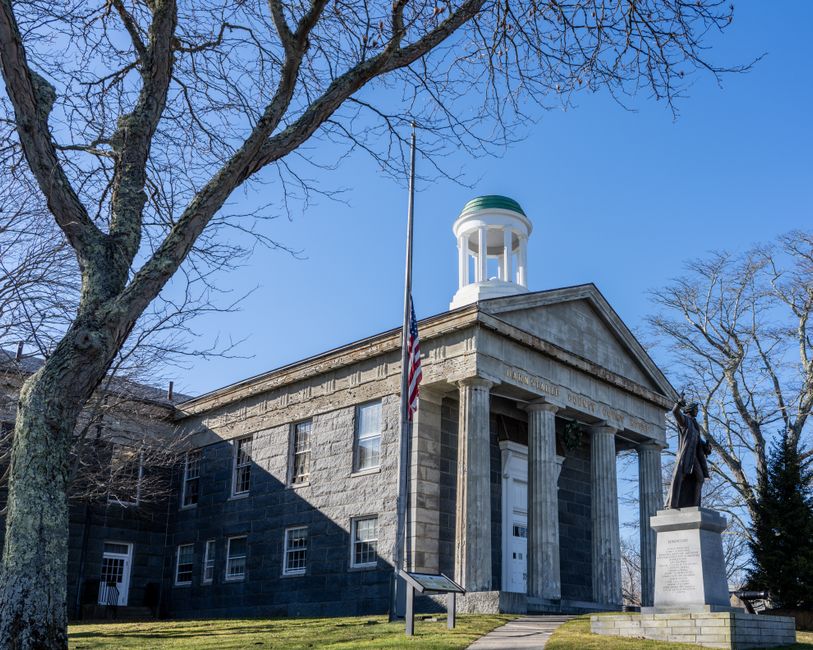
Massachusetts's criminal justice system is anchored by some of the most significant constitutional case law in American history — not surprising for the state that produced John Adams as a defense attorney, the founding of the ACLU's Massachusetts chapter, and a legal culture deeply shaped by Harvard Law School's clinical programs and Boston's prominent criminal defense bar. But beyond its philosophical commitment to constitutional rights, Massachusetts has distinctive procedural rules that differ markedly from most states: the Commonwealth's Criminal Procedure Act (M.G.L. c. 278), grand jury practice, the doctrine of "continuance without a finding" (CWOF), and the availability of clerk's magistrate hearings before arrest for certain misdemeanors.
The Massachusetts CWOF (Continuance Without a Finding) is a unique resolution mechanism available in District Court and Superior Court. A defendant who admits to sufficient facts to support a finding of guilt but is not actually found guilty is placed on probation for a specified period. If the defendant successfully completes probation, the case is dismissed — and while the admission is recorded on the CORI (Criminal Offender Record Information), the conviction appears as "continued without a finding, dismissed" rather than a guilty finding. CWOFs are significant in employment, professional licensing, and immigration contexts: for many federal purposes (immigration, federal employment background checks), a CWOF is treated as a conviction because the defendant admitted guilt. For Massachusetts state purposes, it may be treated differently. The immigration consequences of CWOFs for non-citizen defendants require careful analysis — a CWOF on a marijuana possession charge for a non-citizen may trigger inadmissibility or deportability under federal immigration law despite not being a "conviction" under Massachusetts law.
Massachusetts Bail and Arraignment Procedures
Massachusetts bail procedures differ from most states. Under M.G.L. c. 276, § 58, arraignment occurs within 24 hours of arrest on weekdays; weekend arrests may wait until Monday. At arraignment, the prosecutor and defense argue bail in a bail hearing before a District Court judge. Massachusetts has a constitutional right to bail (Part I, Article 26 of the Massachusetts Declaration of Rights) for non-capital offenses. A judge may release the defendant on personal recognizance (PR), set monetary bail, impose conditions of release (GPS monitoring, curfew, stay-away orders), or deny bail for the period allowed by statute. Massachusetts's dangerousness detention provision (M.G.L. c. 276, § 58A) allows prosecutors to file a motion for detention based on dangerousness — if a defendant is charged with certain enumerated offenses (including sex offenses, violent crimes, and drug trafficking), the prosecutor can request a dangerousness hearing. If dangerousness is found, the defendant can be detained for up to 90 days pre-trial. Unlike federal detention hearings under the Bail Reform Act (where pretrial detention is routine for many federal offenses), Massachusetts § 58A detention requires a specific dangerousness motion and hearing — it's not the default.
CORI Reform and Record Sealing in Massachusetts
Massachusetts Criminal Offender Record Information (CORI) is controlled by the Criminal History Systems Board (CHSB) under M.G.L. c. 6, §§ 167-178. Massachusetts's CORI reform movement culminated in the 2010 CORI Reform Act and subsequent amendments, which: (1) limited employer access to CORI — employers with access to CORI have enhanced restrictions on how they can use it; (2) created a "ban the box" provision prohibiting most Massachusetts employers from asking about criminal history on an initial job application (CORI reform of 2010 and enhanced through subsequent executive orders); (3) expanded and accelerated the record sealing timeline. Current record sealing waiting periods (M.G.L. c. 276, § 100A): for misdemeanor convictions, the waiting period is 3 years after the last sentence; for felony convictions, 7 years. Cases that resulted in CWOF, dismissal, or acquittal can be sealed immediately or after much shorter periods. The Boston Fair Chance hiring ordinance: Boston enacted its own enhanced "ban the box" ordinance applicable to city contractors and certain private employers in Boston, going beyond the statewide CORI reform requirements.
Need legal documents for your defense?
Character references, release forms, and legal correspondence templates.
Sponsored links. Affiliate disclosure · Compare all options