
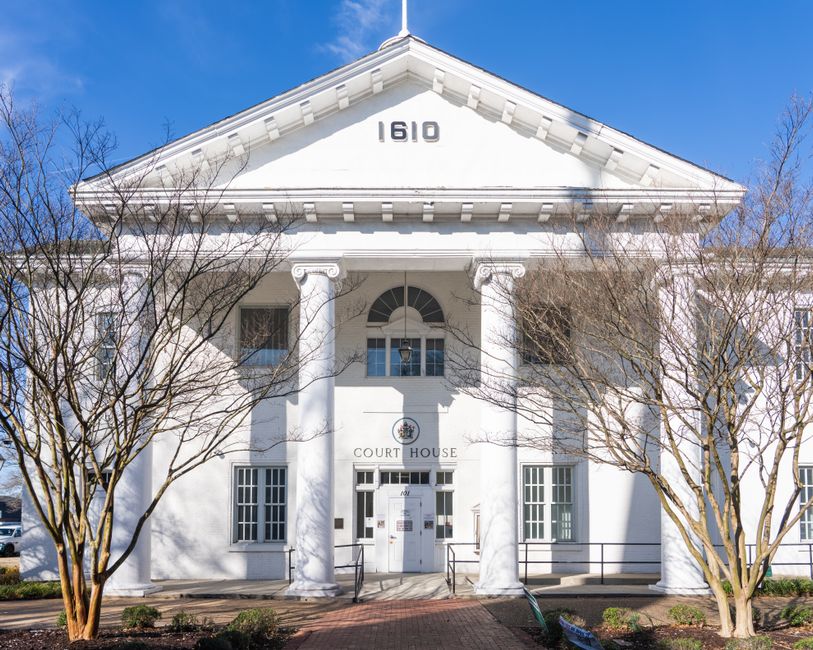
Criminal cases arising in the City of Dallas are prosecuted by the Dallas County District Attorney, whose office handles both felonies and misdemeanors, and are heard at the Frank Crowley Courts Building, 133 N. Riverfront Blvd., just west of downtown along the Trinity River, which houses the felony criminal district courts and the county criminal courts at law. Arrests flow from the Dallas Police Department, the Dallas County Sheriff (which runs the Lew Sterrett Justice Center jail), Dallas Love Field and DART police, and state agencies including DPS. Dallas County's prosecutorial policy in recent years has leaned toward reform, with published guidelines declining to prosecute many low-level marijuana possession cases and certain low-value thefts of personal-necessity items, expanding diversion, and supporting alternatives to incarceration, which shapes charging decisions, plea offers, and diversion eligibility across the enormous urban docket. Texas penalty ranges still apply in full: Class C misdemeanors are fine-only, Class B carries up to 180 days in county jail and Class A up to a year, and felonies run from state jail (180 days to 2 years) through third-degree (2 to 10 years), second-degree (2 to 20), and first-degree (5 to 99 years or life), with habitual-offender enhancements available for defendants with prior felony convictions.
Indigent defense in Dallas County runs through the Dallas County Public Defender's Office, one of the oldest and largest institutional defender offices in Texas, supplemented by appointed private counsel through the county's assigned-counsel system. Ask for appointed counsel at magistration and at every setting until the case is resolved; eligibility turns on income, assets, and the seriousness of the charge, and posting a bond does not by itself disqualify you. Bail is governed by Code of Criminal Procedure article 17.15, under which bail may not be used as an instrument of oppression and the court must consider ability to pay, and Dallas County has moved toward greater use of personal-bond and pretrial-supervision release for lower-level offenses, with conditions such as check-ins, GPS monitoring, an ignition interlock in a DWI case, and no-contact terms in a family-violence case, rather than money alone. A bond-reduction motion or a writ addresses an amount set beyond reach. Two warnings apply to every Dallas arrestee: jail calls at Lew Sterrett are recorded and prosecutors listen to them, so discuss only logistics, and a family-violence bond condition bars all contact with the protected person even if that person invites it. Say the two sentences that stop questioning, that you are not answering questions and you want a lawyer, and then stop talking.
Most cases resolve through negotiation, and Dallas County offers a developed set of diversion and specialty-court options. Pretrial diversion programs suspend prosecution while the defendant completes supervision and conditions, and successful completion ends in dismissal, which preserves eligibility to expunge the arrest entirely. The county operates and supports specialty courts including a veterans court, drug-court and DWI-court dockets, a mental-health diversion track, and programs aimed at defendants whose charges stem from addiction, mental illness, or homelessness. Marijuana enforcement has been sharply curtailed, so small-quantity possession cases are frequently declined or handled through cite-and-release under Code of Criminal Procedure article 14.06 rather than a custodial arrest and prosecution. When a case is not diverted, statutory tools follow: deferred adjudication under article 42A.101 is a plea without a finding of guilt whose successful completion avoids a conviction and often supports a later order of nondisclosure, though it counts as a conviction for immigration and many licensing purposes and exposes the full punishment range if the terms are violated. Felonies must be indicted by a grand jury, and defense packets seeking a no-bill or a reduced charge are a live practice, especially in self-defense cases under Texas's Castle Doctrine and stand-your-ground law and in over-charged or thin-evidence matters.
Collateral consequences deserve as much attention as the sentence, and in a city as diverse as Dallas the immigration stakes are constant. The foreign-born population is large, concentrated in Oak Cliff, Pleasant Grove, and Vickery Meadow, and although Dallas has not sought aggressive cooperation with immigration authorities, Texas's SB4 requires the jail to honor detainers and screen bookings, so a noncitizen arrested for even a minor offense should assume immigration authorities may learn of it, and Padilla v. Kentucky requires defense counsel to give accurate immigration advice before any plea. A drug plea (including deferred adjudication for immigration purposes), a sentence of exactly one year that creates an aggravated felony, a crime involving moral turpitude, and a family-violence finding each carry distinct removal consequences that competent counsel structures around. Professional and status consequences reach the city's large healthcare, finance, aviation, and education workforce, where nurses, physicians, teachers, attorneys, securities professionals, and commercial-license holders face board-reporting rules, and a family-violence finding carries the federal firearm disability under 18 U.S.C. Section 922(g)(9). The rule is simple: no plea, however minor it appears, before the collateral map is drawn.
Record relief afterward is often available and worth pursuing in a job market thick with background checks. Expunction under Code of Criminal Procedure Chapter 55 erases an arrest that ended in acquittal, dismissal (including after diversion completion), a no-bill, or a charge never filed once limitations run, and an expunged arrest can be lawfully denied. An order of nondisclosure under Government Code Chapter 411 seals a successfully completed deferred adjudication and some convictions, including a qualifying first-offense DWI after the applicable waiting period, from public background checks while leaving them visible to law enforcement and licensing agencies, with waiting periods ranging from immediate to five years. Petitions are filed through the Dallas County District Clerk, and the prosecuting office is entitled to review them. Legal Aid of NorthWest Texas, the Dallas Volunteer Attorney Program, area law-school clinics, and periodic community expunction clinics handle petitions at low or no cost. Post-conviction, an article 11.07 writ addresses ineffective assistance and newly discovered evidence, and the Dallas County District Attorney has operated a conviction-integrity unit that has produced numerous exonerations. For victims navigating the same building, the District Attorney's victim-services unit, the Dallas family-violence shelters, and Crime Victims' Compensation through the Texas Attorney General coordinate protection and services, so the courthouse serves both directions of every case.
Need legal documents for your defense?
Character references, release forms, and legal correspondence templates.
Sponsored links. Affiliate disclosure · Compare all options