
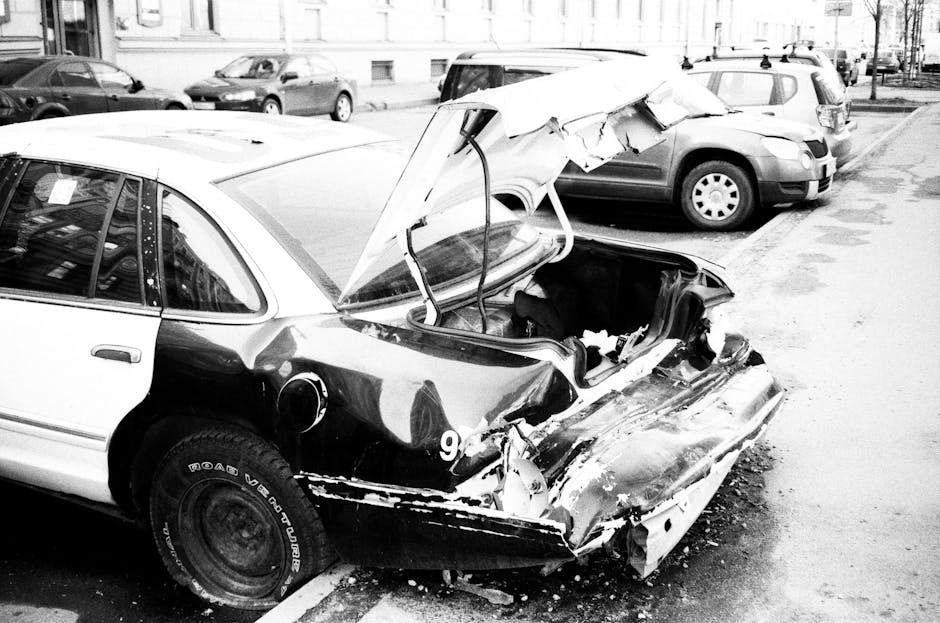
Los Angeles is the car-crash capital of America by raw volume — the nation's worst congestion funneled through the 101, 110, 405, 10, and 5 freeways and a surface grid whose arterials double as high-speed corridors. The city's own VISION ZERO data has long shown that a small fraction of streets — the HIGH-INJURY NETWORK, corridors like Vermont Avenue, Western Avenue, Figueroa Street, and Sepulveda Boulevard — produces the large majority of severe and fatal crashes, with pedestrian deaths stubbornly concentrated in South LA, Koreatown, and the East Valley. Jurisdiction splits in ways that matter to a claim: the LAPD's specialized traffic divisions (Central, South, West, and Valley Traffic) investigate collisions on city streets, while the CHP owns the freeways — so a pile-up on the 405 generates a CHP report, and a Vermont Avenue broadside generates an LAPD report, retrieved through different channels. A crash involving an LA METRO bus, an LADOT DASH shuttle, a city refuse truck, or a police cruiser adds a public-entity defendant and with it the GOVERNMENT CLAIMS ACT six-month claim deadline that surprises out-of-state insurers and unrepresented drivers alike.
California is a FAULT state — no no-fault, no PIP — and every Los Angeles claim is built on PURE COMPARATIVE NEGLIGENCE: a driver 40 percent at fault recovers 60 percent of damages, with no cutoff at any percentage. Minimum liability limits rose sharply under SB 1107 — 30/60/15 effective January 2025, doubling the old 15/30/5 floor — but a minimum policy still evaporates against a single surgery at an LA hospital, which makes UNINSURED/UNDERINSURED MOTORIST (UM/UIM) coverage the most consequential line on an Angeleno's own policy. PROPOSITION 213 adds a harsh wrinkle: an injured driver who was uninsured at the time of the crash is barred from recovering NON-economic damages (pain and suffering) even against a fully at-fault defendant — a rule that matters enormously in a city where uninsured rates on some corridors are estimated well above the statewide average. Report duties stack up fast: an SR-1 to the DMV within 10 days for any crash with injury or significant property damage, prompt notice to your own carrier, and a police report request while the incident is fresh.
The city's crash patterns generate distinctive litigation. HIT-AND-RUN is an LA epidemic — the LAPD logs tens of thousands of hit-and-run collisions a year, among the nation's highest, concentrated where the high-injury network crosses dense pedestrian neighborhoods — and the practical remedy is usually the victim's own UM coverage, which by statute covers hit-and-run if there was physical contact and the crash is reported promptly, paired with a police report and any doorbell or bus-camera footage counsel can subpoena before it is overwritten. Street takeovers and racing — Figueroa, Florence, the industrial grids of the harbor gateway — produce catastrophic-injury cases with punitive-damage exposure. Delivery traffic is its own defendant class: Amazon DSP vans, app-based couriers under Prop 22's hybrid rules, and drayage trucks streaming from the Port of Los Angeles through San Pedro and Wilmington toward the 110 and 60 — commercial defendants with real policies, federal motor-carrier obligations, and telematics that a spoliation letter can preserve. E-scooter and bicycle collisions along Venice, Hollywood, and DTLA corridors round out a docket where the vulnerable-road-user share of serious injuries keeps rising.
Where the case is heard and who pays are city-specific questions. Unlimited civil auto cases filed in Los Angeles route through the PERSONAL INJURY HUB at the Spring Street Courthouse downtown, with trial assignments radiating to Mosk and branch courthouses; Valley crashes often resolve with Van Nuys venue convenience in mind. A claim against the City of Los Angeles — a DASH bus, a dangerous intersection design, a missing signal — must be presented on the city's claim form within six months, and dangerous-roadway claims fight through DESIGN IMMUNITY under Government Code 830.6, which the city asserts aggressively for its signal timing and street configurations; against LA Metro, the claim goes to One Gateway Plaza on the same six-month clock. Medical liens shape net recovery: LA's trauma care runs through LAC+USC and Harbor-UCLA (county facilities with lien rights) and private systems whose emergency bills are negotiated under Howell principles — an LA settlement is only as good as its lien resolution.
The playbook for an LA crash victim is concrete. At the scene: photograph vehicles, plates, street signs, and signal phases; identify the investigating agency (LAPD traffic division on surface streets, CHP on freeways) and get the report number; refuse to speculate about fault. Within days: see a doctor even if adrenaline masked symptoms — gap-free treatment is the spine of case value — file the SR-1, put your own carrier on notice, and open the UM investigation if the other driver fled or carried minimums. Within weeks: counsel sends preservation letters for commercial telematics, Metro bus video (which is overwritten on short cycles), and nearby business cameras; a six-month claim goes out to any public entity in the fault picture. Legal help is dense and multilingual — LAFLA and neighborhood clinics for low-income drivers, LACBA SmartLaw (866-762-7852) for certified referrals — and contingency representation at 33 to 40 percent is the norm. California bad-faith law (Comunale, Egan and their line) gives insurers real exposure for lowballing clear-liability claims, leverage an experienced LA practitioner uses from the first demand letter.
Need legal documents after an accident?
Demand letters, release forms, and settlement agreements — ready in minutes.
Sponsored links. Affiliate disclosure · Compare all options