
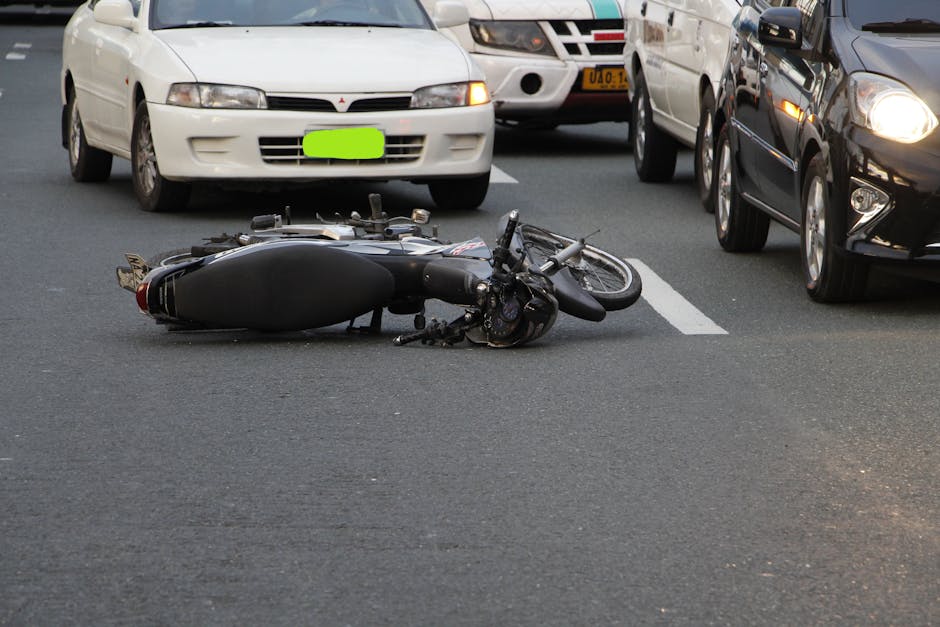
Montgomery County anchors the MIAMI VALLEY — roughly 535,000 residents gathered around DAYTON, the county seat, and radiating out through Kettering, Huber Heights, Trotwood, Centerville, Riverside, Moraine, and Harrison Township at the precise point where INTERSTATE 75 meets INTERSTATE 70. Locals call it the CROSSROADS OF AMERICA, and the label is not marketing: national truck freight pours through the middle of this county every hour, and the through-traffic it delivers shapes the personal-injury docket more than any single fact of local geography. Serious cases are filed in the MONTGOMERY COUNTY COURT OF COMMON PLEAS at 41 North Perry Street in Dayton, which hears civil claims above $15,000 with no ceiling — every catastrophic-injury, wrongful-death, and medical-malpractice matter in the county ends up there. Smaller disputes route to DAYTON MUNICIPAL COURT and the suburban municipal courts, which take civil claims up to $15,000 and run SMALL CLAIMS divisions up to $6,000 for property damage, deposit fights, and minor fender-benders. What sets this county apart from most of Ohio is the federal shadow: Dayton hosts the U.S. DISTRICT COURT FOR THE SOUTHERN DISTRICT OF OHIO, WESTERN DIVISION, and WRIGHT-PATTERSON AIR FORCE BASE — Ohio's largest single-site employer, with more than 38,000 jobs — makes federal defendants an ordinary feature of injury practice here rather than an exotic one. The jury pool blends West Dayton, the affluent southern suburbs, Appalachian East Dayton, the AHISKA TURKISH community of Old North Dayton, and tens of thousands of households tied to the base — a practical, evidence-driven mix that rewards documented harm and is hard on exaggeration.
The governing law is Ohio's, and Ohio is a TORT-REFORM state — something no honest Dayton lawyer hides. Fault runs on MODIFIED COMPARATIVE NEGLIGENCE with a 51 PERCENT BAR: you recover only if your share of the fault is 50 percent or less, with your damages cut by your percentage, and nothing at all once you cross 51. That one-point cliff makes fault allocation existential rather than arithmetic. The deadline for bodily injury is TWO YEARS (R.C. 2305.10), and WRONGFUL DEATH is two years from the date of death. And Ohio HAS DAMAGE CAPS — stated plainly, because plenty of billboard advertising pretends the opposite. Under R.C. 2315.18, NON-ECONOMIC damages — pain, suffering, loss of enjoyment, loss of consortium — are capped at the GREATER of $250,000 or three times economic damages, subject to a hard ceiling of $350,000 per plaintiff and $500,000 per occurrence. ECONOMIC damages — medical bills, lost wages, future care, life-care plans — are NEVER capped. The exception decides the largest cases: the non-economic cap DOES NOT APPLY to CATASTROPHIC injuries, meaning permanent and substantial physical deformity, loss of a limb, loss of a bodily organ system, or a permanent physical injury that prevents a person from caring for themselves and living independently. Those claims are UNCAPPED, which is why the fight over which category an injury occupies is frequently worth more than the fight over liability itself. PUNITIVE damages demand clear and convincing proof of actual malice and are capped at TWICE compensatory damages. The Ohio Supreme Court upheld the whole structure in ARBINO v. JOHNSON & JOHNSON, so the caps are settled law, not a live constitutional fight. And MEDICAL MALPRACTICE carries Ohio's harshest clock — a ONE-YEAR statute of limitations (R.C. 2305.113), the shortest among major states, extendable by 180 DAYS when a proper written notice letter reaches the provider before the year runs, all sitting beneath a FOUR-YEAR STATUTE OF REPOSE that can end a claim before anyone discovers it. Every malpractice complaint must attach an AFFIDAVIT OF MERIT from a qualified expert (Civ.R. 10(D)(2)), so a Dayton med-mal case needs a retained expert before filing, not after.
This county's docket still carries the scars of two nights in 2019 and one decade-long public-health catastrophe. The MEMORIAL DAY TORNADO OUTBREAK of May 2019 put fifteen tornadoes across the region in a single night, gutting Trotwood, Harrison Township, Old North Dayton, and Brookville — and its legal afterlife runs through insurance rather than negligence: ACTUAL CASH VALUE versus replacement cost, matching disputes on partial roof damage, underpaid contents claims, and the contractor-assignment fights that trail every catastrophe. Ohio treats those as contract claims layered with common-law BAD FAITH, which requires proof the insurer denied or delayed WITHOUT REASONABLE JUSTIFICATION and opens punitive exposure when the conduct is malicious. The OREGON DISTRICT shooting of August 2019 pushed the county through the machinery of mass-casualty response — victim-compensation funds and premises-security litigation — where Ohio asks whether third-party criminal conduct was FORESEEABLE rather than applying any strict rule. The OPIOID CRISIS made Dayton a national datapoint — an overdose capital in 2017 — before the region rebuilt into a treatment-and-recovery hub with drug dockets. Underneath all of it sits the housing stock: a weak-market county thick with out-of-state investor landlords, LAND CONTRACTS, land-bank demolition inventory, pre-1978 LEAD PAINT driving child-poisoning claims, and tornado-scarred structures whose deferred repairs produce porch and stairway collapses. The GREAT MIAMI RIVER and the MIAMI CONSERVANCY DISTRICT levees — built after the 1913 flood, still Ohio's deadliest disaster — define the county's flood geography and the coverage-exclusion arguments that follow every heavy rain. DOG BITES follow Ohio's STRICT LIABILITY statute: no one-bite rule and no need to prove the owner knew the animal was dangerous, with owners, keepers, and HARBORERS all exposed — reaching a landlord who harbors a tenant's dog on common ground.
Serious trauma here has a precise institutional map, and that map decides which deadline and which sovereign you are fighting. MIAMI VALLEY HOSPITAL, part of PREMIER HEALTH, is the region's LEVEL I ADULT TRAUMA CENTER — a private nonprofit, so the ordinary one-year malpractice clock and the affidavit requirement apply. KETTERING HEALTH anchors the county's other major hospital-and-trauma network, GRANDVIEW among its campuses, and DAYTON CHILDREN'S HOSPITAL is the LEVEL I PEDIATRIC center, likewise private. The DAYTON VA MEDICAL CENTER is federal: claims there run under the FEDERAL TORT CLAIMS ACT — an administrative claim on STANDARD FORM 95 within TWO YEARS, then a bench trial in the Southern District of Ohio, no jury and no punitive damages. WRIGHT-PATTERSON AIR FORCE BASE makes federal practice routine: civilians and visitors hurt on base proceed under the FTCA, while ACTIVE-DUTY SERVICE MEMBERS generally cannot, because the FERES DOCTRINE bars claims for injuries incident to service. The base also anchors the region's PFAS GROUNDWATER litigation — decades of firefighting-foam chemistry migrating toward area water supplies, a mass tort with its own science and exposure-proof problems. PUBLIC ENTITIES follow yet another path: the CITY OF DAYTON, MONTGOMERY COUNTY, the townships, the school districts, and the GREATER DAYTON RTA are POLITICAL SUBDIVISIONS shielded by R.C. CHAPTER 2744 — broad statutory immunity with narrow exceptions, chiefly negligent operation of a motor vehicle, proprietary functions, road repair, and physical building defects — a two-year deadline, no punitive damages, and no pre-suit notice-of-claim letter required in Ohio. The STATE of Ohio and its universities, WRIGHT STATE among them, are sued in the OHIO COURT OF CLAIMS in Columbus: two years, no jury, one judge deciding liability and damages, while the private UNIVERSITY OF DAYTON answers under ordinary rules. Workers hurt on the job meet Ohio's unique architecture — the BUREAU OF WORKERS' COMPENSATION is a STATE-FUND MONOPOLY, so employers cannot buy private comp; it is exclusive against the employer, VSSR awards add extra money for specific safety violations, and the real recovery often lives in THIRD-PARTY claims against equipment makers at plants like FUYAO GLASS AMERICA in Moraine or the warehouses feeding I-75.
The support infrastructure is real but thin against the need. ADVOCATES FOR BASIC LEGAL EQUALITY (ABLE) and LEGAL AID OF WESTERN OHIO (LAWO) serve Dayton and the surrounding counties with civil legal aid for income-qualified residents — housing, benefits, and the collateral fallout an injury creates, such as an eviction while you cannot work — and the GREATER DAYTON VOLUNTEER LAWYERS PROJECT recruits private attorneys for matters legal aid cannot staff. Most injury representation, though, runs on CONTINGENCY FEES, so ability to pay rarely blocks a strong case, and consultations are free. The playbook for any Montgomery County injury is disciplined and early: get treated and follow through — Miami Valley is the adult Level I trauma center, Dayton Children's the pediatric one, with Kettering Health and Grandview covering the rest of the county; photograph the scene and preserve physical evidence before the county's freight traffic and weather erase it; identify every defendant at the outset, because the private-versus-federal-versus-state split changes the forum, the deadline, and the right to a jury; calendar the shortest plausible clock, especially the one-year med-mal deadline and the two-year FTCA administrative window; and have counsel weigh the caps, the catastrophic-injury exception, and every layer of available insurance before you accept a first offer that prices none of them in. Expect subrogation, too — health plans, Medicare, and Medicaid all assert reimbursement claims against a settlement, and negotiating those liens down is often where the net recovery is actually won. Interpreters are free in Ohio courts, and immigration status neither bars an injury claim nor belongs in the defense's file.
Need legal documents for your claim?
Medical release forms, demand letters, and more — state-specific.
Sponsored links. Affiliate disclosure · Compare all options