
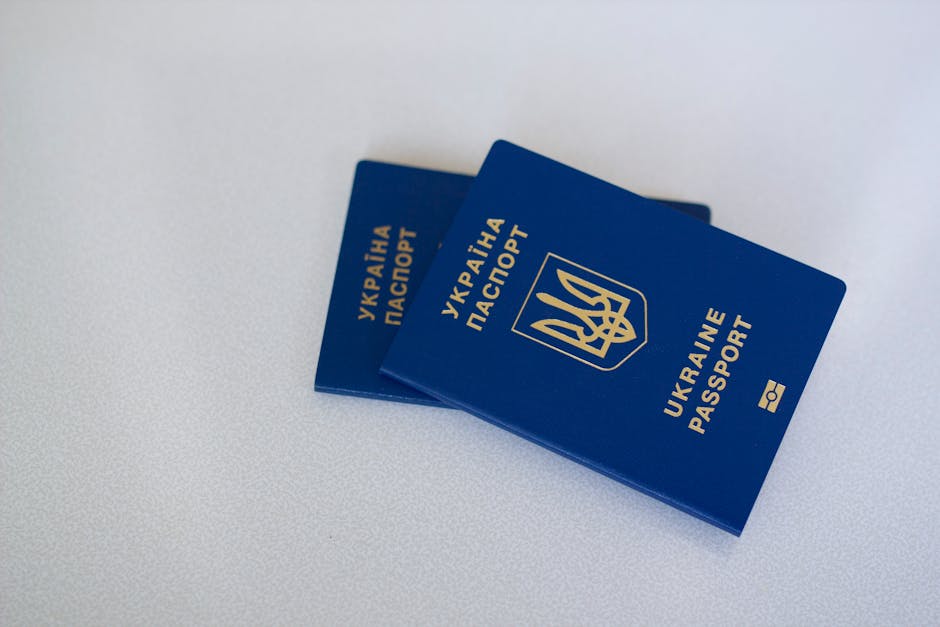
Fresno is one of the most immigrant-defined cities in the United States, yet it has NO IMMIGRATION COURT of its own — a structural gap that shapes every removal case in the region. A CITY OF FRESNO resident placed in removal proceedings is generally scheduled before the SAN FRANCISCO IMMIGRATION COURT (part of the federal Executive Office for Immigration Review, EOIR), roughly a two-hundred-mile trip each way, in a system already carrying a years-long backlog between the initial master-calendar hearing and the individual merits hearing. That distance is not a technicality: for a farmworker family without reliable transportation or paid time off, a court date across the state is a genuine barrier to justice, and it magnifies the region's already-severe shortage of immigration attorneys. Unlike a criminal defendant, a person in removal proceedings has the RIGHT TO COUNSEL but is NOT provided a government lawyer — which makes access to free and low-cost immigration help, and the danger of unlicensed "notario" fraud, the defining practical realities of immigration life in the Central Valley.
California law surrounds Fresno's immigrants with some of the strongest state-level protections in the country. The CALIFORNIA VALUES ACT (SB 54) makes California a SANCTUARY STATE, sharply limiting how state and local agencies — including local police and the county jail — may cooperate with federal immigration enforcement, and the TRUTH ACT gives detained immigrants notice and rights around ICE interviews. AB 60 allows all California residents, regardless of immigration status, to obtain a DRIVER'S LICENSE — enormously important in a farm region where driving to the fields is unavoidable. AB 540 and the CALIFORNIA DREAM ACT let undocumented students who meet California high-school and residency requirements pay in-state tuition and access state financial aid at California colleges, including Fresno State and the community colleges. And California's 2024 expansion of MEDI-CAL to all income-eligible residents regardless of immigration status opened health coverage to undocumented adults — a major shift for the Valley's uninsured. Labor Code 1019 separately bars employers from using immigration status to retaliate during a labor dispute.
Fresno's immigrant landscape is unusually layered. The city is MAJORITY LATINO, with a large Mexican and Central American population deeply tied to agricultural labor — many in mixed-status families, some holding or having held TEMPORARY PROTECTED STATUS (TPS) that requires periodic re-registration amid shifting federal policy, and many farmworkers navigating H-2A guest-worker terms or seeking a path to status. Fresno is also home to ONE OF THE LARGEST HMONG COMMUNITIES in the United States — Southeast Asian refugees who resettled after the Vietnam War, concentrated in southeast Fresno, some of whom face old removal orders, naturalization gaps, or the trauma-linked barriers of refugee elders — alongside Lao, Cambodian, and Mien families. A PUNJABI SIKH community anchors surrounding rural areas. DACA recipients are woven throughout the young immigrant population: current holders can generally still RENEW, but new initial applications have been blocked by federal litigation since 2021, a distinction that strands many who arrived as children but never obtained DACA in time.
The institutional map is thin relative to the need but real. The CONSULATE OF MEXICO in Fresno serves the region's large Mexican-national population with matricula consular ID cards, passports, and legal-orientation outreach across the Valley. CALIFORNIA RURAL LEGAL ASSISTANCE (CRLA) — founded in the Central Valley and inseparable from the region's farmworker-rights history — assists immigrant workers where status overlaps with wages, housing, and safety, and refugee-resettlement and community organizations serve the Hmong, Southeast Asian, and Latino communities. Because demand vastly outstrips capacity, a person facing a deadline should contact several organizations at once, and should rigorously AVOID unlicensed NOTARIO consultants, who are not authorized to give legal advice and who have wrecked countless Valley families' cases with defective filings — in Spanish, "notario publico" wrongly implies an attorney, and the confusion is deliberately exploited. Faith-based and community rapid-response networks provide know-your-rights education and support during enforcement activity.
Practical guidance for a Fresno immigrant centers on preparation and speed. Keep your address current with the immigration court on Form EOIR-33 after any move, because missing a San Francisco hearing typically results in an IN ABSENTIA removal order entered in your absence. Carry proof of California residency and, if eligible, get an AB 60 driver's license so a traffic stop does not escalate. Make a FAMILY PREPAREDNESS PLAN — powers of attorney, childcare arrangements, and access to key documents — given the reality of mixed-status households. Know that under the Values Act you generally do not have to answer immigration questions from local police, and you have the right to remain silent and to speak to a lawyer if detained by ICE. Preserve every immigration document and any prior filing, especially for Hmong refugee elders and long-resident families whose old paperwork may hold the key to relief. Above all, get real legal advice early — from CRLA, a nonprofit immigration program, an accredited representative, or a licensed attorney — because delay narrows options fast once removal proceedings begin, and a bad notario filing can foreclose relief you were entitled to.
Need immigration-related legal documents?
Affidavits, power of attorney, notarized forms — 150+ document types.
Sponsored links. Affiliate disclosure · Compare all options