
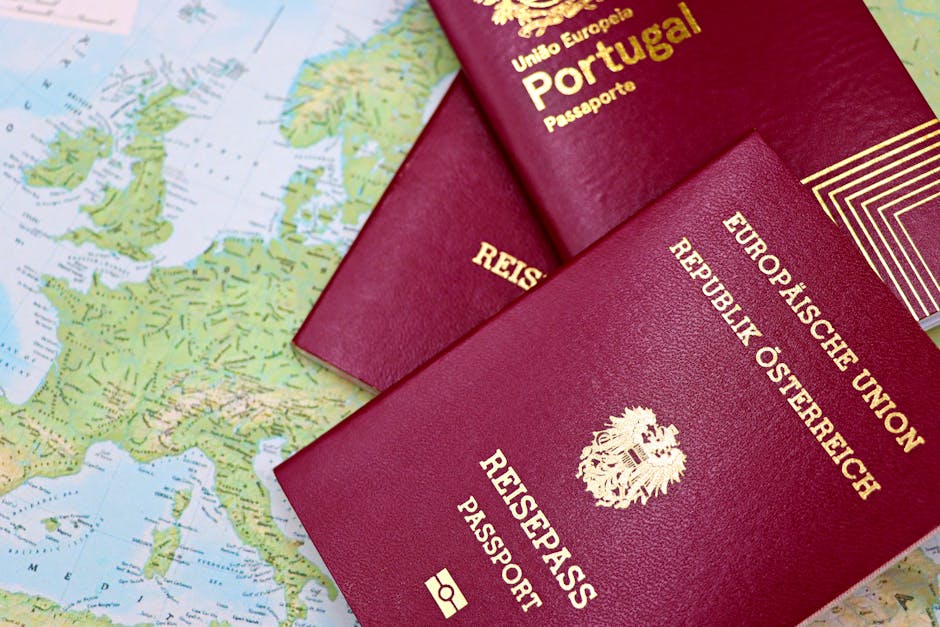
Immigration status is governed entirely by federal law, and for Bloomington-Normal residents the front door to the federal system is not local. There is no immigration court in central Illinois; every removal case originating downstate is docketed at the CHICAGO IMMIGRATION COURT at 55 E. Monroe Street, the Executive Office for Immigration Review (EOIR) tribunal that carries one of the largest backlogs in the country — measured in the hundreds of thousands of pending cases as of early 2026 — and whose non-detained hearings are routinely set years into the future. Affirmative applications run through a separate track: USCIS handles green-card and naturalization interviews for downstate applicants through its regional field offices, and federal litigation — habeas petitions over detention, mandamus suits over stalled applications, and review of naturalization denials — belongs to the U.S. DISTRICT COURT FOR THE CENTRAL DISTRICT OF ILLINOIS, whose Peoria Division covers McLean County. For families, this geography is the defining hardship: a Bloomington resident placed in proceedings drives to Chicago for hearings, and a resident detained by ICE is typically moved out of Illinois entirely, because state law has eliminated immigration detention within its borders.
Illinois has assembled what may be the strongest state-level protective architecture in the interior United States, and Bloomington-Normal residents live under it. The ILLINOIS TRUST ACT bars state and local police everywhere in Illinois — including the Bloomington and Normal police departments, the ISU Police, and the McLean County Sheriff — from honoring ICE detainers or administrative warrants absent a JUDICIAL WARRANT signed by a judge, and prohibits stops or arrests based on immigration status alone. The WAY FORWARD ACT went further, banning private and local-government ICE detention contracts, which emptied Illinois of immigration detention beds entirely: McLean County residents taken into ICE custody are transferred to facilities in Indiana, Kentucky, Wisconsin, and beyond, forcing families into long interstate drives for visits. Daily life is protected too: Illinois has issued driver's licenses regardless of immigration status since 2013, since folded into standard license issuance; state programs extend health coverage to income-eligible undocumented seniors and older adults; and undocumented students — including those attending Illinois State University, Illinois Wesleyan, or Heartland Community College — qualify for in-state tuition and state financial aid under the RISE ACT. These everyday protections shield residents in ordinary life, but none of them reaches the federal removal system itself.
Bloomington-Normal's immigration patterns flow from its economy and its universities. The metro's GROWING LATINO community, concentrated in Bloomington's west side and the twin cities' working neighborhoods, is drawn heavily to the food-processing plants (Ferrero, Beer Nuts), warehousing along the I-55 corridor, construction, agriculture in surrounding McLean County — one of the nation's most productive farm counties — and the service economy, and it generates the full range of family-based petitions, asylum cases, U- and T-visa applications arising from crime and labor exploitation, and DACA renewals. ILLINOIS STATE UNIVERSITY, with roughly 20,000 students, plus Illinois Wesleyan and Heartland, sustains a substantial international-student population on F and J visas, whose questions run to status maintenance, optional practical training, H-1B transitions, and the consequences of any criminal charge on a visa. The region's large corporate employers — State Farm, Country Financial, GROWMARK, and Rivian — sponsor professionals on employment-based visas, adding H-1B, L, and EB-category work to the local immigration bar's docket. Because the Chicago Immigration Court sets hearings so far out, asylum seekers must manage the ONE-YEAR FILING DEADLINE, work-authorization eligibility, and evidence preservation long before any judge hears the merits — and must keep their address current with the court on FORM EOIR-33, because a missed hearing notice produces an IN ABSENTIA removal order that is brutally difficult to undo.
The system's most dangerous intersection sits at the McLEAN COUNTY LAW & JUSTICE CENTER, where any criminal plea can carry immigration consequences the criminal court never mentions. Under PADILLA v. KENTUCKY, defense counsel — including the McLEAN COUNTY PUBLIC DEFENDER — must advise noncitizen clients about deportation risk, but the traps are subtle: Illinois COURT SUPERVISION, which keeps a conviction off the state record, still counts as a conviction under federal immigration law, and a seemingly minor cannabis, retail-theft, or DUI disposition can trigger removability or destroy eligibility for relief. A student who resolves an underage-drinking or shoplifting case without a second thought, or a worker who accepts supervision on a first offense, can create a federal immigration problem that surfaces years later at a green-card interview or a port of entry. The PRETRIAL FAIRNESS ACT's abolition of cash bail has at least reduced the time noncitizens spend in the county jail, shrinking one historic pipeline into ICE custody, but the surest protection remains getting an immigration opinion on any plea before it is entered. Enforcement pressure in a downstate community concentrates at predictable points — home visits, worksite actions, and routine check-in appointments — which is why know-your-rights training (do not open the door without a judicial warrant, remain silent, sign nothing) has become standard programming among the metro's immigrant-serving organizations.
The anchor of downstate immigration legal help is THE IMMIGRATION PROJECT, a nonprofit based in Normal that provides low-cost immigration legal services across central and southern Illinois — the region the big Chicago organizations do not reach — handling family petitions, asylum, DACA, U and T visas, naturalization, and removal defense, and coordinating pro bono attorneys throughout downstate. The NATIONAL IMMIGRANT JUSTICE CENTER in Chicago takes complex and detained cases statewide, and Illinois State University's international-student office and community organizations round out the network. The practical playbook: verify any representative's credentials — only licensed attorneys and DOJ-ACCREDITED REPRESENTATIVES at recognized organizations may lawfully give immigration advice, and NOTARIO FRAUD (a "notario" in the United States is not a lawyer) remains a danger in immigrant commercial corridors, reportable to the Illinois Attorney General; never sign documents you do not understand, especially anything resembling stipulated removal or voluntary departure; keep copies of every filing and receipt notice; update your address with EOIR and USCIS every time you move; calendar the asylum one-year deadline the day you arrive; and if anyone in the household faces criminal charges at the Law & Justice Center, get an immigration attorney's opinion on the plea before accepting it, because in immigration law the cheapest disposition is often the most expensive one.
Need immigration-related legal documents?
Affidavits, power of attorney, notarized forms — 150+ document types.
Sponsored links. Affiliate disclosure · Compare all options