
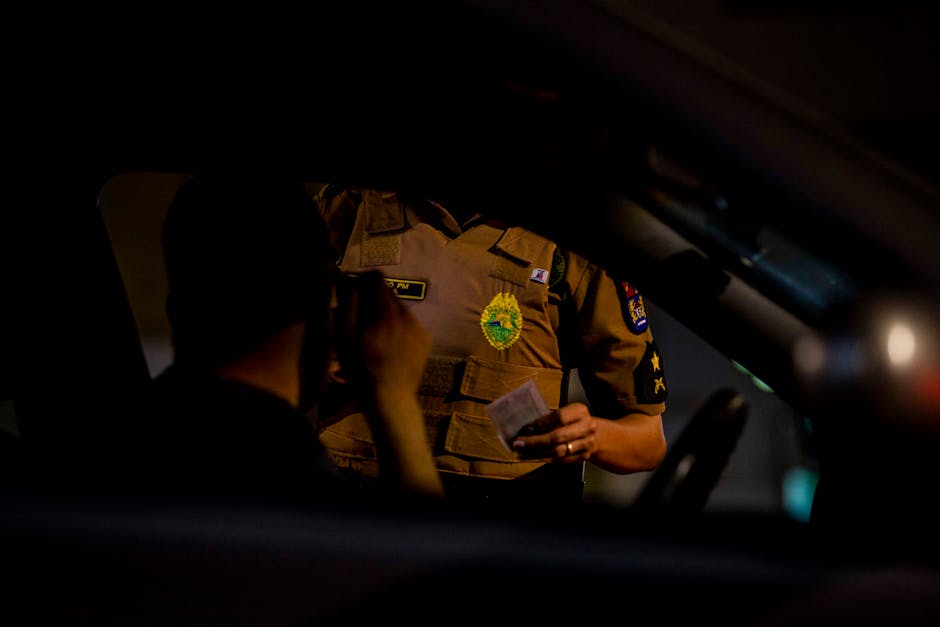
Wyoming DUI law under Wyo. Stat. sec. 31-5-233 governs a state where alcohol-impaired driving intersects with some of the most dangerous driving conditions in the country: single-lane mountain highways, open-range roads where livestock can appear without warning, high-altitude ski resort parking lots at Jackson Hole and Grand Targhee where après-ski patrons drive home on US-89 and State Highway 22 through winter conditions, and a rural bar culture in communities like Gillette, Riverton, and Cody where significant distances separate drinking establishments from residential areas. Wyoming's DUI statute covers both alcohol (BAC of 0.08% or above for standard drivers, 0.04% for commercial drivers, 0.02% for drivers under 21) and controlled substances (driving while under the influence of a drug or combination of alcohol and drugs that renders the driver incapable of safely driving). Wyoming has no legal cannabis, and THC-impaired driving is prosecuted under the controlled substance prong of the DUI statute — blood testing for THC metabolites is conducted by the Wyoming Division of Criminal Investigation Laboratory (208 South College Drive, Cheyenne, WY 82002) following evidentiary blood draws administered at hospitals or medical facilities under implied consent.
Wyoming's DUI penalties escalate with each prior offense within a ten-year lookback period. A first offense DUI in Wyoming is a misdemeanor carrying up to six months in the county jail, a minimum $750 fine, a 90-day driver's license suspension, and mandatory evaluation and possible treatment through the Alcohol Safety Action Program (ASAP). Wyoming's first offense DUI does not carry a mandatory minimum jail term, though most county attorneys will request jail time for first offenders with an elevated BAC or accident involvement. A second DUI offense within ten years is also a misdemeanor, carrying up to one year in jail, a $750 minimum fine, a one-year license suspension, and mandatory ignition interlock installation for eighteen months. A third DUI offense within ten years becomes a felony under Wyo. Stat. sec. 31-5-233(b)(iv), carrying up to five years in the Wyoming State Penitentiary (1600 Center Street, Rawlins, WY 82301), a three-year license revocation, and a three-year ignition interlock requirement upon reinstatement. A DUI that causes serious bodily injury is a felony regardless of prior history.
Wyoming's implied consent statute (Wyo. Stat. sec. 31-6-102) requires drivers to submit to evidentiary breath or blood testing upon a law enforcement officer's request following a lawful arrest for DUI. Refusal to submit to testing under Wyoming implied consent results in a one-year driver's license suspension — longer than the 90-day first-offense suspension for submitting and failing the test — and refusal evidence is admissible in the subsequent criminal DUI trial. Wyoming law enforcement typically uses the DataMaster breathalyzer for field and evidentiary breath testing. For blood testing, Wyoming Highway Patrol or local law enforcement transports the arrestee to a hospital or medical facility where blood is drawn by qualified medical personnel; the blood is analyzed at the Wyoming DCI Laboratory. Wyoming courts have consistently upheld the constitutionality of implied consent blood draws authorized by Missouri v. McNeely, 569 U.S. 141 (2013) principles — a warrant is generally required for a blood draw absent exigent circumstances in Wyoming, and warrantless blood draws that violate McNeely result in suppression of the blood test results.
Wyoming DUI license suspension proceedings are separate from the criminal prosecution and are handled by the Wyoming Office of Administrative Hearings under the Department of Workforce Services. A driver arrested for DUI in Wyoming has 20 days from the date of arrest to request an administrative hearing challenging the license suspension; failure to request a hearing within 20 days results in automatic suspension without any administrative review. The administrative hearing addresses the lawfulness of the stop, whether probable cause existed for arrest, and whether the test was administered in conformity with Wyoming's chemical testing protocols. An administrative hearing request does not stay the suspension pending the hearing unless the DWS hearing officer grants a stay, which is discretionary. Even a Wyoming DUI criminal conviction that results in probation rather than incarceration carries a mandatory license suspension that will affect the driver's ability to work, particularly in Wyoming's rural counties where public transportation is virtually nonexistent.
Wyoming's DUI aggravated circumstances include accidents causing serious bodily injury or death. A Wyoming DUI resulting in serious bodily injury is charged as a felony under Wyo. Stat. sec. 31-5-233(b)(iv), while a DUI that causes the death of another person may be prosecuted as aggravated vehicular homicide under Wyo. Stat. sec. 6-2-106(b), carrying up to twenty years in the Wyoming State Penitentiary. Wyoming's prosecution of DUI vehicular homicide cases in Teton County (Jackson), Natrona County (Casper), and Laramie County (Cheyenne) has generated significant litigation over the scope of recklessness required to distinguish aggravated vehicular homicide from the less serious aggravated assault charges. The civil wrongful death liability of a DUI driver who causes a fatality in Wyoming can significantly exceed the criminal penalties, particularly in Teton County where victims are often high-income Jackson Hole visitors or residents whose lost income and loss of consortium damages can support multi-million dollar wrongful death settlements.
Wyoming has specifically addressed the problem of high-altitude DUI enforcement in its ski resort corridor. Jackson Hole Mountain Resort and surrounding Teton Village attract tens of thousands of skiers and snowboarders each winter season; the après-ski bar and restaurant scene in Jackson and Teton Village generates significant DUI enforcement activity on US-89 (Jackson to Alpine and points south) and on State Highway 22 (Jackson to Wilson and the Teton Pass to Idaho). Teton County Sheriff's Office (180 South King Street, Jackson, WY 83001) and Wyoming Highway Patrol both conduct DUI patrols on these routes in the ski season. Wyoming's Teton County DUI cases are heard in the Teton County Circuit Court (180 South King Street, Jackson, WY 83001) for misdemeanor charges and the Ninth Judicial District Court for felony DUI cases. The seasonal concentration of DUI enforcement in Teton County, combined with Jackson's affluent defendant population, makes Teton County Wyoming's most litigated DUI venue per capita, and retaining experienced Wyoming DUI defense counsel with familiarity with Teton County practice and the specific evidentiary issues of mountain road DUI cases is critical.
Need legal documents for your traffic case?
Hardship license requests, hearing prep forms, and correspondence — state-specific.
Sponsored links. Affiliate disclosure · Compare all options