
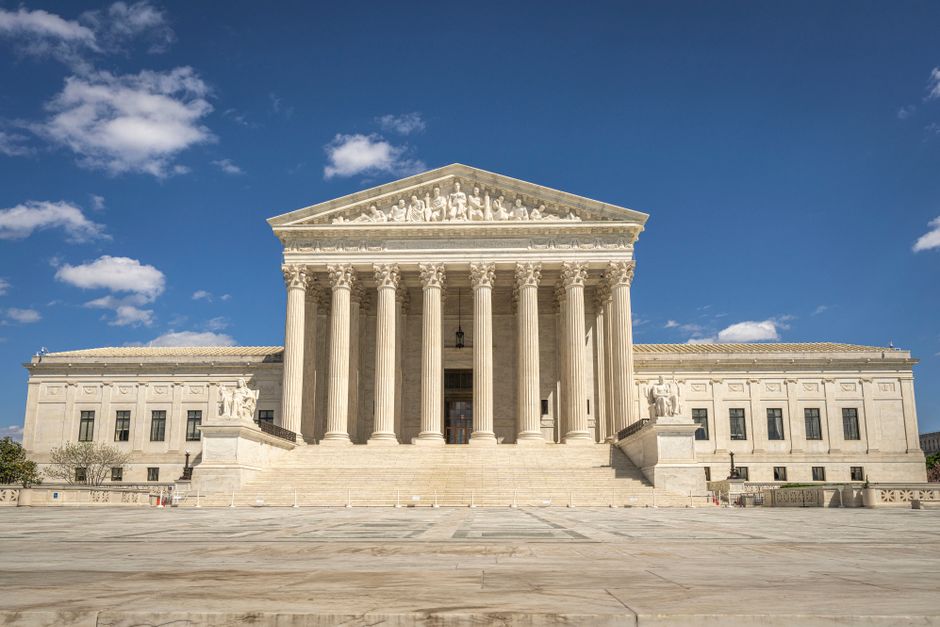
In February 2021, the Washington Supreme Court handed down State v. Blake, 197 Wn.2d 170, 481 P.3d 521 (2021) — a decision that invalidated Washington's simple drug possession statute and upended years of criminal convictions. The court held that RCW 69.50.4013, which made simple possession of controlled substances a felony without any intent or knowledge element, was unconstitutional because it criminalized innocent conduct: a person who unknowingly carries someone else's drugs could be convicted without knowing what they possessed. Blake itself involved a woman who claimed the methamphetamine found in her jeans pocket had been planted in a pair of pants someone else left at her house. The ruling applied retroactively, entitling thousands of Washingtonians convicted under the prior law to have their convictions vacated. Courts across the state spent years processing Blake-related vacation petitions. The legislature responded by enacting a new possession statute with an intent element, but the Blake saga illustrates that Washington's Supreme Court is willing to make sweeping constitutional decisions that fundamentally reshape criminal enforcement.
Washington abolished the death penalty through legislative action in 2023 (SB 5087, amending RCW 10.95) — formalizing what Governor Inslee had implemented through moratorium since 2014. Unlike Virginia's 2021 abolition, Washington's legislative abolition followed years of de facto non-execution and multiple Supreme Court rulings finding the death penalty's application arbitrary. In State v. Gregory, 192 Wn.2d 1, 427 P.3d 621 (2018), the Washington Supreme Court had already found the death penalty unconstitutional as applied, essentially ending executions even before legislative abolition.
Washington Sentencing Reform Act: Grid-Based Presumptive Sentences
Washington's Sentencing Reform Act (SRA, RCW 9.94A) establishes a presumptive sentencing grid where the recommended sentence depends on two variables: the offense seriousness level (levels I through XVI) and the offender score (calculated from criminal history). Judges must impose a sentence within the standard range unless they find "substantial and compelling reasons" to depart (called an "exceptional sentence"). The grid produces a specific range — for example, a seriousness level V offense with an offender score of 3 has a standard range of 13-17 months. Unlike advisory guidelines (like Virginia's), Washington's SRA ranges are presumptive: a judge imposing an exceptional sentence upward must enter written findings supporting departure, and exceptional sentences are reviewable by the Court of Appeals.
Offender score calculation is critical: prior convictions are assigned points based on the current offense type and the prior offense type. A Washington felony within the last 10 years typically adds 1 point; serious violent felonies within 10 years add more. Juvenile adjudications after age 15 may count. Out-of-state convictions for equivalent offenses are included. The offender score directly controls the standard range — a defendant scoring 0 (no prior record) has a lower standard range than a defendant scoring 6 (multiple prior convictions). Challenging the offender score — arguing that a prior conviction doesn't count, that the prior was for a different type of crime, or that out-of-state convictions don't match Washington law — can move the standard range lower and is among the most impactful things a defense attorney can do in a Washington felony sentencing.
Washington Vacating Convictions
Washington's conviction vacation statute (RCW 9.96.060) allows people to petition to have certain convictions vacated from their records after completing all sentence conditions and meeting waiting periods. Class C felony: eligible for vacation 5 years after sentence completion (with no subsequent convictions). Class B felony: eligible 10 years after sentence completion. Most misdemeanors: eligible 3 years after sentence completion. Once vacated, the conviction is treated as if it never occurred for most purposes — the person can answer "no" to employment questions about convictions. Exceptions: vacations are not available for violent offenses, sex offenses, DUI (treated separately), or convictions where sentencing required registration as a sex offender. Blake vacations were a special category of constitutional vacations — distinct from the discretionary RCW 9.96.060 process and processed under the court's inherent authority to correct unlawful judgments.
Felony Murder: Washington's Approach
Washington's felony murder rule (RCW 9A.32.030(1)(c)) holds that a person is guilty of first-degree murder if they cause the death of another person during commission of or flight from certain enumerated first-degree felonies (robbery, rape, burglary, arson, kidnapping, and others) — even if the death was not intentional. Washington's felony murder doctrine is broader than some states and narrower than others; the enumerated predicate felonies define who can be charged. In State v. Andress, 147 Wn.2d 549, 56 P.3d 981 (2002), the Washington Supreme Court addressed the scope of the predicate felony requirement, establishing that the defendant must be a participant in the predicate felony (not just present). Felony murder carries a mandatory Life imprisonment sentence in Washington for first-degree murder — no standard range applies to murder convictions.
Need legal documents for your defense?
Character references, release forms, and legal correspondence templates.
Sponsored links. Affiliate disclosure · Compare all options