
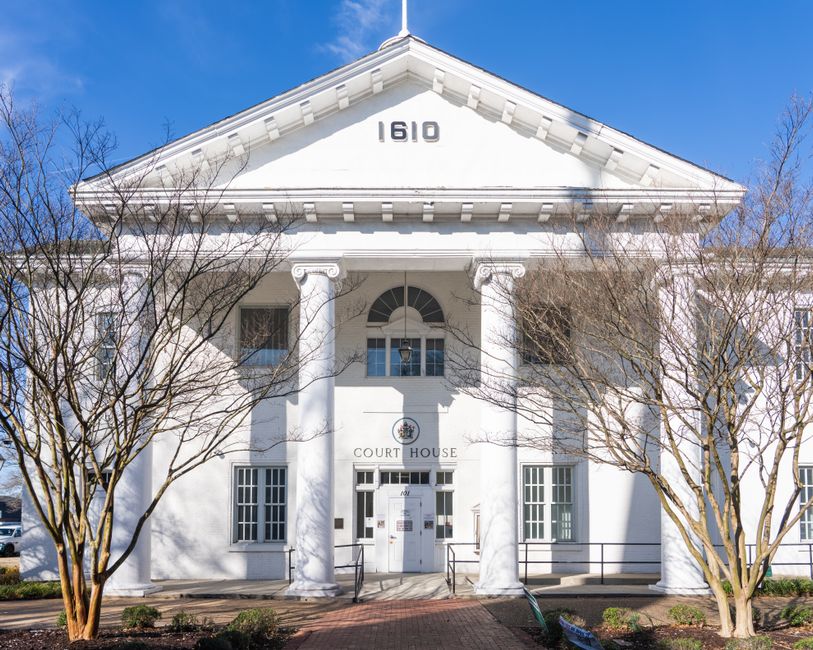
DeKalb County — the dense, extraordinarily diverse eastern anchor of metropolitan Atlanta, roughly 765,000 people stretching from the historic square of DECATUR, the county seat, through the refugee gateway of CLARKSTON, the Latino and Asian storefront economy of CHAMBLEE and DORAVILLE, the affluent enclaves of DRUID HILLS, DUNWOODY, and BROOKHAVEN, and the vast middle-class Black homeowner belt of south and central DeKalb out to STONE MOUNTAIN, LITHONIA, and STONECREST — prosecutes crime through the STONE MOUNTAIN JUDICIAL CIRCUIT, a single-county circuit that runs entirely within DeKalb. The hub is the DEKALB COUNTY COURTHOUSE at 556 North McDonough Street in Decatur, and getting the court structure right matters from the first appearance. FELONIES are prosecuted in the SUPERIOR COURT of DeKalb County by the DISTRICT ATTORNEY for the Stone Mountain Judicial Circuit, SHERRY BOSTON. MISDEMEANORS — the enormous bulk of the docket, from shoplifting and simple battery to marijuana possession and misdemeanor DUI — are prosecuted in the high-volume STATE COURT of DeKalb County by the SOLICITOR-GENERAL, an office separate from the district attorney. The MAGISTRATE COURT issues arrest warrants, holds the first appearance, and sets the initial bond; a separate JUVENILE COURT handles delinquency; and the municipal courts of Decatur, Clarkston, Chamblee, Doraville, Brookhaven, Dunwoody, Tucker, Stone Mountain, and Stonecrest dispose of city-ordinance and in-city traffic matters while binding serious cases over to the county courts. One feature above all shapes the local defense landscape: DeKalb is among the most IMMIGRANT-DENSE counties in the South, so the IMMIGRATION CONSEQUENCES of any arrest — and the LANGUAGE-ACCESS demands of a courthouse serving speakers of Spanish, Amharic, Somali, Nepali, Burmese, Vietnamese, and dozens of other languages — sit at the center of criminal practice here in a way they do in few American suburbs.
The governing law is Georgia's, and several 2020s-era statutes have pushed it in a punitive direction a DeKalb defendant feels immediately. CASH BAIL is the norm, and SENATE BILL 63, effective in 2024, EXPANDED the list of offenses for which a secured money or property bond is mandatory to more than thirty charges — including many misdemeanors — and sharply restricted CHARITABLE BAIL FUNDS, capping how many people a nonprofit or church may bond out. That is the opposite direction from bail reform elsewhere, and it means more DeKalb arrestees sit in the DEKALB COUNTY JAIL on Memorial Drive until a magistrate sets terms they can meet. Against that, Georgia offers powerful second-chance tools. The FIRST OFFENDER ACT lets a person with no prior felony conviction plead or be found guilty, have sentencing DEFERRED, and — on successful completion — be DISCHARGED WITHOUT AN ADJUDICATION OF GUILT, exonerated of the offense with the record automatically RESTRICTED and SEALED. It is available ONCE PER LIFETIME and must be elected before sentencing, so the decision cannot be undone or saved for later. A separate CONDITIONAL DISCHARGE does the same work for certain first drug possessions without spending the First Offender election. The 2020 SECOND CHANCE ACT opened new RECORD RESTRICTION paths for many misdemeanor convictions that were once permanent. And Georgia has built a statewide network of ACCOUNTABILITY COURTS — DRUG COURT, MENTAL HEALTH COURT, VETERANS COURT, and DUI COURT — that trade intensive supervision and treatment for a path away from incarceration, and DeKalb operates a robust set of these dockets. On self-defense, Georgia is a STAND YOUR GROUND state with no duty to retreat, and since 2022 it has allowed PERMITLESS CARRY of handguns by those legally eligible.
DeKalb's own geography and institutions generate a distinctive charging docket. CLARKSTON — often called the most diverse square mile in America and the refugee-resettlement capital of the South, home to Somali, Congolese, Burmese and Karen, Bhutanese-Nepali, Syrian, Afghan, and Eritrean communities resettled by agencies such as NEW AMERICAN PATHWAYS and the INTERNATIONAL RESCUE COMMITTEE — and the pan-immigrant BUFORD HIGHWAY corridor through Chamblee and Doraville, anchored by PLAZA FIESTA and a Latino, Chinese, Korean, and Vietnamese storefront economy, sit at the sharpest edge of the criminal system, where the immigration fallout of a plea under PADILLA v. KENTUCKY is a first-order concern and a competent INTERPRETER is not optional. MARIJUANA remains a live enforcement problem that confuses residents daily, because state law and the retail shelf point in opposite directions: cannabis is still ILLEGAL under Georgia law — only a narrow LOW-THC OIL registry exists — while gas stations and vape shops stock HEMP-derived DELTA-8 in a legal gray zone the legislature keeps revisiting, and LAB TESTING to separate legal hemp from illegal marijuana drives many DeKalb cases. The county has also become the stage for one of Georgia's most closely watched prosecutions: the ATLANTA PUBLIC-SAFETY TRAINING CENTER under construction on land in unincorporated south DeKalb — the facility opponents call Cop City — has produced a wave of arrests, with demonstrators charged with DOMESTIC TERRORISM and, later, folded into a sweeping statewide RACKETEERING (RICO) INDICTMENT brought by the GEORGIA ATTORNEY GENERAL, an unusually aggressive charging posture that has drawn national scrutiny. On immigration cooperation, DeKalb has taken a more restrained posture than some metro counties, LIMITING the extent to which its jail honors federal IMMIGRATION DETAINERS — though, as of early 2026, Georgia's post-Laken-Riley legislation pushes local jails statewide back toward cooperation with federal immigration authorities, so the exposure is neither what it once was nor as low as some residents assume.
The institutional map a DeKalb defendant must learn is compact but exacting. The office of DISTRICT ATTORNEY SHERRY BOSTON charges and tries felonies in Superior Court; the SOLICITOR-GENERAL handles the misdemeanor volume in State Court; and the two prosecutorial offices apply different policies, so the same arrest can look very different depending on how the charge is classified. Indigent defendants who cannot afford counsel are represented by the DEKALB COUNTY PUBLIC DEFENDER'S OFFICE, part of the statewide Georgia Public Defender Council system — appointment turns on a financial-eligibility screening at or after the first appearance. The DEKALB COUNTY SHERIFF'S OFFICE runs the DeKalb County Jail, while the DEKALB COUNTY POLICE DEPARTMENT, the city police departments of Decatur, Chamblee, Doraville, Brookhaven, Dunwoody, Tucker, and Clarkston, and the GEORGIA STATE PATROL that works I-285, I-20, and I-85 make most of the arrests. A wrinkle unique to DeKalb: the county is a FEDERAL ENCLAVE of sorts, home to the CENTERS FOR DISEASE CONTROL AND PREVENTION, EMORY UNIVERSITY, and the ATLANTA VA MEDICAL CENTER in Decatur, and an offense committed on federal property can be prosecuted in FEDERAL court rather than DeKalb's, a jurisdictional question worth asking early. Bond, once contested, can be revisited in Superior or State Court even after the magistrate's initial call. The ACCOUNTABILITY-COURT dockets — a genuine strength of the Georgia system — are administered locally and require an application and screening; they are not automatic, and entry usually must be negotiated early with the prosecutor and the judge.
Free and low-cost help exists, but a defendant must know where it does and does not reach. For CRIMINAL matters, the indigent-defense answer is the DeKalb County Public Defender's Office, not a legal-aid charity. ATLANTA LEGAL AID operates a DEKALB OFFICE in Decatur and handles CIVIL fallout — record-restriction petitions, collateral consequences, housing, benefits, and family matters — but does not take criminal cases; the DeKalb Bar Association and the State Bar of Georgia's lawyer-referral service can connect residents to private counsel, and immigrant defendants can turn to the LATIN AMERICAN ASSOCIATION, ASIAN AMERICANS ADVANCING JUSTICE-ATLANTA, or resettlement agencies such as New American Pathways for immigration-side help the criminal case will not cover. The playbook for a DeKalb County case runs like this. At the first appearance, understand which court and which prosecutor own your charge, and treat the SB 63 bail landscape realistically — mandatory-bond offenses will not release on signature. If English is not your first language, demand a QUALIFIED COURT INTERPRETER at every stage and never let a relative translate a plea. Decide the FIRST OFFENDER question deliberately and early, because it is a once-in-a-lifetime election made before sentencing and cannot be recovered later. If you are not a U.S. citizen, insist on a PADILLA immigration analysis before you plead to anything, because even with DeKalb's more restrained detainer posture, an arrest and state law can still put you in front of federal authorities. Ask whether an ACCOUNTABILITY COURT fits, since those seats are negotiated, not granted on request. And map your RECORD RESTRICTION options under the Second Chance Act at the outset, because how a case is resolved today determines whether it can ever be sealed.
Need legal documents for your defense?
Character references, release forms, and legal correspondence templates.
Sponsored links. Affiliate disclosure · Compare all options