
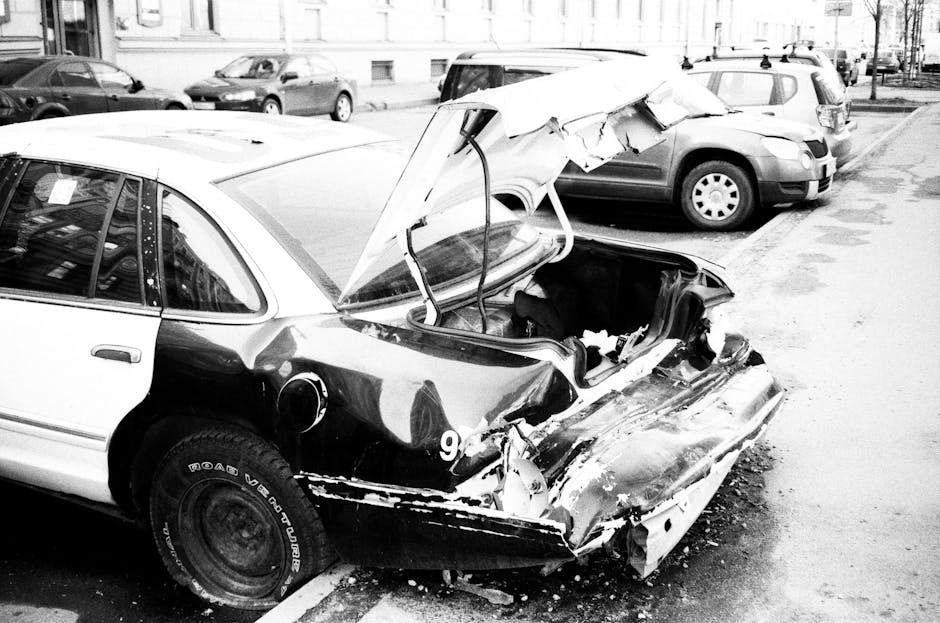
Car crashes in Peoria funnel through a compact but heavily traveled road network built around the ILLINOIS RIVER crossings. INTERSTATE 74 slices through the heart of the metro and carries the MURRAY BAKER BRIDGE over the river between Peoria and East Peoria; the I-474 bypass loops the south and west; and the surface grid — WAR MEMORIAL DRIVE (US-150), UNIVERSITY STREET, KNOXVILLE AVENUE, ADAMS and JEFFERSON downtown, Route 8 (Farmington Road) and Route 116 — carries commuters, the region's freight, and the trucks feeding Caterpillar's plants and the river terminals. Injury suits are filed in the CIRCUIT COURT OF THE TENTH JUDICIAL CIRCUIT at the PEORIA COUNTY COURTHOUSE, 324 Main Street. The crash itself is investigated by a patchwork that matters later: the PEORIA POLICE DEPARTMENT covers city streets, the PEORIA COUNTY SHERIFF handles unincorporated areas, and the ILLINOIS STATE POLICE (District 8) patrol the interstates and state highways — so obtaining the right report from the right agency is the first task of every case. Because the river crossings pull traffic onto a handful of bridges — the Murray Baker on I-74, the Bob Michel Bridge carrying US-150 downtown, and the McClugage Bridge to the north — a single corridor concentrates a disproportionate share of the metro's serious collisions.
Illinois is a pure FAULT state — it never adopted no-fault insurance, so there is NO PIP coverage and NO injury threshold to satisfy before suing. Any injury, from a strained neck to a catastrophic brain injury, supports a liability claim against the at-fault driver, whose insurer pays medical bills, lost wages, and pain and suffering as damages rather than as first-party benefits. Suit must be filed within TWO YEARS of the crash (735 ILCS 5/13-202; five years for pure property damage), and recovery runs under MODIFIED COMPARATIVE NEGLIGENCE with its 51 PERCENT BAR (735 ILCS 5/2-1116) — your award is cut by your share of fault and eliminated entirely if that share exceeds 50 percent. Every Illinois driver must carry liability insurance of at least 25,000 dollars per person and 50,000 dollars per crash for bodily injury plus 20,000 dollars for property damage — the 25/50/20 minimums — and every policy must include UNINSURED MOTORIST coverage at least at those limits, with UNDERINSURED MOTORIST coverage riding along when higher limits are bought. Medical payments coverage is optional but valuable in a state with no PIP. And because Illinois imposes NO CAPS on injury damages after LEBRON v. GOTTLIEB MEMORIAL HOSPITAL (2010), a catastrophic Peoria crash case is limited only by the evidence and the coverage available; WRONGFUL DEATH claims carry their own two-year clock from the date of death, and under 735 ILCS 5/2-1117 a defendant less than 25 percent at fault is only severally liable for non-economic damages — an allocation rule that matters in the multi-vehicle pileups the interstates and river bridges produce.
Peoria's crash profile is shaped by freight, river geography, and central-Illinois weather. The metro sits at a crossroads of manufacturing logistics — Caterpillar and Komatsu components, Keystone steel, and grain moving to the barge terminals — so BIG RIGS and commercial trucks are a constant on I-74, I-474, and War Memorial Drive, and a heavy-truck crash opens the door to federal motor-carrier rules and far higher policy limits than a personal auto policy provides. Preserving a commercial carrier's driver logs, telematics, and electronic control module (ECM) data requires a spoliation letter within days, because a trucking company will often dispatch its own rapid-response team to the scene within hours. Winter brings the hazards central Illinois is known for — snow, freezing rain, and dense river-valley fog that can drop visibility on the bridges and the I-74 approaches — producing the chain-reaction crashes that turn into fault-allocation battles among several insurers. DUI-related collisions cluster around the Warehouse District nightlife, downtown, and the riverfront on weekends, and pedestrian and cyclist injuries concentrate on the wide, fast arterials — War Memorial Drive, University Street, and Knoxville Avenue — that cut through dense neighborhoods. Illinois adds a further wrinkle to drunk-driving crashes: beyond the claim against the driver, the tavern or liquor store that overserved may face DRAM SHOP liability under the Liquor Control Act — statutory-only, subject to annually indexed caps, with its own one-year limitations period.
Public-entity and rideshare crashes carry their own rules. A collision with a CITY OF PEORIA fleet vehicle, a CityLink bus, or a Peoria County Sheriff's squad car falls under the TORT IMMUNITY ACT's ONE-YEAR limitations period, with police pursuits and emergency responses judged by the demanding WILLFUL AND WANTON standard rather than ordinary negligence — and a CityLink bus injury runs on that one-year clock rather than the six-month notice that traps Chicago's CTA riders. A crash caused by a defective state road — a pothole on I-74, a failed guardrail on the I-474 bypass, standing water or poor drainage, or a dangerous work-zone design — is a claim against the ILLINOIS DEPARTMENT OF TRANSPORTATION and goes to the ILLINOIS COURT OF CLAIMS, not the Peoria County Courthouse; there is no tollway authority downstate, so the Court of Claims is the route for every state-highway defect. RIDESHARE collisions around downtown, Bradley University, and the airport turn on the driver's app phase: with the app on but no ride accepted, the transportation network company provides limited coverage, while en route to or carrying a passenger triggers a one-million-dollar commercial liability policy — a difference established by subpoenaing Uber's or Lyft's trip and GPS data. And when your OWN carrier delays or denies a UM, UIM, medical-payments, or collision claim without reasonable cause, Section 155 of the Illinois Insurance Code (215 ILCS 5/155) supplies a statutory remedy for VEXATIOUS AND UNREASONABLE conduct — penalties and attorney fees on top of the benefits owed — leverage most states' drivers lack.
The playbook after a serious Peoria crash is unforgiving about time. Get the police report started at the scene — Illinois requires a written crash report where anyone is injured or property damage is significant — and get medical care immediately; OSF Saint Francis is the region's Level I trauma center, and the UnityPoint Methodist and Proctor emergency departments handle the rest, while unexplained gaps in treatment become the defense's chief exhibit. Photograph vehicles, plates, the roadway, skid marks, and injuries before anything is towed or healed. Move immediately on video: CityLink onboard cameras, city intersection cameras, business and doorbell systems along the arterials, and in truck cases the carrier's ECM and logs all overwrite quickly, so a preservation letter should go out within days. Calendar the traps — one year for the City, County, and CityLink; two years for private drivers; the Court of Claims track for IDOT road defects — and route insurance communications carefully: notify your own carrier promptly because your policy requires cooperation, but decline recorded statements to the other side until you have counsel, since casual words about speed or lookout become comparative-fault percentages later. Contingency representation is the norm and consultations are free; PRAIRIE STATE LEGAL SERVICES and the PEORIA COUNTY BAR ASSOCIATION referral service connect residents to help; and for property-only disputes — a contested total-loss valuation or a diminished-value claim — a complaint to the ILLINOIS DEPARTMENT OF INSURANCE can often resolve the fight without a lawsuit.
Need legal documents after an accident?
Demand letters, release forms, and settlement agreements — ready in minutes.
Sponsored links. Affiliate disclosure · Compare all options