
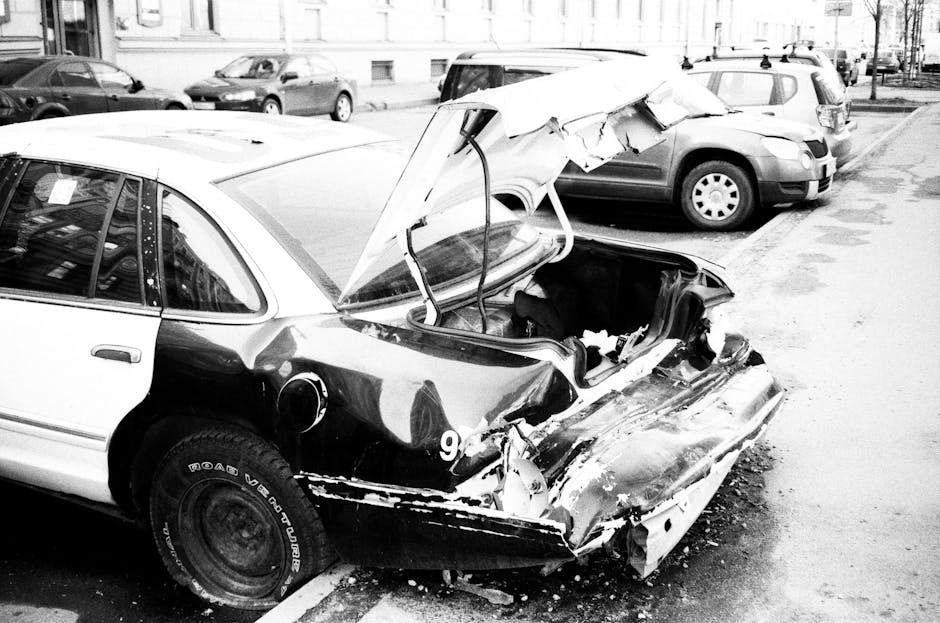
Gwinnett County sits astride some of metropolitan Atlanta's busiest northeast highways, and car crashes are the county's largest single category of injury claims. INTERSTATE 85 runs the length of the county as its freight-and-commuter spine, joined by the INTERSTATE 985 spur toward Gainesville and by GEORGIA 316 (UNIVERSITY PARKWAY) — the high-speed, at-grade route toward Athens that has long carried a reputation as one of the region's deadliest corridors. But it is the SURFACE ARTERIALS that dominate the local crash map and its human toll: BUFORD HIGHWAY and its extension, JIMMY CARTER BOULEVARD, U.S. 78 (Stone Mountain Highway) through Snellville, SATELLITE BOULEVARD, SUGARLOAF PARKWAY, PLEASANT HILL ROAD, and PEACHTREE INDUSTRIAL BOULEVARD — wide, multi-lane roads through dense immigrant commercial districts where PEDESTRIAN FATALITIES cluster around bus stops, strip retail, and sparse crosswalks. Crashes are worked by the GWINNETT COUNTY POLICE DEPARTMENT in the unincorporated county, by the Duluth, Norcross, Lilburn, Snellville, Suwanee, and Lawrenceville police inside the cities, and by the GEORGIA STATE PATROL on the interstates and GA-316; each produces the crash report that anchors any claim. Lawsuits are filed in the STATE COURT or SUPERIOR COURT of Gwinnett County at the GWINNETT JUSTICE AND ADMINISTRATION CENTER, 75 Langley Drive in Lawrenceville, in the GWINNETT JUDICIAL CIRCUIT, with most ordinary auto cases proceeding in State Court — and with the county's large court-interpreter operation making language-accessible litigation a routine part of the docket.
Georgia is an AT-FAULT (tort) state, not a no-fault state: the driver who causes a crash — and that driver's liability insurer — is responsible for the resulting injuries and damage, so there is no no-fault system paying your own bills regardless of fault. Every Georgia driver must carry minimum liability limits of 25,000 dollars per person and 50,000 dollars per accident for bodily injury and 25,000 dollars for property damage (25/50/25). Fault is governed by the same MODIFIED COMPARATIVE NEGLIGENCE rule that controls all Georgia injury cases (O.C.G.A. 51-12-33): you recover only if you are LESS THAN 50 percent at fault, and your recovery is reduced by your own percentage — so a disputed left-turn or lane-change crash on Pleasant Hill Road or a merge conflict on I-85 can come down to which driver the jury blames more. The statute of limitations is generally TWO YEARS from the crash. Because the state minimums are low and many drivers carry only that (or drive uninsured), the most important protection a Gwinnett County driver can buy is UNINSURED/UNDERINSURED MOTORIST (UM/UIM) coverage on their own policy. Georgia law requires insurers to offer UM/UIM and gives drivers a critical election between ADD-ON coverage (which stacks on top of the at-fault driver's limits, giving you the most protection) and REDUCED-BY coverage (which is offset by the at-fault driver's limits) — an election many drivers make without understanding it, and one that frequently determines whether there is any real money after a serious crash.
Several features distinguish serious Gwinnett County crash cases. First, PEDESTRIAN CRASHES. The immigrant commercial corridors — Buford Highway, Jimmy Carter Boulevard, U.S. 78 — produce a persistent pattern of pedestrians struck and killed on roads engineered for cars, and these cases turn on Georgia's WRONGFUL-DEATH measure, the FULL VALUE OF THE LIFE of the person who died (economic plus intangible value, from the decedent's own perspective, with no cap on the intangible component). They also turn on comparative fault — the defense routinely argues a pedestrian crossed outside a crosswalk — so preserving intersection video, signal-timing data, and independent witnesses is decisive. Second, TRUCKING. Freight moving along the I-85 logistics corridor makes commercial-vehicle wrecks a significant category, and Georgia gives crash victims a powerful tool most states do not: the DIRECT ACTION statute allows an injured person to name the motor carrier's INSURER directly as a defendant alongside the trucking company, putting the insurance squarely before the jury. A commercial-truck case also triggers federal motor-carrier (FMCSA) safety rules and a trove of electronic evidence — the truck's engine-control-module and electronic-logging data, driver hours-of-service logs, maintenance records, and dashcam footage — all of which must be preserved immediately with a spoliation letter before the carrier's rapid-response team disposes of it. Third, IMPAIRED DRIVING. DUI crashes on the SATELLITE BOULEVARD and SUGARLOAF PARKWAY nightlife strips not only support the ordinary injury claim but can unlock PUNITIVE DAMAGES — and Georgia's usual 250,000 dollar punitive cap does NOT apply to DUI cases, a significant multiplier where a drunk driver causes serious harm. Ordinary passenger-car crashes still dominate the docket, clustering at the county's high-volume interchanges and along the busy Pleasant Hill and Peachtree Industrial corridors where sheer traffic volume and turning conflicts drive the numbers.
Insurance realities drive most Gwinnett County crash outcomes. Because Georgia's minimum limits are low, a severe injury frequently exceeds the at-fault driver's coverage, making your own UM/UIM — and its add-on-versus-reduced-by election — the practical source of recovery. Optional MEDICAL PAYMENTS (MedPay) coverage on your own policy, if you carry it, pays medical bills up to its limit regardless of fault and can bridge gaps while the liability claim is pending. When an insurer refuses to pay a valid claim in bad faith, Georgia provides real leverage: O.C.G.A. 33-4-6 lets a policyholder recover a BAD-FAITH penalty of up to 50 percent of the loss plus attorney fees when the insurer refuses to pay within 60 days of a proper demand and the refusal was in bad faith. Against liability insurers, Georgia's well-developed practice of TIME-LIMITED POLICY-LIMITS DEMANDS — the so-called Holt demand, after the Georgia case that established it, and now shaped by statutory demand requirements — lets a claimant offer to settle within policy limits by a firm deadline; if the insurer unreasonably rejects a proper limits demand and a judgment later exceeds the policy, the insurer can be exposed for the FULL judgment, not just its limits. This excess-exposure dynamic is a central feature of serious Georgia auto litigation and a major reason insurers settle strong cases. For truck crashes, the direct-action statute and higher federal coverage minimums usually mean more insurance is available than in a car-versus-car wreck — but also a more aggressive defense.
After any Gwinnett County crash, the playbook is consistent: call police and get the report; seek prompt medical care and keep every record; photograph the vehicles, positions, damage, and scene before anything is moved; exchange insurance and get witness names and numbers before people leave; and notify your own insurer (through which UM/UIM runs) while declining any recorded statement to the other driver's insurer until you have counsel. If a truck is involved, get a preservation letter to the carrier immediately. Hit-and-run and phantom-vehicle crashes — common on the interstates and busy arterials — are covered by your UM coverage, so report them to police right away. If English is not your first language, insist on interpretation and be wary of anyone who is not a licensed Georgia lawyer offering to handle your claim, because notario-style fraud follows crash victims in every language across this county. Serious trauma generally goes to NORTHSIDE HOSPITAL GWINNETT in Lawrenceville or EASTSIDE MEDICAL CENTER in Snellville; keep every record. As of early 2026, recent Georgia tort-reform legislation (the 2025 SB 68/69 package) has reshaped auto litigation in ways the courts are still working out — SEAT-BELT non-use is now admissible as evidence (previously it was not), defendants have expanded rights to BIFURCATE the liability and damages phases of trial, new limits constrain how your lawyer may anchor pain-and-suffering figures for the jury, and third-party litigation funding is now regulated — all of which tilt somewhat toward the defense and make prompt evidence preservation and experienced counsel more important than before. Free and low-cost help is available through ATLANTA LEGAL AID, which operates a Gwinnett County office in Lawrenceville, and the GWINNETT COUNTY BAR ASSOCIATION referral service, and auto representation is contingency-based with free consultations — the earlier the consultation, the more evidence survives to fight the apportionment battle that Georgia's 50 percent bar makes decisive.
Need legal documents after an accident?
Demand letters, release forms, and settlement agreements — ready in minutes.
Sponsored links. Affiliate disclosure · Compare all options